
WITH the recent rains affecting a large part of the country, and with the very real prospect of more dangerous weather in the form of strong storms due to the ongoing El Niño event, the Philippine chapter of the People for the Ethical Treatment of Animals (PETA) has issued a timely and relevant warning about the safety and care of pets and livestock in our calamity-prone environment. In the sense that the conditions we have been experiencing over the past week could definitely be considered outside the norm, PETA’s call for greater vigilance toward animal welfare is quite appropriate.
For the sake of honesty, we should point out that among our editorial leadership, PETA’s general position on animal welfare is considered a bit extreme. However, the group’s recent observations — which included helpful tips for pet owners who may find themselves caught up in floods or other catastrophes — are very sensible, and worth sharing widely.
According to a media statement on Aug. 4, just about the same time the latest episode of extended rainfall was beginning, PETA sent a joint letter to the Department of Agriculture (DA) and the Department of Environment and Natural Resources (DENR), calling on them to ensure that captive animals on farms, zoos and other facilities throughout the country are included in all disaster preparedness and response plans. The group cited recent tragedies in China, where severe flooding from a typhoon reportedly washed away more than 16,000 pigs from farms and more than 900 snakes from breeding facilities, along with zebras, ostriches and other animals that had been confined in zoos. “This highlights the devastating consequences of failing to take animals into account before disasters strike,” PETA said.
The statement calls attention to a very real economic risk from flooding and other weather-related impacts, which has become particularly apparent as this week’s rains and floods have affected large agricultural areas, particularly in Central Luzon. Livestock losses are usually included in post-calamity reports of damage issued by the DA, but there are not, to our knowledge, any sort of disaster preparation protocols or guidance to prevent or reduce those losses, except perhaps at the local level.
This seems to us to be a significant oversight, because while crops in fields are unavoidably at the mercy of the elements, livestock — pigs, chickens, goats, cattle and other animals — are movable. Even if one does not regard the issue as one of humane treatment of animals, livestock are agricultural products, and the consequence of not taking available steps to protect them from being lost to a weather calamity is an irresponsible and avoidable economic cost.
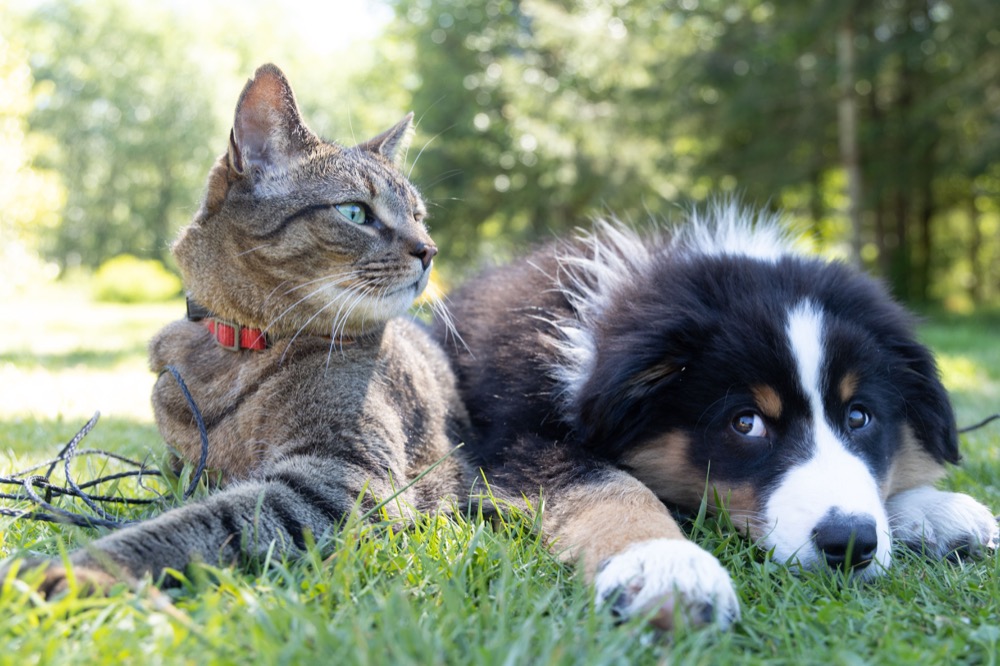
The other point raised by PETA directly addresses humane treatment of animals, and that is care of pets during calamities. Many Filipinos are, of course, conscientious and caring pet owners who treat their nonhuman companions no differently than any other member of the family. Unfortunately, many other Filipinos, while not being intentionally unkind or unappreciative of pets, do not exercise the same care. This, we believe, is largely due to lack of awareness of the implications of pet ownership.
Keeping a pet imposes the responsibility for ensuring the safety and well-being of a living creature, and putting that pet at mortal risk — such as leaving it behind when one’s home is threatened by flooding — could very well be interpreted as animal cruelty, according to our laws that impose criminal penalties for such actions. Abandoned pets that are frightened or injured can also add complications to disaster response and rescue efforts.
PETA recommends a few simple steps to ensure that pets are kept safe during calamities. Pets should be brought indoors during severe weather, and not left caged, chained, or otherwise trapped outdoors. One’s “emergency kit” or “go bag” containing human essentials to take along in case of evacuation should also contain basic pet essentials such as food, medications, treats and other items to help care for the pet, such as a favorite toy or blanket. To this we would add that local government units and other relief agencies should include basic pet foods in “family food packs” for those who need them. Pets should also be tagged so they can be identified if they are separated from their people; a collar with a name and contact number will suffice. Pet owners should also keep a recent photo of their pet handy to help in identification.
Finally, if one is forced to evacuate with a pet, it should be restrained, kept leashed or in a suitable pet carrier. Frightened domestic animals may bolt if they are taken out of their familiar settings, putting themselves and others in danger.

