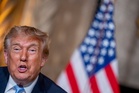
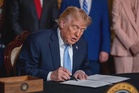
THE most revealing moment of the 49th Association of Southeast Asian Nations Summit in Manila and the Asia-Pacific Economic Cooperation meetings in China this month was not an official declaration or an economic deal. It was the sight of United States President Donald Trump, Chinese leader Xi Jinping and Russian President Vladimir Putin seated at the same table in the southeastern Chinese city of Shenzhen, setting aside deep geopolitical differences to agree on matters of common interest.
The three leaders agreed to pursue United Nations reform, increase petroleum supplies, respect state sovereignty, and work toward reducing nuclear risks. They reaffirmed that nuclear war cannot be won and must never be fought.
There is a lesson here for the Philippines. Even archrivals understand the importance of engagement and managing their differences. Unfortunately, this seems to be a lesson that Defense Secretary Gilberto “Gibo” Teodoro Jr. has yet to appreciate.
In recent weeks, Teodoro has received four public reminders that his increasingly confrontational approach toward China is not necessarily shared by the rest of the country.
The first came from 23 business and sectoral organizations that appealed to Manila and Beijing to lower tensions and restore disciplined diplomatic engagement. Their concern was understandable. China is the Philippines’ largest trading partner. Thus, a prolonged hostility can affect trade, investment, employment, and economic development. The groups were not asking the government to surrender Philippine sovereignty. They were pointing out that defending national interests and maintaining constructive economic relations are not incompatible.
The second reminder came from Foreign Affairs Secretary Ma. Theresa Lazaro. Following her discussions with Chinese Foreign Minister Wang Yi, Lazaro emphasized diplomacy, dialogue, and the peaceful management of disputes. She also reminded government officials that the president is the chief architect of Philippine foreign policy, and that all officials must align their public statements with the administration’s policy directions.
The message was clear. Foreign policy is not the personal domain of the defense secretary or any other Cabinet member. Gibo sometimes appears to act as though he is the country’s foreign policy architect rather than an official tasked with implementing the president’s policies.
The third reminder came from ordinary Filipinos. The Chinese Embassy reported that Filipino travel to China increased by 48.9 percent in the first half of 2026. Visa applications in October alone reportedly increased by 66 percent, compared with the same month last year. While travel decisions do not necessarily reflect political preferences, the figures suggest that Filipinos continue to see opportunities in engaging with China despite hostile rhetoric coming from some government officials.
The fourth, and perhaps the most consequential reminder came from President Trump himself.
During his Nov. 18, 2026 meeting with President Marcos and members of his Cabinet, including Teodoro, Trump was asked about tensions in the West Philippine Sea and the possibility of an armed confrontation. His response was unmistakable:
“I’m not concerned about that at all. That’ll be taken care of.”
This was the American president speaking in front of the defense secretary, who has repeatedly expressed confidence that Washington would support the Philippines in a war with China.
Trump subsequently proceeded to Shenzhen, where he met Xi and Putin. Their joint declaration demonstrated that Washington was prepared to engage Beijing and Moscow on matters of strategic importance.
There is an important distinction between an American treaty commitment and an automatic response to fight a war on the Philippines’ behalf. The 1951 Mutual Defense Treaty remains in force, but its invocation is subject to constitutional processes of both countries. American support can take different forms and Manila should not assume that it necessarily means direct American military intervention in a confrontation with China.
Gibo might also take a lesson from Saudi Arabia’s Crown Prince Mohammed bin Salman, or MBS. In September 2026, MBS twice asked Trump for direct American military intervention against the Houthis in Yemen. Trump declined to commit American forces, although he offered intelligence and targeting assistance. Even a longstanding American partner cannot simply assume that Washington would fight its battles.
The more important issue, however, is Gibo’s apparent fixation with China. He appears to have an axe to grind against Beijing. Whatever the underlying reason may be is unknown. What is increasingly evident is that his public posture risks turning what should be a carefully managed foreign policy issue into a personal vendetta.
The consequences will not be borne by Gibo alone. They will be borne by the entire country.
The omission of Ukraine and Iran from the four-point Shenzhen declaration is also worth considering. Ending wars that have already begun is extraordinarily difficult. It requires negotiations over territorial claims, security guarantees, and political concessions. Such conflicts cannot be settled in one meeting.
Preventing war, however, is an entirely different matter. The Philippines is not at war with China. We still have an opportunity to manage our differences through diplomacy, dialogue and negotiation.
If Trump, Xi, and Putin can sit together despite their intense disagreements, why should Beijing and Manila be unable to do the same?
Defending Philippine sovereignty is a national obligation, but pursuing confrontation is not. The country must not be dragged into a war simply because one Cabinet official appears determined to have one.
It is better to prevent a war than to spend years trying to end it.
Rafael P. Tuvera is a lawyer who taught law and political science. He analyzes geopolitics and diplomatic strategy with an emphasis on productive approaches with legal and historical context.