

It began with a quiet morning in Bangkok a woman leaned over her nightstand, flicked open the aluminium cap of a familiar little herbal inhaler, took a breath. A simple ritual, entrusted for generations. But somewhere in the manufacturing line of Hong Thai’s “Formula 2” inhaler, that act of inhaling relief flipped into a whisper of risk.
When the Thai Food and Drug Administration (Thai FDA) dropped its public warning on 28 October 2025, the message cut through the daily hum: a batch of the beloved herbal inhaler was contaminated with microbes, including the bacteria genus Clostridium, and failed key quality-control standards. (nationthailand) The company, Thai Herbal Hong Thai Ltd., moved swiftly recalling Lot 000332, manufactured on 9 December 2024 (expiry 8 December 2027), comprising 200,000 units. (nationthailand). Suddenly, that little inhaler marketed as a harmless herbal remedy for nasal congestion, headaches or fatigue was under a spotlight it never anticipated.
In its announcement, the Thai FDA disclosed that test results revealed the product exceeded limits for Total Aerobic Microbial Count, Total Combined Yeasts and Mould Count, and had detectable Clostridium spp. (NST Online)
Clostridium is not trivial. In some species it can form spores, survive harsh conditions, and in rare cases cause serious infections. A Vietnamese report noted:
“The U.S.-based Johns Hopkins Medical Center states that Clostridium can form spores … It includes agents that can cause tetanus and botulism.” (VnExpress International)
While the Thai FDA has not publicly disclosed the exact strain nor documented illness, the finding triggered legal provisions: under Thailand’s Herbal Products Act B.E. 2562 (2019), manufacturing or selling a non-standard herbal product may carry penalties up to two years imprisonment or a fine not exceeding 200,000 baht. (nationthailand). For consumers, the message is sharp: this was a trusted herbal remedy, but one batch missed the mark.
The story deepens when we trace how a humble inhaler became a cross-border phenomenon. Hong Thai Formula 2 is part of a long-standing Thai tradition of “yadom” (ยาดม) herbal inhalers or sniffers often used for relief of stuffy noses, travel fatigue, or just a quick “pick-me-up” scent.
In recent years, their appeal transcended Thailand’s markets. Reports in Vietnam indicate the inhaler was widely sold on e-commerce platforms there, and the recall raised alarm among Vietnamese consumers. (Tuoi tre news). This international spread underscores how local health-products can leap across borders and how contamination in one place can ripple globally.
The recall notice reveals deeper manufacturing questions. The company said the contamination was confined “solely to Lot 000332” and insisted other batches remain unaffected. (The Straits Times)
Yet even that admission carries weighty implications. How did microbes exceed limits? Was it a lapse in sterilization, storage conditions, raw-material hygiene, or post-production handling?
The company pledged to strengthen production controls, adding ultraviolet (UV) sterilisation at every stage of manufacturing. (nationthailand)
It raises a broader question: in the booming herbal-wellness industry, how robust are manufacturing systems, especially when products are scaled, exported and placed under e-commerce scrutiny?
Why does this matter so deeply? For many consumers, herbal inhalers are perceived as safe, benign, “natural” solutions far removed from pharmaceuticals. That belief often shields rigorous oversight. Yet this incident blows that assumption apart. Even “herbal” products can carry microbial risk if the manufacturing environment is not tightly controlled.
Health-experts warn consumers: a natural label does not always mean safe. The truth is often in the unseen: microbes, spores, moulds. The presence of Clostridium spp. in a product meant for inhalation is especially worrying.
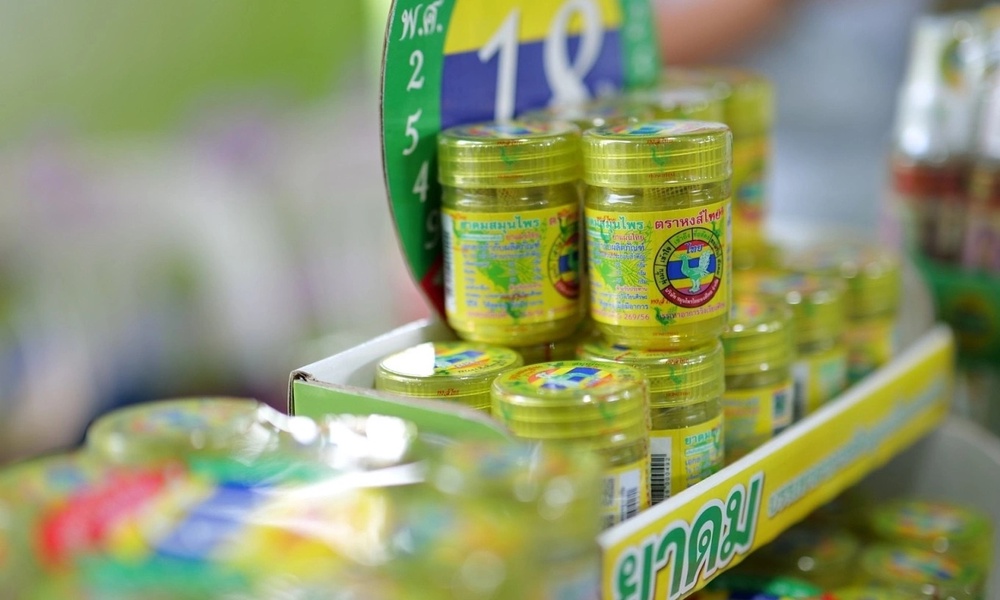
Asia’s herbal-wellness market has surged: consumers seek traditional, familiar, culturally rooted remedies. Thailand has actively promoted its herbal industry as part of health-tourism and export strategy.
But the very growth that fuels innovation also invites risk: rapid expansion, global distribution, variable regulation across borders, and demand for scaling. When smaller producers expand fast, quality controls may lag.
According to the recall, this product had been registered in 2021. (The Straits Times) Since then, it had gained popularity. The recall forces the industry to ask: when a local wellness product meets global demand, do regulatory safeguards keep pace?
For consumers who purchased the affected lot, the company offered full refunds or replacement products a standard response. (The Straits Times). But more than refunds, the psychological dimension matters. When your go-to inhaler risks microbial contamination, even if you owned an unaffected lot, trust is shaken.
Retailers and e-commerce platforms may pull listings, supply chains may tighten, and regulators may accelerate scrutiny. In Malaysia, Singapore, Vietnam and other ASEAN markets where imported Thai herbal products circulate, the recall will likely prompt increased consumer caution.
The Thai FDA's announcement is public and stern. Under law, non-standard herbal products may face prosecution. (nationthailand) For the manufacturer, this is more than a recall: it’s a reputational and legal stress test. For the regulator, it signals that even widely trusted herbal products are vulnerable to the same microbial hazards as any consumer product.
At the regulatory level, one recalls that occasionally inhalation products including pharmaceutical inhalers have been subject to recalls when manufacturing or packaging defects occurred. For example, a generic inhaler in the U.S. was recalled due to leakage. (Reuters) Although that case differs in mechanism, it shows inhalation products require rigorous control.
Inhaling a scented herbal stick the act is innocent, almost ritualistic. Yet this episode reminds us: safety is invisible. Inside a tiny inhaler can lurk spores, moulds, microbes that defy our expectations.
The Thai case serves as a regional cautionary tale. It calls for cross-border coordination between ASEAN health regulators to ensure that recalls and safety alerts move as quickly as the products themselves.
What Consumers Can Do
- Check batch numbers and expiry dates before using any herbal inhaler or balm.
- Buy only from reputable sellers or pharmacies.
- Avoid using products with broken seals or discolored contents.
- Stop use immediately if you experience irritation or dizziness.
Most importantly, remember herbal doesn’t mean immune to contamination. Nature can heal but only when paired with science.
For the millions who use such devices trusting in tradition and natural healing, the recall of Hong Thai Formula 2 becomes a wake-up call: wellness must be matched by manufacturing integrity.
Beyond Thailand’s borders, the lesson reverberates: global demand for herbal and wellness products is rising but so too is the responsibility of producers, regulators and consumers.
As we breathe in relief, perhaps we must pause and ask: did we check the batch number? Do we trust the seal? Because when healing becomes hazard, the gap between intention and outcome can be narrow. In the quiet act of inhaling relief, we carry trust. And when that trust is shaken by unseen bacteria, the scent of comfort becomes a call for scrutiny.
AM World (tameer.work88@gmail.com) is a content creator under the Newswav Creator programme, where you get to express yourself, be a citizen journalist, and at the same time monetize your content & reach millions of users on Newswav. Log in to creator.newswav.com and become a Newswav Creator now!
The User Content (as defined on Newswav Terms of Use) above including the views expressed and media (pictures, videos, citations etc) were submitted & posted by the author. Newswav is solely an aggregation platform that hosts the User Content. If you have any questions about the content, copyright or other issues of the work, please contact creator@newswav.com.
