By Dr Sajad Hussein Kamarally
☕ Two months ago, I stayed at an Ibis hotel near Heathrow, London.
When I stepped out of the hotel, a thought suddenly crossed my mind: Eh, am I in Southall or KL?" 😄
The hotel staff came from various South Asian backgrounds. At the petrol station, the worker was Bangladeshi. My Uber driver was from Pakistan. At the grocery shop, I was served by a Punjabi woman.I did not see very many people whom I would consider to be local residents.It reminded me of the London I knew in the 1980s — but at the same time, it made me reflect on just how much a city can change over several decades.
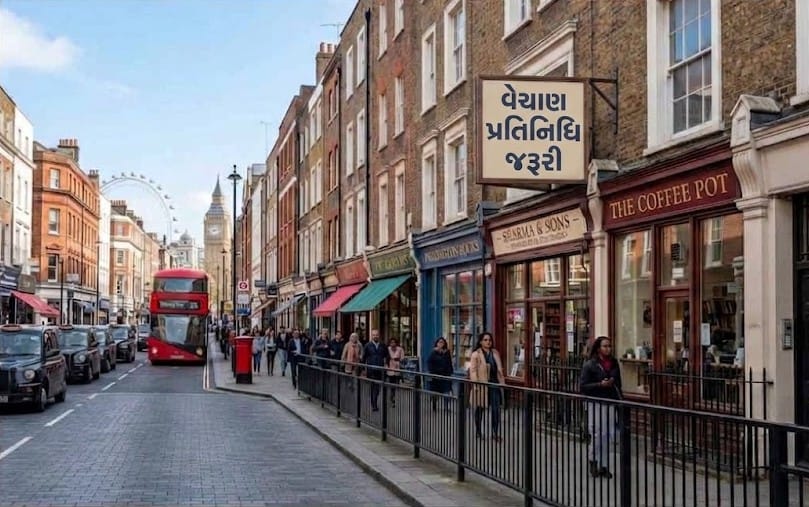
I remember once seeing a shop with a "Vacancy" sign written in Gujarati. I asked the shop owner why.He smiled and said something along these lines:
“Many local people don't want to work long hours here. Come back in a few years and London will look very different.”Forty years later, I find myself wondering — perhaps there is a lesson from London's experience for Malaysia.
Are we witnessing the beginning of the same story?
Malaysia already depends heavily on foreign workers in several important sectors.Construction, plantations, manufacturing, cleaning, restaurants, logistics, car washes, wholesale markets, delivery services and many other businesses rely on workers from Indonesia, Bangladesh, Nepal, Myanmar and other countries.They perform work that is essential to our economy and, in many cases, work that is difficult to fill with local workers.Then there is something else that may happen.
Workers begin settling in particular areas. Businesses serving their communities start to appear. Social connections and community networks develop. Over time, some neighbourhoods naturally begin to take on a different character and atmosphere.There is not necessarily anything wrong with a community becoming more diverse.The question is whether we plan and manage that change properly, or simply allow it to happen without thinking about the long-term consequences.
The part we need to manage
We also need to distinguish between legal foreign workers and those who enter or remain in Malaysia outside the established system.Illegal recruitment networks and syndicates can exploit workers who pay large sums of money to agents. At the same time, employers who deliberately hire undocumented workers can gain an unfair cost advantage.This creates problems for everyone.It makes enforcement more difficult, disadvantages employers who follow the rules, can leave workers vulnerable to exploitation, and makes it harder for the government to plan infrastructure, housing and public services accurately.
The solution is not to blame the workers.The solution is to build a better and more organised system. ofcourse there are many benefits we get from this foreiners: The woirk get done in sectors like palm oil plantation , construction, manufacturing, cleaning., hospitality and thers requireing labour. Prices can remain more manageable because the avalbility of labour also affects the cost of food, services, constructioin and many everyday activities. and finally it helps many businesses thaat depend on foreign l abour to keep their operations running.
However, there are also many challenges: first, Communities become concentrated when large numbers of people from the same background settle in a particular area, the identity and atmosphere of those area can gradually change, second, wages can come under pressure if employers continue to get access to significantly cheap labour, and this will lead to less incentive to improve productivity, wage and work conditions. Third, there is a gendency for illgeal recruitment to grow when demand is high but legal recruitment channels are perceived to be too complicated and expensive, Syndicates and unscruplous agents canm ake advantage fourth, what is temporarary can become permenant without clear rules governing recruitment, employment periods, family arrangements and the return of workers,
I am not saying that we should not hire foreign workers ad Malaysia needs these workers and many of them are making important conribution to our country's economy; What i mean to say is that we should manage the system better. we xan take seveal steps to do this. among them employers should bear a reasonable cost when that use foreign labour, we should invest in automation, focus on enforcement of syndicates and employers who deliberately employ cheap labour. finally we should have clear and easy pathways for these workers.
I am simply a grandfather who wants my grandchildren to grow up in a Malaysia that still feels like Malaysia.But I also want them to grow up in a Malaysia that is fair, prosperous, open and respectful of everyone who contributes to this country.
London may not have planned every aspect of how its communities would develop.Perhaps Malaysia still has an opportunity to learn from that experience — not by copying London, but by thinking further ahead.This is not about race or nationality.It is about planning, economics, integration, enforcement and the kind of country we want Malaysia to become over the next 20 or 40 years.
So, what do YOU think?
Dr Sajad H Kamarally (sajadhk05@gmail.com) is a content creator under the Newswav Creator programme, where you get to express yourself, be a citizen journalist, and at the same time monetize your content & reach millions of users on Newswav. Log in to creator.newswav.com and become a Newswav Creator now!
The User Content (as defined on Newswav Terms of Use) above including the views expressed and media (pictures, videos, citations etc) were submitted & posted by the author. Newswav is solely an aggregation platform that hosts the User Content. If you have any questions about the content, copyright or other issues of the work, please contact creator@newswav.com.