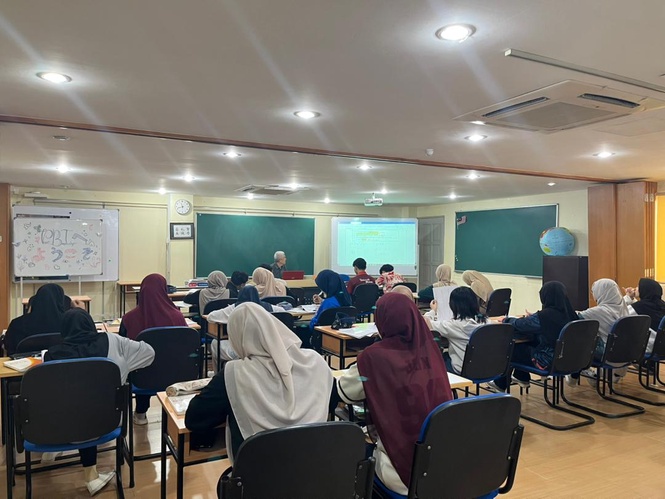
On a typical morning in a classroom in Seputeh, Kuala Lumpur, the sound of Japanese fills the air as a teacher walks students through a mathematics problem on the board.
Some students quietly write small pronunciation guides next to unfamiliar kanji, while others compare answers with classmates.
Not long ago, many of them had little or no knowledge of the language.
Today, they are learning to study academic subjects in Japanese as they prepare for university life in Japan.
For a growing number of Malaysian students, Japan has become an appealing destination for higher education.
The interest sometimes begins with anime, music, or technology, but it is also shaped by the long relationship between the two countries.
For many parents, Japan represents quality education, advanced technology, and a reliable environment for study– an image that has developed over decades of close economic and cultural ties.
Turning that aspiration into reality, however, requires careful preparation.
Japan’s education system mandates a specific number of years of formal schooling before students can enter university.
To help Malaysian students get ready, preparatory programs offer an intensive mix of Japanese language lessons alongside subjects like mathematics, physics, and social studies.
All taught according to the Japanese curriculum, so students can hit the ground running once they arrive.
In these classrooms in Kuala Lumpur, students are gradually building the language skills and academic foundation they will need to take the next step toward life on Japanese campuses.
Educational Migration Begins Before Departure
Malaysian students preparing for university life in Japan through language and academic study. Photo: Migrant Times
Before Malaysian students set foot on Japanese soil, many of them spend months in specialized Japanese-language schools at home.
These schools are not just about learning a new language, they are carefully designed to help students adjust to the demands of a different education system.
These schools also serve as a preparatory hub for Japanese university entry. Classes cover not only Japanese language but also academic subjects.
By combining language skills with subject knowledge, students gradually gain the confidence and foundation needed to tackle the challenges of university life in a foreign country.
Beyond academics, these schools function as a soft-landing space for students who will soon become international migrants.
They provide a safe environment where students can adjust to Japanese-style teaching, learn study habits, and develop routines that reflect what life in Japan will be like.
For many, it is the first experience of living independently while still being close to family like a gentle transition into a new culture.
Teachers play a key role in this preparatory journey. They help students navigate the difficulties of learning subjects in Japanese, adapt to classroom expectations, and develop skills for collaboration and problem-solving.
In this way, the schools make the learning process approachable and even enjoyable.
Ultimately, these Japanese-language schools do more than teach. They prepare students for a life-changing experience.
By bridging education gaps, preparing them academically, and easing cultural transition, they give students a head start on their university journey.
When students finally leave Malaysia for Japan, they don’t just carry their suitcases, they carry knowledge, skills, and a confidence that helps them thrive from day one.
Why Do Malaysians Choose Japan?
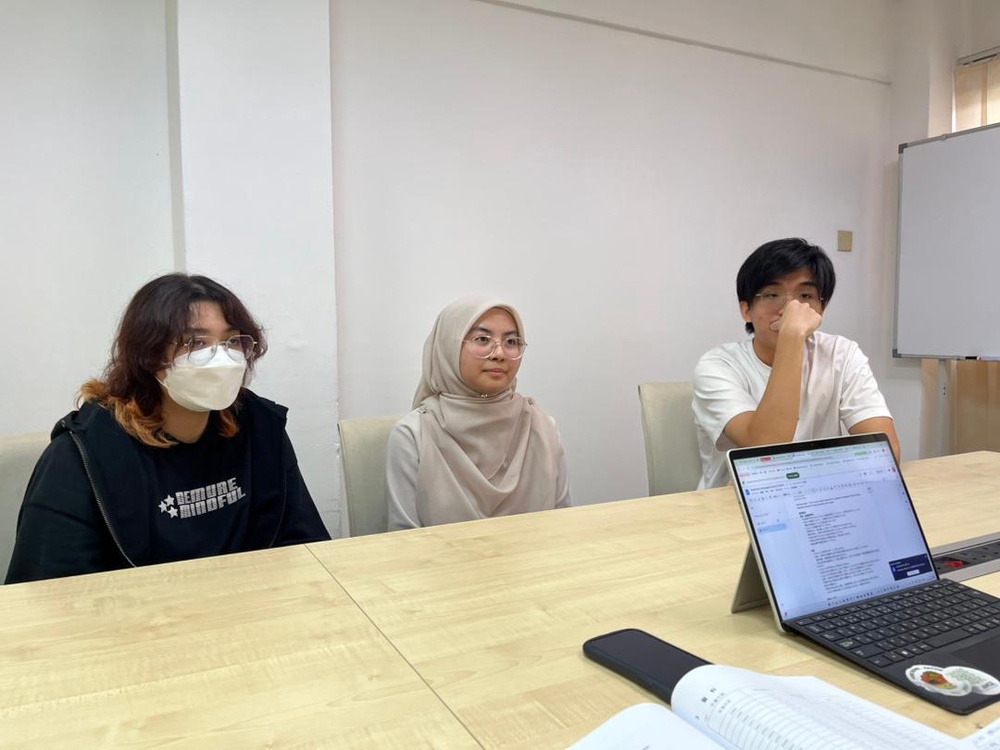
Students interviewed for this story, each pursuing their own path toward studying and building a career in Japan. Photo: Migrant Times
For many Malaysian students, the idea of studying in Japan starts with curiosity and excitement.
Some are drawn by anime, J-pop, or the sleek gadgets and technology they’ve admired since childhood.
According to a survey by the Japan Student Services Organization (JASSO), 61.8% of respondents said they were interested in Japanese society, while 39.4% wanted to learn the Japanese language and culture.
The findings suggest that Japan’s cultural appeal plays an important role in shaping students’ decisions to consider studying there.
For some students, the attraction goes beyond entertainment and becomes a professional aspiration.
Nurkhadeeja Shahril, a student in the Art Stream at Pusat Bahasa Teikyo, said she hopes to work as a translator in Japan and help translate manga into English.
“I want to work in Japan as a translator.
“I read manga every day, but there are not many English translations. I want to help create them so more people can read them, ” she said.
Nuraina Qistina Mohammad Rizal, a student in the Science Stream, said she hopes to study architecture and is fascinated by the precision and attention to detail in Japanese architectural design.
“I want to study architecture, and Japanese architecture is very carefully designed, even in the smallest details,” she said.
Others are captivated by Japan’s seasonal beauty from cherry blossoms in spring to the fiery autumn leaves or by travel experiences during family vacations or school trips.
These initial attractions make Japan feel approachable and fascinating, giving students a personal reason to consider a life far from home.
Cultural admiration also plays a big role. Japanese manners, attention to detail, and unique traditions often leave a lasting impression.
But beyond these appealing surface elements, students quickly realize that studying in Japan comes with serious challenges.
Japanese universities demand discipline, focus, and a level of academic severity that goes far beyond casual fascination.
Once they arrive at preparatory programs or university campuses, students must shift their mindset from personal interest to academic purpose.
Watching anime or enjoying seasonal festivals is no longer enough, studying in Japan requires degree-focused thinking.
Students learn to balance intensive coursework in subjects like mathematics, physics, or chemistry while improving their Japanese language skills, often in a classroom full of peers from diverse backgrounds.
Career planning becomes part of the equation too.
Many students arrive with vague ideas of what they might do after graduation, but the longer they study in Japan, the more they are encouraged to think strategically about their future.
Discussions with teachers, alumni, and career advisors help them explore potential paths– whether continuing to graduate school, entering the workforce in Japan, or returning to Malaysia with specialized skills that set them apart.
Lastly, studying in Japan demands endurance, both academic and personal.
Long hours of study, cultural adaptation, and the challenge of living in a foreign country test students in ways they might never have imagined.
Yet, those who persevere often find themselves growing not just as students, but as global citizens.
By the time they graduate, their admiration for Japan has deepened into real expertise, resilience, and a clear vision for their careers to prove that the initial spark of attraction can lead to a lifetime of opportunity.
Parents Who Trust Japan
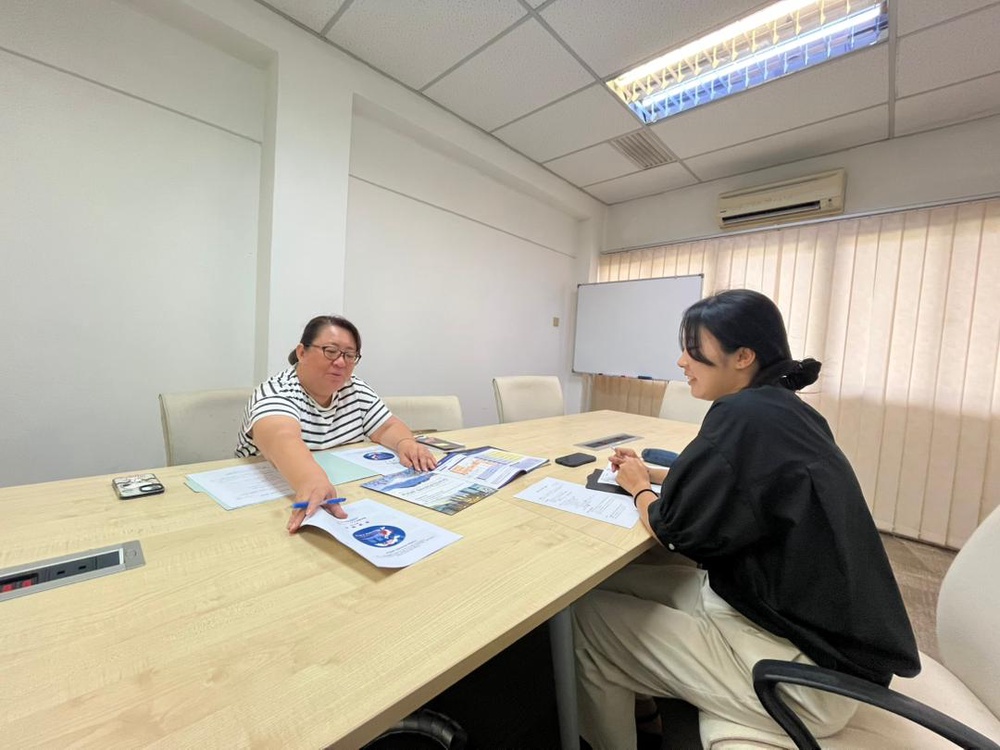
Behind many students’ decisions to study in Japan are parents who place strong trust in the 'Japan brand'. Photo: Migrant Times
In some cases, parents play an important role in encouraging students to study abroad.
Atsuko Sagayama, a vice principal and Japanese language teacher at Pusat Bahasa Teikyo, said the parent generation often holds strong trust in Japan.
“The parent generation tends to have strong trust in Japan, in the ‘Japan brand’ and Japanese quality,” said Sagayama.
A 2008 public opinion survey on Japan conducted in six major ASEAN countries, during the period when Malaysia’s fourth and seventh Prime Minister, Tun Dr Mahathir Mohamad, was promoting economic development by learning from Japan and South Korea, shows overwhelmingly positive perceptions of Japan.
Respondents described Japan as: a country with advanced science and technology (89%), and economically developed (82%), rich in natural beauty (81%), having a high standard of living (75%), possessing an interesting culture (73%).
Against this historical backdrop, Japanese products and cultural influences have become visibly embedded in everyday life in Malaysia, reflecting the deep ties between the two countries.
According to Sagayama, parents sometimes play a decisive role when students hesitate about where to study abroad, with their strong trust in Japan helping to push their children toward choosing Japan.
Cost is another important factor. Because Japan is in the same Asian region, studying there can cost nearly half as much as studying in Western countries.
In Japan, international students are permitted to work part-time for up to 28 hours per week with approval from immigration authorities.
According to available data, 65.2% of international students actually take on part-time jobs while studying.
Bridging the One-Year Gap
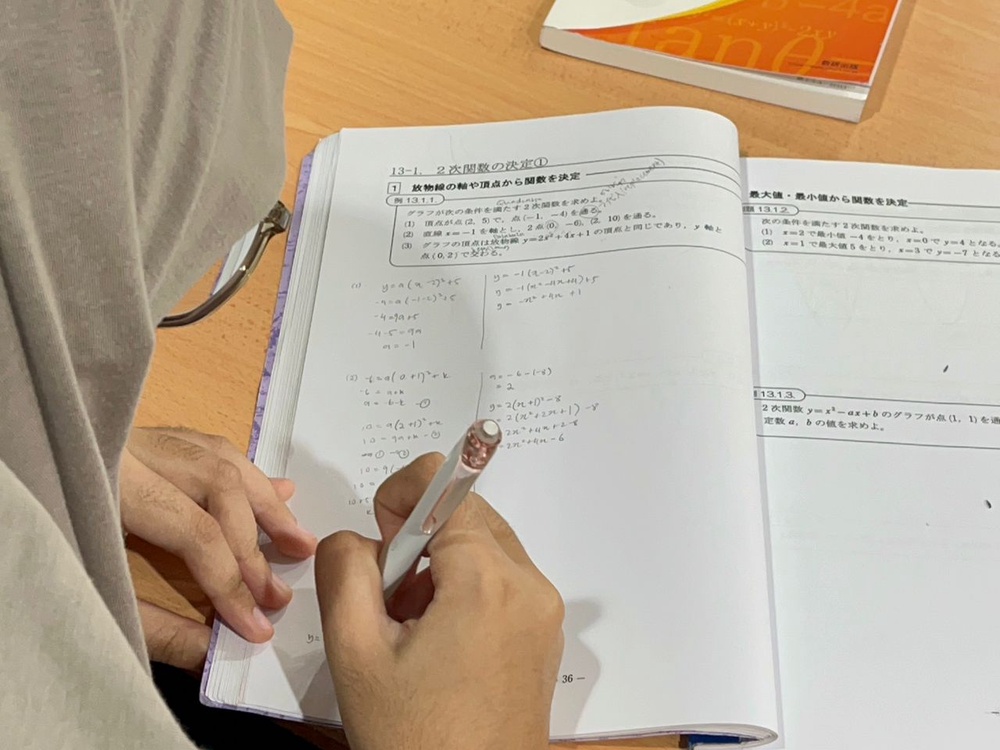
In preparatory education, language is not just a subject, but the key to accessing all other fields of study. Photo: Migrant Times
Pusat Bahasa Teikyo is the only Japanese-language school outside Japan recognized by Japan’s Ministry of Education, Culture, Sports, Science and Technology (MEXT) to offer the Preparatory Education Course (Pre-U), which is required for university admission.
Under the ‘Look East Policy’ proposed by Mahathir in 1981, Malaysia was encouraged to learn from East Asian modernization models, such as those of Japan and South Korea.
Since then, the Malaysian government has sent students to Japanese universities and technical colleges for more than four decades.
Japan’s education system requires students to complete 12 years of formal schooling before entering university.
In Malaysia, however, the standard track consists of 11 years, creating a structural gap that must be filled through a preparatory program.
Students aiming to enter universities in Japan generally need to spend about a year attending a Japanese-language school in Japan.
With the MEXT designation, however, students can now earn the necessary qualifications while remaining in Malaysia.
The additional preparatory period before university can, in some cases, lead to higher costs and require students to leave their families earlier than expected.
Reducing this period by even one year can help ease the overall burden, including financial costs.
The program also receives accreditation from Malaysian educational authorities, strengthening institutional trust.
To date, more than 1,800 students have graduated from the school, with around 1,500 advancing to universities or vocational institutions in Japan.
“We design the curriculum on the assumption that students enter with zero Japanese ability,” Sagayama said.
Although the official preparatory gap is one year, she notes that achieving the level of Japanese required to study academic subjects at Japanese universities typically takes longer.
In practice, students enroll in Japanese-language courses lasting 12 or 20 months.
Students are divided into the Art and Science Streams.
Subjects follow the Japanese education system and include Japanese language, mathematics, social studies (economics, politics, history), physics, and chemistry.
Classes run daily from around 9 am to 5 pm.
“For the first six to eight months, we thoroughly focus on Japanese fundamentals,” Sagayama said.
The students are only able to move on to more advanced learning after they have acquired a sufficient level of Japanese.
“For example, in the Science Stream, subjects like physics and chemistry cannot be properly understood until students reach a certain level of Japanese,” she explained.
In the preparatory education program, Japanese language education is not simply about learning the language itself.
Rather, it plays a fundamental role in developing the linguistic foundation necessary for studying academic subjects.
While subject classes deal with specialized knowledge and academic content, Japanese language education functions as the basis that makes such learning possible.
Building a solid foundation in Japanese is essential for enabling students to transition successfully to university-level study.
Inside the Classroom
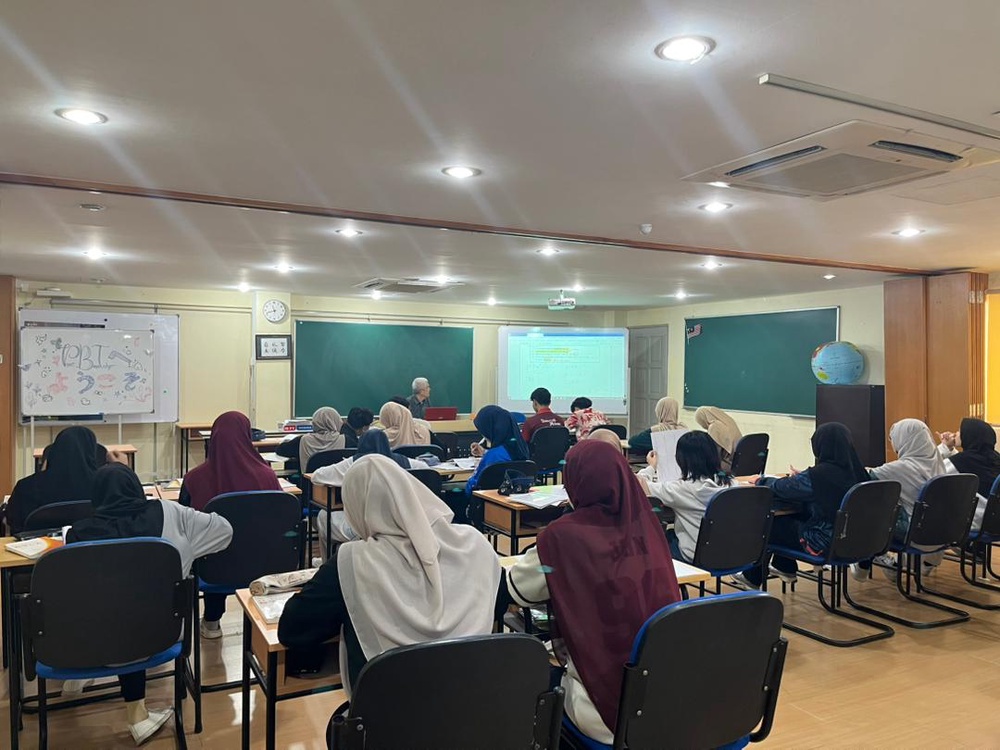
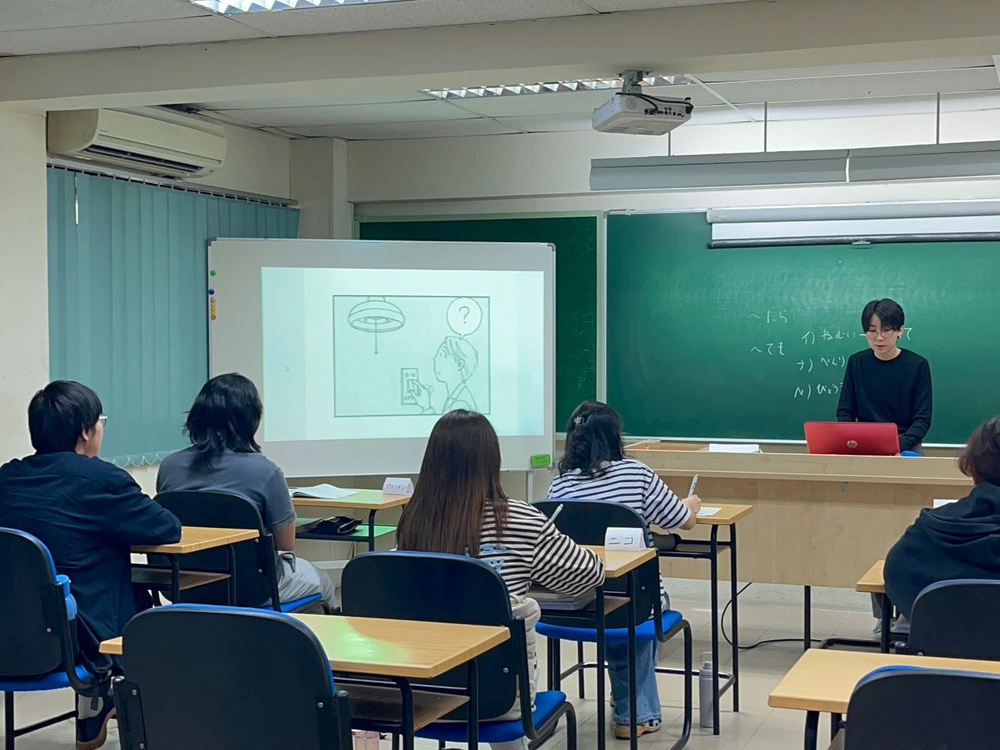
A student explains her answer during class, reflecting the interactive learning environment at the institute. Photo: Migrant Times
For instructors supporting these classes, teaching Japanese can be challenging.
All teachers at the institute are Japanese.
In a mathematics class, a student called on by the teacher stood up and explained to the rest of the class how she interpreted the problem.
Teachers say that helping students understand the material requires careful adjustments in the classroom.
“We have to be creative in how we teach.
“For example, students sometimes add ‘furigana’ to their textbooks to help them read kanji, and we encourage them to work in groups so they can discuss and support each other,” Sagayama added.
All classes are conducted primarily in Japanese.
Some Malaysian Chinese students are already familiar with Chinese characters and can sometimes infer meanings from them.
For most students, however, understanding the language used in Japanese textbooks and academic materials can be extremely challenging.
“I’m a little worried about communicating with Japanese people.
“It’s difficult to know what kind of language to use. I don’t know when to speak politely and when to speak more casually, but I think speaking casually will help me make friends,” Quek Yi Chen, one of the students in the Science Stream, said.
The difficulty becomes even greater in Science Stream classes.
The subjects themselves are equivalent to mathematics, chemistry and physics taught to second- and third-year high school students in Japan.
But teaching these subjects to students who are still learning Japanese requires a very different approach from teaching native Japanese students.
“In the preparatory education course, teachers need a high level of instructional skill.
“Instructors must constantly rephrase concepts in language students can understand, while assessing what they already know and what they do not, and filling in those gaps step by step,” Sagayama said.
Some students begin their journey with an interest in Japanese culture, often inspired by anime, music, or technology.
However, teachers emphasize that this interest must develop into something more substantial in order to succeed at the university level.
This shift is not only academic but also a change in mindset.
Students are expected to move beyond simply enjoying culture and grow into individuals who can engage with society through their expertise.
In other words, passive admiration needs to be transformed into a clear sense of aspiration, and interest into professional intent.
Teachers encourage students to connect their studies with future careers and develop concrete, actionable goals.
In this process, Japan is no longer seen as something distant, but as a place where they will live, work, and become part of society.
Ultimately, the goal is to turn passion into meaningful contributions, supporting students in becoming professionals who can engage both in Japan and beyond.
Beyond language proficiency and subject knowledge, adapting to Japanese society and interpersonal norms is also essential for university success.
The other vice principal, Daigo Sato, notes that building relationships, manners, and appropriate behavior become very important.
While there is no standalone course on Japanese customs, the school intentionally integrates these elements into daily school life so students can absorb them naturally.
At the same time, Sagayama emphasizes the importance of balance.
“Rather than simply forcing students to conform to uniquely Japanese practices like ‘reading the air’ or strict hierarchies, what matters is helping them take initiative in communication and meet others halfway,” she said.
The goal is not merely to make students speak Japanese, but to enable communication that leads to further growth.
As the number of foreign residents in Japan reaches record highs, Japan itself also has opportunities to learn from the diverse people arriving from abroad, a development that could benefit both sides.
“Malaysia and Japan differ greatly in culture. For example, Japan’s approach to manufacturing is distinctive.
“Rather than simply making what one wants to create, there is a strong emphasis on considering the user and ease of use.
”This is something students can naturally learn through living there, reflecting on the value of studying in Japan,” Sato added.
Where Students Go Next
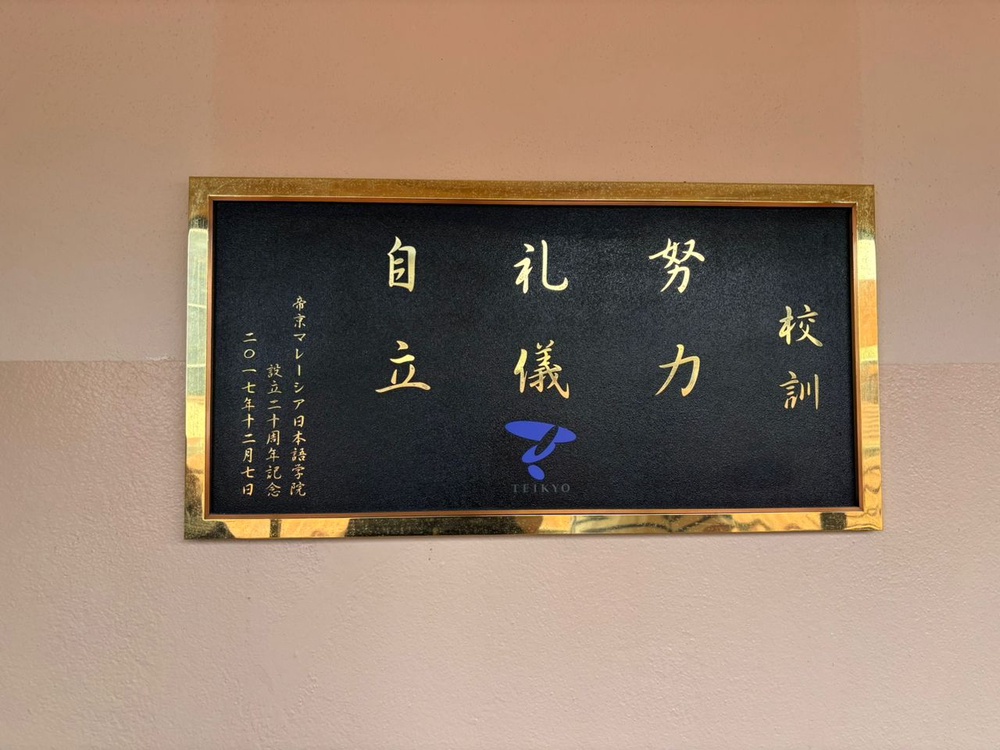
Students who study in Japan are expected to become bridges connecting Malaysia and Japan through knowledge, skills, and cultural understanding. Photo: Migrant Times
According to a JASSO survey, more than 54% of international students hope to find employment in Japan after graduation.
In addition, 44.3% expressed a desire to continue their studies in Japan.
According to Japan’s Immigration Services Agency, 26,795 international students changed their status to work visas in 2022, continuing an upward trend.
Many graduates, particularly from universities and vocational schools, find employment with companies in Tokyo and Osaka, according to the international student career support network.
Sato said the school continues to stay in touch with many alumni.
“Some of them return during summer holidays to speak with their juniors.
“Each of them has something uniquely strong. I believe they will be valued even in Japan. I hope they will shine on the path they choose, ” he said.
For students, studying Japanese and academic subjects, the journey to Japan is more than earning a degree.
It is a chance to gain new skills, perspectives, and experiences that shape their futures. Its philosophy is to cultivate globally minded individuals who can deepen friendship between Japan and Southeast Asia and contribute to peace through international understanding.
They hope to use what they learn abroad not only for their careers but also to benefit their communities by bringing back knowledge, technological expertise, and insights from Japanese work culture.
In doing so, these students can help strengthen ties between Malaysia and Japan and become bridges connecting societies, industries, and cultures.