.jpg)
Kedah: From ‘Made in Kedah’ to ‘Created in Kedah’
By Mihar Dias September 2026
There are some ideas that make you sit up.
And then there are ideas that make you wonder why somebody did not think of them earlier.
“From Made in Kedah to Created in Kedah” is one of them.
The idea, attributed to Kedah Menteri Besar Datuk Seri Muhammad Sanusi Md Nor, is that Kedah should not merely manufacture things for the world but should increasingly create the ideas, technologies and solutions that the world wants.https://www.facebook.com/share/p/1HCyc5VAJD/
That is quite a leap.
For a state better known historically as Malaysia’s rice bowl, the ambition is almost revolutionary.
And I like it.
Not because I am an admirer of politicians — I have been around long enough to know better — but because the idea itself makes sense.
Kedah has spent decades watching its sons and daughters leave.
They went to Kuala Lumpur.
Penang.
Singapore.
London.
New York.
Tokyo.
Melbourne.
California.
And just about everywhere else where somebody was prepared to pay them to think.
Some became engineers. Some doctors. Some academics. Some entrepreneurs. Some consultants. Some scientists. Some became senior executives.
And some, like me, simply became wandering Kedah boys who discovered that the world was rather larger than Alor Setar.
The irony is that many of us have spent our productive lives helping other states, other companies and other countries solve their problems.
Nobody ever asked us what we could do for Kedah.
Perhaps the Kedah Civil Service simply did not know that there are quite a lot of Kedah boys and girls scattered around the world doing reasonably interesting things.
I know.
Because I am one of them.
I was born in Kedah.
I grew up with Kedah in my bloodstream.
I left, studied and worked overseas, spent decades in management consulting, organisational behaviour, education and business development, and have had the privilege of working with thousands of executives and organisations.
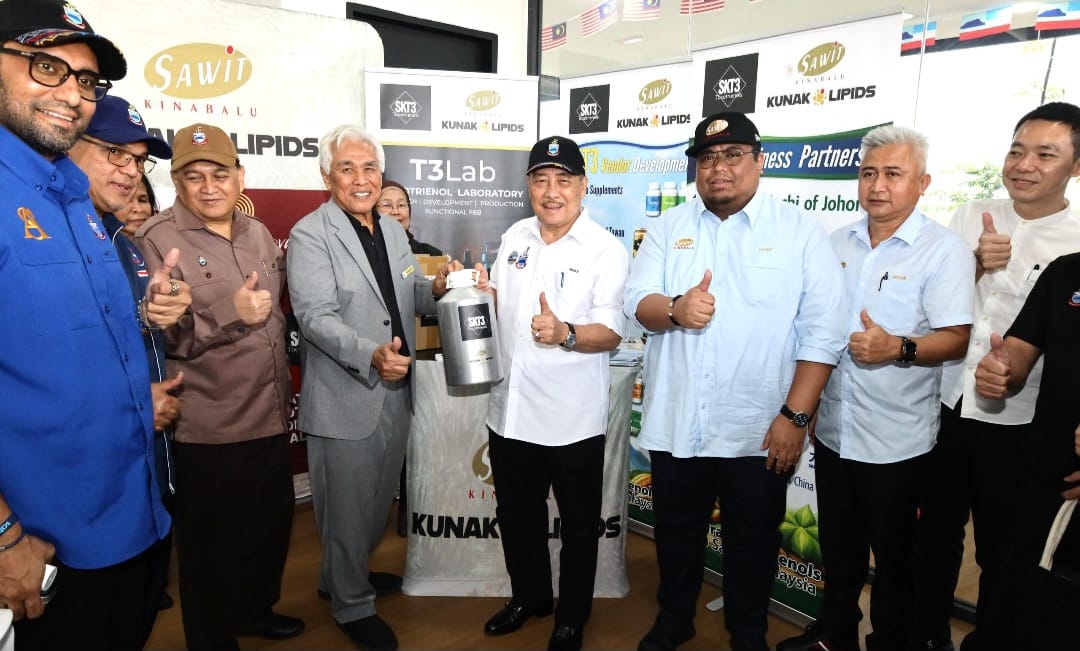
And recently, I have been helping Sabah think about something rather different — how a locally produced agricultural resource, tocotrienols, can become the basis for an ecosystem of products, entrepreneurs and businesses.
Nobody in Sabah had to explain to me why its people should be part of the economic story.
So I began asking a slightly uncomfortable question:
Why not Kedah?
If I can help Sabah, why can't I help my own state?
Perhaps the answer is embarrassingly simple.
Nobody asked.
Kedah's missing asset may be outside Kedah
The Kedah government has already identified human capital as central to its longer-term development ambitions. The state's Kedah 2035 framework talks about economic prosperity, infrastructure, social inclusion, human capital and talent, governance and sustainability.
The state has also been developing initiatives such as Kedah Young Professionals and a TVET roadmap to prepare young Kedahans for higher-value employment arising from new investment.
All sensible.
But there is another pool of talent that deserves attention:
Kedahans who are no longer in Kedah.
They are an invisible diaspora.
They may be in Silicon Valley.
Singapore.
Sydney.
London.
Dubai.
Tokyo.
Bangkok.
Penang.
Kuala Lumpur.
They may own companies, run laboratories, teach at universities, advise corporations, design technology, manage investment funds or simply possess 30 years of experience that nobody in Kedah has thought to tap.
Why wait for them to come home permanently?
Perhaps Kedah doesn't need them to come home.
Perhaps Kedah needs to connect with them.
Imagine a Kedah Global Talent Network.
Not another government committee.
Please.
We already have enough committees to populate a small district.
Instead, create a living network of Kedah-born professionals around the world.
Ask them one simple question:
“What can you create for Kedah?”
Not:
“How much money can you donate?”
Not:
“Can you attend our dinner?”
Not:
“Can you give us a speech?”
But:
“What can you build?”
That changes the conversation completely.
From brain drain to brain circulation
For decades, Malaysians have talked about the brain drain.
Perhaps we should start talking about brain circulation.
A Kedahan engineer in California does not have to return to Kedah to contribute to Kedah.
A Kedahan entrepreneur in Singapore does not have to close his company and move back to Alor Setar.
A Kedahan academic in Australia does not have to resign his university position.
They can mentor.
They can invest.
They can advise.
They can introduce Kedah companies to international markets.
They can help young Kedahans develop businesses.
They can identify technology.
They can open doors.
And occasionally, they might even come home.
That is how Created in Kedah begins.
Not necessarily with a factory.
Sometimes it begins with an email.
And what should Kedah create?
The obvious temptation is to think only about technology.
Artificial intelligence.
Semiconductors.
Robotics.
Data centres.
Biotechnology.
All important.
But Kedah has something many technology states don't have:
a living laboratory called agriculture.
If Kedah is going to remain the Jelapang Padi while becoming more technologically sophisticated, then why not make the paddy fields themselves laboratories for innovation?
Smart irrigation.
Precision agriculture.
Climate-resilient crops.
Water management.
Farm robotics.
AI-assisted farming.
Agricultural drones.
Post-harvest technology.
Food processing.
New rice products.
Agri-tourism.
Farmer-owned brands.
And, most importantly, business models that allow farmers to capture more of the value they create.
The rice farmer should not always remain at the bottom of the value chain while somebody else becomes rich selling the packaged version of what he produced.
That is where Created in Kedah becomes more than a slogan.
It becomes an economic philosophy.
I have seen what can happen
This is why I am making an unusual offer.
I am willing to help.
Not because I am looking for a position.
Not because I need a government appointment.
And certainly not because I expect a plaque.
I have enough plaques to remind me that civilisation has survived without another one.
I am offering what I know.
I have spent decades working with organisations, executives, entrepreneurs and institutions. I have helped businesses develop people, strategies, markets and ideas.
I have recently been applying some of that experience in Sabah.
So I ask:
Why not Kedah?
Why should Sabah get the benefit of a Kedahan's experience while Kedah politely watches from the sidelines?
Perhaps because Sabah asked.
Perhaps Kedah simply hasn't.
So, consider this my application.
No form required.
No tender.
No committee.
Just a Kedahan saying:
“If you are serious about moving from Made in Kedah to Created in Kedah, I would like to help.”
And perhaps there are hundreds of other Kedahans around the world who would say exactly the same thing.
The government doesn't have to know all of them.
It simply has to create the mechanism to find them.
The world's oldest problem with new ideas
There is one danger, of course.
Every government loves the word “innovation”.
Until somebody actually innovates.
Then the paperwork begins.
The committee wants a proposal.
The proposal requires a meeting.
The meeting produces a working group.
The working group requests another meeting.
And eventually the innovative idea dies peacefully of administrative exhaustion.
Kedah cannot afford that.
If Created in Kedah is to mean anything, the state must make it easy for people to experiment.
Let young people fail.
Let entrepreneurs try.
Let farmers experiment.
Let universities commercialise ideas.
Let Kedahans abroad connect with Kedahans at home.
Let private enterprise do things government cannot do.
And when something works, scale it.
The objective should not be to create another government programme.
It should be to create an ecosystem of people creating things.
That is a very different proposition.
The Kedah I remember — and the Kedah I would like to see
I still remember the Kedah of my youth.
The paddy fields.
The bicycles.
The slow roads.
Pekan Rabu.
Alor Setar.
The enormous blue sky over the sawah.
A place where life moved at a pace that Kuala Lumpur would now consider medically suspicious.
But nostalgia is not a development strategy.
Kedah cannot live forever on memories of what it was.
Nor should it have to.
The challenge is to take everything that makes Kedah Kedah — agriculture, history, location, people, culture, universities, industry — and add something it has never had enough of:
the confidence to create.
The ambition should not simply be:
“Come and invest in Kedah.”
It should also be:
“Come and see what Kedah has created.”
That is a much more powerful sentence.
And somewhere out there, scattered across the world, are thousands of Kedah-born people waiting to hear it.
Somebody just has to call.
Preferably before they forget their Kedah dialect.
As for me, I am ready.
I helped Sabah.
Why not my own Kedah?
After all, if Kedah is going from Made in Kedah to Created in Kedah, perhaps it is time for some of its long-lost sons and daughters to come out of hiding.
We are here.
We were just never asked.
Mihar Dias (mihardias@gmail.com) is a content creator under the Newswav Creator programme, where you get to express yourself, be a citizen journalist, and at the same time monetize your content & reach millions of users on Newswav. Log in to creator.newswav.com and become a Newswav Creator now!
The User Content (as defined on Newswav Terms of Use) above including the views expressed and media (pictures, videos, citations etc) were submitted & posted by the author. Newswav is solely an aggregation platform that hosts the User Content. If you have any questions about the content, copyright or other issues of the work, please contact creator@newswav.com.