

The recent leak of purported Judicial Appointments Commission (JAC) meeting minutes in Malaysia has ignited a fierce debate, raising serious concerns about the integrity of judicial appointments and, more broadly, the doctrine of separation of powers. This incident, regardless of the authenticity of the leaked documents, highlights deep-seated anxieties about executive influence over the judiciary, a problem that critics argue has historical roots and appears to be continuing under the current administration.
The Detrimental Impact on Separation of Powers
The doctrine of separation of powers, a cornerstone of democratic governance, dictates that the legislative, executive, and judicial branches of government should operate independently to provide checks and balances against potential abuses of power. The JAC was established precisely to safeguard judicial independence by making recommendations for judicial appointments based on merit, free from political interference.
If the leaked minutes are indeed legitimate, and if they suggest external pressure or manipulation in the appointment process, it strikes at the very heart of this doctrine. It implies that decisions meant to be the purview of an independent commission are being influenced by the executive, thereby blurring the lines between the branches of government. This not only erodes public confidence in the judiciary's impartiality but also weakens its ability to act as a truly independent arbiter of justice, holding the executive and legislature accountable.
When judicial appointments are perceived as political appointments, the legitimacy of court decisions is inevitably called into question, leading to a crisis of trust in the entire legal system.
The Rot Starts with Tommy Thomas and Mahathir
The current controversy resonates with past allegations of executive overreach in judicial appointments. The Royal Commission of Inquiry (RCI) on former Attorney-General Tommy Thomas's book reportedly revealed instances where the Judicial Appointments Commission Act 2009 was allegedly bypassed during the tenure of Tommy Thomas and then-Prime Minister Tun Dr. Mahathir Mohamad.
The RCI's findings indicated that appointments in 2018 and 2019, including those for Chief Justice and President of the Court of Appeal, deviated from the JAC's recommendations, with alternative candidates being appointed based on the recommendations of the Prime Minister and Attorney-General. This alleged disregard for the JAC's due process set a dangerous precedent, suggesting that political expediency could trump the established mechanism designed to ensure a meritocratic and independent judiciary. This period, therefore, is often cited as a starting point for the "rot" or erosion of proper protocols in judicial appointments.
Anwar Ibrahim Following the Path?
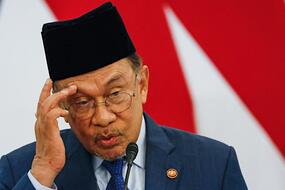
Now, concerns are being voiced that Prime Minister Anwar Ibrahim's administration might be treading a similar path. While Anwar has publicly denied interfering in judicial rulings and stressed the importance of respecting the appointment process, the timing of the leaked JAC minutes and the ongoing delays in filling top judicial positions have fueled speculation and criticism. The Malaysian Bar and several opposition figures have called for a Royal Commission of Inquiry, drawing parallels to past judicial scandals.
The argument is that if the executive, regardless of who is in power, continues to exert undue influence or disregard the JAC's recommendations, it perpetuates a cycle of undermining judicial independence. The perception, real or imagined, that political considerations play a role in judicial appointments can be just as damaging as actual interference. It creates an environment where the judiciary's integrity is constantly under scrutiny, making it harder for the public to believe in a truly impartial justice system.
Did Ramkarpal Quit Because of This?
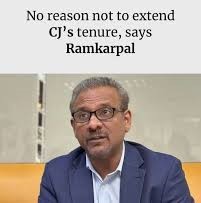
In light of these developments, the recent resignation of Ramkarpal Singh as Deputy Minister in the Prime Minister's Department (Law and Institutional Reforms) naturally prompts a question: Did Ramkarpal Singh's resignation as deputy law minister have any connection to these concerns about judicial appointments and the alleged executive interference?
While official statements attributed his resignation to a desire to dispel claims of nepotism following his brother's appointment as a full minister, the timing of his departure and his known advocacy for judicial independence lead some to ponder if the growing controversy surrounding judicial appointments played a role in his decision. Ramkarpal Singh has previously expressed concerns about judicial matters, including urging extensions for judges to uphold institutional stability. It remains a pertinent question whether the pressures and alleged irregularities within the judicial appointment process contributed to his choice to step down.
Yukiepedia (yukiepedia@gmail.com) is a content creator under the Newswav Creator programme, where you get to express yourself, be a citizen journalist, and at the same time monetize your content & reach millions of users on Newswav. Log in to creator.newswav.com and become a Newswav Creator now!
The User Content (as defined on Newswav Terms of Use) above including the views expressed and media (pictures, videos, citations etc) were submitted & posted by the author. Newswav is solely an aggregation platform that hosts the User Content. If you have any questions about the content, copyright or other issues of the work, please contact creator@newswav.com.
