
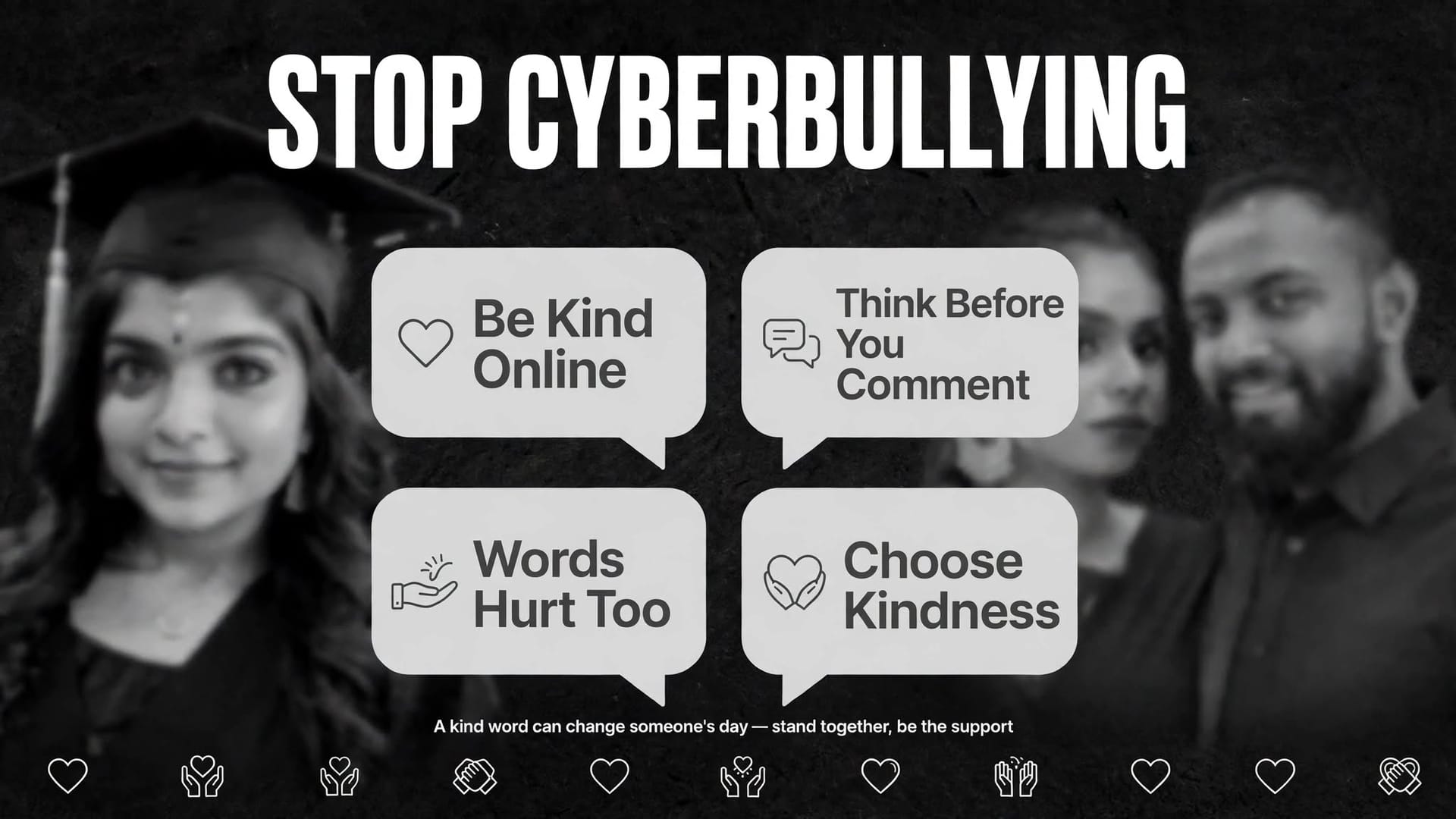
There was a time when personal tragedies were mostly born inside private, physical walls a broken heart, a fractured family, or quiet financial strain played out among a small circle of people who actually knew one another. Today, the internet has erased the boundary between private life and a 24-hour public stadium. An ordinary dispute over a skincare cream or a wedding photography deposit no longer stays between buyer and seller; within hours, it becomes viral entertainment judged by thousands of strangers who have no stake in the outcome.
Yes, the internet has empowered small entrepreneurs and given everyday citizens a voice. Yet when unverified commerce,consumer complaints, and cyberbullying collide in a virtual arena, a disturbing reality emerges: social media platforms continue to grow larger and richer from the very ecosystem that leaves ordinary end users financially ruined or emotionally destroyed.
Look first at the verified, heartbreaking case of Rajeswary Appahu, known online as Esha. She did not set out to provoke an internet war. As an everyday consumer who suffered skin damage from a substandard cosmetic product, she tried to complain privately only to be ignored and blocked by the seller. Left with no redress, she used her own social media platform to warn other buyers. Instead of swift regulatory intervention to pull a dangerous product off the market, she was met with coordinated cyberbullying, doxxing, and violent threats. Even after lodging a police report on July 4, 2024,protection did not reach her in time; she passed away the next day.
Public outrage over that failure and over an initial court penalty that amounted to a mere RM100 fine under outdated legislation forced Malaysia to enact Penal Code reforms introducing dedicated cyberbullying clauses (Sections 507B to 507G).
Yet passing a law on paper does not automatically fix a broken digital marketplace. That reality is visible again in the recent social media storm surrounding Phoenix Pixel Photography and the viral rumors involving Yohan and Rajeswary.
Here, the spark began from the opposite direction: frustrated clients took to Threads and TikTok alleging unfulfilled wedding photography services and payment disputes. With no rapid, accessible mechanism to resolve commercial grievances, the comment sections turned into an instant courtroom. Soon after, condolence graphics and unconfirmed rumors of a tragic murder-suicide discovered days later began sweeping across social media, even as official confirmation from the authorities remained conspicuously absent.
We must remain disciplined enough not to treat viral rumors as established fact until police confirm what happened. But we cannot ignore the wider economic trap fueling these explosions across Malaysia: the dangerous gap between protected e-commerce marketplaces and direct social media transactions.
When Malaysians shop on established platforms like Shopee or Lazada, both buyer and seller operate under an escrow safety net. Payment is held securely until the item arrives as promised. If a product is defective, the buyer has an official dispute button; if a customer makes false claims, the seller has documented tracking proof. Neither side has to beg in an inbox or wage war in a comment box just to recover their money.
Small social media businesses and freelance service providers operate in a completely different reality. Relying on TikTok reels, curated Instagram grids, and boosted promotional videos, sellers persuade customers to transfer deposits directly into personal or company bank accounts via DuitNow or online banking. Once that transfer clears, there is zero payment protection.
Too often, the glossy artwork and persuasive videos do not match the final delivery. When a buyer receives a harmful product or is left stranded without the service they paid for, they become the first victim. When the seller ignores messages or hits the "block" button, the desperate buyer turns to public posts to warn others. And on the flip side, when a small operator lacking financial buffers, legal guidance, or crisis management suddenly faces a viral public manhunt of thousands of angry commenters, some go silent, vanish, or collapse silently under unbearable shame and isolation.
Behind both tragedies sits the deepest contradiction of the modern internet: the platforms hosting these interactions profit at every stage while the end user absorbs all the risk. Social media corporations collect advertising revenue from unverified sellers running flashy promotions, and when deals collapse into exposés, comment wars, and live-streamed attacks, those same algorithms monetize the resulting outrage through higher traffic and screen time. For years, giants like Meta defended themselves against thousands of lawsuits in the United States by arguing that platforms are merely neutral tools and that "the user makes the final decision." That excuse is finally crumbling in American courtrooms, where juries and settlements have begun holding companies accountable for designs that amplify conflict and trap users in relentless psychological loops.
In Malaysia, while the Online Safety Act 2025 has come into force to impose statutory duties on major platforms with formal safety plans due by the end of 2026 authorities themselves acknowledge that fake and unverified accounts remain an unresolved loophole. Combined with physical-era policing, where complaints sit in overflowing queues for weeks, victims are still left defenseless against virtual-speed destruction that ruins a livelihood or breaks a human spirit in 48 hours.
This hits especially hard in communities where fear of public disgrace, financial strain, and silence around mental health already run deep. For decades, Malaysian public health data has shown how acutely interpersonal heartbreak, family pressure, and economic hardship weigh on vulnerable individuals particularly within the Malaysian Indian community, where preserving dignity and family reputation carries immense social expectation. When that traditional fear of shame collides with modern viral exposure, a personal setback or business failure stops feeling temporary; on a public screen where hundreds of familiar faces are watching and commenting, it feels like permanent ruin. Worse still, deep-rooted stigma around emotional distress keeps too many people from speaking up or asking for help until the pressure becomes unbearable.
If we want to stop online disputes from turning into human tragedies, everyone in our digital society has a role to play:
- Buyers Must Look Past Glossy Marketing: Do not let follower counts, aesthetic Instagram pages, or viral TikTok videos replace basic caution. Verify SSM registration, insist on written agreements for services like wedding packages, avoid paying 100% upfront via direct bank transfer, and use protected escrow platforms whenever possible.
- Small Sellers Must Choose Transparency Over Silence: Blocking an unhappy customer or deleting critical comments is like pouring petrol on a fire. Honest communication, clear refund terms, and legitimate business registration protect not just your customers, but your own livelihood and mental well-being.
- Communities Must Break the Stigma Around Shame and Mental Health: A financial loss, a failed venture, or a public mistake is not the end of a human life. Families and friends must replace judgment with open conversation,reminding those under fire that seeking counseling or admitting struggle is a sign of strength never disgrace.
- Platforms and Authorities Must Match Digital Speed: Social media companies must be held financially accountable when unverified commercial accounts and coordinated harassment raids thrive on their networks, while regulators and police must treat severe online threats and viral commercial crises as urgent priorities issuing swift protection and timely public clarifications before rumor mills spiral out of control.
- Society Must Refuse to Become a Mob: Supporting a wronged consumer does not justify turning a business dispute into a bloodsport or circulating unverified death graphics before authorities confirm the truth.
Esha’s passing gave Malaysia stronger legal clauses. Now, our institutions, platforms, communities, buyers, and sellers must prove we value human lives more than viral clicks before the comment section becomes someone's final verdict.
If you or someone you know is struggling or in emotional distress, confidential support is available 24/7 in Malaysia via Talian Kasih at 15999 or Befrienders KL at 03-7627 2929.
A thought to carry forward: Tech giants should never grow richer while ordinary users grow more defenseless a polished video is not a guarantee, a comment section is not a courtroom, and public shame should never cost a human life. - Annan Vaithegi
Annan Vaithegi (annanvaithegi@icloud.com) is a content creator under the Newswav Creator programme, where you get to express yourself, be a citizen journalist, and at the same time monetize your content & reach millions of users on Newswav. Log in to creator.newswav.com and become a Newswav Creator now!
The User Content (as defined on Newswav Terms of Use) above including the views expressed and media (pictures, videos, citations etc) were submitted & posted by the author. Newswav is solely an aggregation platform that hosts the User Content. If you have any questions about the content, copyright or other issues of the work, please contact creator@newswav.com.