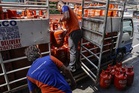
THE government’s proposed suspension of excise taxes on liquefied petroleum gas (LPG) and kerosene is nearing the approval stage, with Finance Secretary Frederick Go saying the measure could reach the Office of the President within two days.
“I believe it will pass because before it goes to the DBCC (Development Budget Coordination Committee) members, it first goes through the Technical Working Committee, and the Technical Working Committee has already endorsed it as well,” Go told reporters at the sidelines of a budget hearing on Tuesday.Go said he had already signed the measure and expressed confidence that it would move forward in the next days.“I believe it should be with OP (Office of the President) in the next day or two,” he said. “By next week, it should be out already.”President Ferdinand Marcos Jr., through Executive Order (EO) 114, temporarily suspended excise taxes on specific petroleum products for three months to cushion the impact of elevated global oil prices on consumers and businesses.This move cut LPG costs by P3.36 per kilogram and kerosene by P5.60 per liter.This was lifted on July 8 after the Bureau of Internal Revenue said the Department of Energy had certified that the one-month Dubai average had fallen to $79.45 per barrel, below the $80-per-barrel threshold set under EO 114.Hence, the excise tax rates on kerosene and LPG automatically reverted to those prescribed under Section 148 of the National Internal Revenue Code of 1997.However, global crude oil prices have risen again, prompting Go to push for tax relief on LPG and kerosene after benchmark crude prices breached $80 per barrel.Go said the suspension would cover three months again, which would most probably extend until the end of the year.The Finance chief acknowledged that the measure would again affect revenue collection of the government. However, he stressed that the main objective of the measure was to help ease the burden of high global oil prices on vulnerable sectors.“We need to help the people first and foremost,” Go added.The government previously lost around P2.5-billion revenue over a three-month period.Go said LPG and kerosene were chosen because these fuel products are used by some of the most vulnerable households.“I think the most important thing, first and foremost, is to help ease the burden of high global oil prices on the most vulnerable sectors,” he said.