Lower fuel costs no cure-all for Malaysia’s cost-of-living squeeze
PETALING JAYA: For Malaysians already juggling groceries, rent, healthcare and other essentials, a little extra breathing room at the pump may be welcome, but consumer advocates say relief could easily be swallowed up by the broader rising cost of living.
Federation of Malaysian Consumers Associations (Fomca) CEO Dr Saravanan Thambirajah said the government’s six measures announced by Prime Minister Datuk Seri Anwar Ibrahim are a welcome source of immediate relief, particularly for households that depend heavily on private vehicles.
However, he said consumers should not mistake short-term assistance for a complete solution to the cost-of-living problem.
“Consumers today are not facing pressure from one expenditure alone,” he noted.
“Food, housing, transport, utilities, healthcare, education and other daily expenses have all become significant household commitments.”
He said this means that the impact of fuel assistance would vary considerably between households.
He cited workers who travel between 60km and 80km daily, saying their fuel requirements could be substantially higher than those of consumers who live and work within the same town.
Saravanan emphasised that while the government’s data may indicate that most motorists use less than 200 litres a month, such averages could mask the different circumstances faced by individual households.
“The focus therefore cannot only be on the price of fuel. We need to look at the total monthly expenditure of households and how much disposable income remains after paying for basic necessities.”
He said a household might save RM20 or RM50 through lower fuel expenses, only to see the benefit absorbed by higher grocery bills, rent, healthcare costs, school expenses or other necessities.
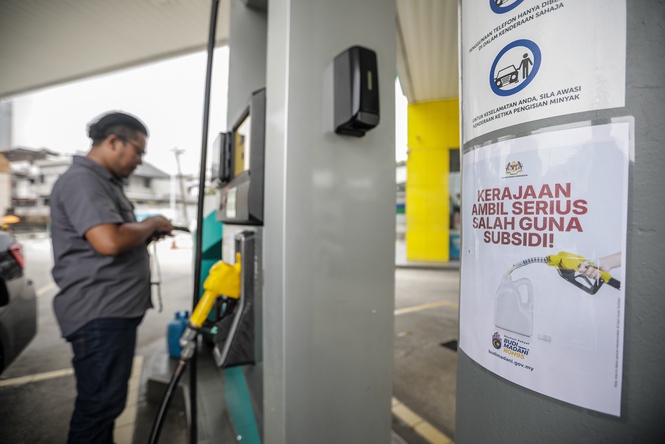
The government announced the restoration of the Budi95 monthly eligibility from 200 litres to 300 litres as part of six immediate measures aimed at easing pressures related to the cost of living.
Other measures include an additional RM1 billion in microfinancing, a RM200 million Geran Sejahtera Madani for small traders and home-based businesses, RM1 billion for public healthcare digitalisation, free AI application subscriptions for 100,000 youths and a higher e-Invoice exemption threshold.
He highlighted that Fomca welcomed the package but stressed that longer-term policy should focus on strengthening household purchasing power and improving the affordability of essential goods and services.
“One of the biggest issues is the gap between income and the actual cost of maintaining a reasonable standard of living.”
He also said stronger wage growth needs to be accompanied by productivity improvements, while measures are also needed to address food affordability, housing, public transport, healthcare, childcare and education costs.
Saravanan called for continued enforcement against profiteering and unjustified price increases, particularly when changes to subsidies, taxes, wages or tariffs are introduced.
“Whenever there are changes involving subsidies, taxes, wages, electricity tariffs or other government policies, there is always a concern that some businesses may use these changes as an excuse to increase prices.”
Looking ahead to Budget 2027, he said the government should assess the financial wellbeing of households more holistically rather than measuring success simply by the amount of assistance given.
“The real measure should be whether Malaysians have stronger purchasing power, whether essential expenses take up a smaller proportion of household income, and whether families have enough left each month to save and build some financial security.