
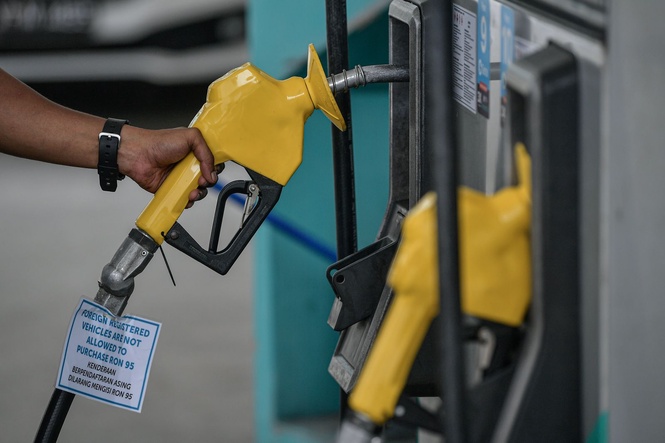
SHAH ALAM, May 11 - Scaling back fuel subsidies for high-income earners is a necessary measure to ease fiscal pressure on the government and ensure that assistance is more effectively targeted towards middle- and lower-income households.
Bank Muamalat Malaysia Bhd chief economist Mohd Afzanizam Abdul Rashid said rising global oil prices, driven by the ongoing West Asia conflict, have pushed Malaysia’s fuel subsidy bill sharply higher.
"The government is facing increasing fiscal pressure as subsidy costs continue to climb in tandem with higher oil prices. It has limited financial resources to continue bearing such high expenses indefinitely,” he told Media Selangor.
He was responding to Economy Minister Akmal Nasrullah Mohd Nasir’s comment that Putrajaya is mulling to reduce fuel subsidies for higher-income individuals as early as next month as it grapples with rising costs driven by volatile global oil prices.
Akmal told CNA in an interview that the shift towards more targeted support follows a sharp rise in the government’s monthly subsidy bill, which surged to RM6 billion in April from RM700 million before the conflict in Iran started.
He said the government intends to narrow subsidy coverage, allowing wealthier Malaysians to absorb higher fuel costs, a move Afzanizam said is time and appropriate.
“Fundamentally, fuel subsidies are meant for the middle and lower-income groups, not high-income earners. However, Malaysia’s current subsidy structure remains broad-based, meaning even wealthy individuals benefit from subsidised fuel prices,” the economist said.
Afzanizam added that studies by international institutions such as the World Bank and the International Monetary Fund (IMF) have consistently shown that fuel subsidies tend to benefit higher-income groups more because they typically own larger vehicles with higher fuel consumption.
"Restructuring the subsidy system would allow the government to redirect savings towards protecting the welfare of the M40 and B40 groups, while maintaining subsidised fuel prices for eligible households.
“At the same time, the government must implement reforms gradually to avoid causing shocks to the economy,” he said.
On the broader economic outlook, Afzanizam said prolonged geopolitical tensions in West Asia could continue weighing on global and domestic economic growth.
"Malaysia, as an open economy heavily dependent on international trade and investment, remains vulnerable to external developments.
“We are now in a very cautious mode when assessing the future economic outlook because whatever happens globally will have a direct impact on Malaysia,” he said.
Regional tensions have escalated since the US and Israel launched strikes against Iran on February 28, triggering retaliation from Tehran.
The resulting instability and disruptions in the Strait of Hormuz, which is one of the world’s key oil transit routes, have disrupted global crude supply flows, pushing up international oil prices and contributing to higher fuel and energy costs worldwide.