In a recent development, the Group of Seven (G7) industrial powers issued a resounding call for the "immediate repeal" of import restrictions on Japanese food products. While the statement did not explicitly mention China, it was a clear reference to China's recent restrictions, which were imposed in response to Japan's decision to release wastewater from the Fukushima nuclear power plant into the Pacific.
The G7 trade ministers, hailing from the United States, Japan, Germany, Britain, France, Italy, and Canada, convened in Osaka for a weekend meeting to address these pressing trade issues. The G7's statement expressed deep concerns about what they perceive as China's growing economic coercion through trade practices. The statement emphasized the commitment to nurturing free, fair, and mutually beneficial economic and trade relationships.
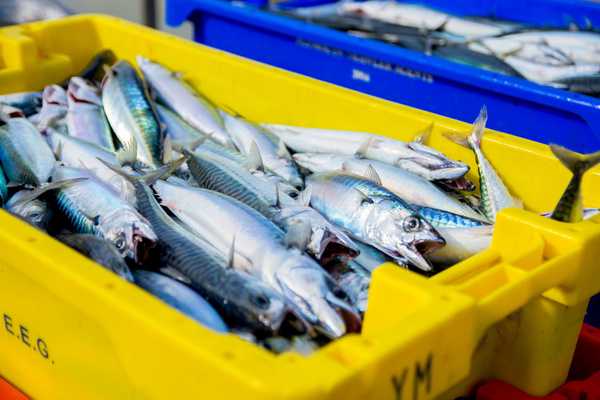
At the heart of this trade dispute lies the blanket suspension of Japanese fish imports imposed by China two months ago. This suspension was triggered by Japan's controversial decision to release treated radioactive water from the damaged Fukushima plant into the Pacific Ocean. Japan, with support from the United States, has argued that these restrictions are unfair and not based on scientific evidence. Additionally, Russia followed suit by imposing a similar restriction on Japanese fish imports earlier this month, further escalating the situation.
China's foreign ministry, as of the time of this statement, had not responded to the G7's call for an immediate repeal of import curbs, leaving the issue unresolved and the possibility of further negotiations uncertain.
The G7 trade ministers went beyond addressing the specific issue of import curbs and also expressed "concern" about recent control measures pertaining to the export of critical minerals. China, the world's largest producer of graphite, recently announced export restrictions on this essential material, which is widely used in electric vehicle batteries. China's actions are seen as an attempt to further assert control over the supply of critical minerals, thus consolidating its global manufacturing dominance.
Yasutoshi Nishimura, Japan's trade minister and the host of the G7 meeting, stressed the importance of reducing dependence on a single country for the supply of critical resources. He emphasized the need for building resilient and reliable supply chains for critical minerals, semiconductors, and batteries. This signals a broader strategy to diversify supply sources and reduce vulnerabilities in the face of international tensions.
The G7 trade ministers also reaffirmed their concerns regarding what they termed "a wide and evolving range of non-market policies." These concerns encompass various issues, including opaque and trade-distortive industrial subsidies and forced technology transfer. Such practices are seen as detrimental to the principles of fair and open trade and have been a source of international tension in recent years.
Furthermore, the G7 ministers addressed the ongoing crisis involving Russia and Ukraine. They condemned Russia's actions, including the destruction of Ukrainian grain export infrastructure during its invasion of Ukraine. Additionally, the G7 criticized Moscow's decision to "unilaterally" withdraw from talks on an agreement that had previously allowed Ukraine to export wheat and other products through the Black Sea.
Notably, the G7 trade ministers refrained from addressing the Middle East crisis, particularly the conflict between Israel and Hamas. Instead, they focused on the challenges of moving humanitarian goods across international borders during natural disasters and emergencies. This shift in focus reflects the complexity of international dynamics and differing perspectives on the Middle East situation.
The G7's call for the immediate repeal of import curbs on Japanese food products, though not explicitly directed at China, represents a significant move in addressing ongoing trade disputes and rising economic tensions. The emphasis on building resilient supply chains for critical resources and addressing non-market policies underscores the commitment of these industrial powers to fair and open global trade. The situation remains fluid, with the response of China and other key players yet to be determined, leaving room for further diplomatic efforts and negotiations to resolve these trade issues.
Reference: G7 calls for immediate repeal of bans on Japanese food, pressing China | Malay Mail
Ronny M is a content creator under the Newswav Creator programme, where you get to express yourself, be a citizen journalist, and at the same time monetize your content & reach millions of users on Newswav. Log in to creator.newswav.com and become a Newswav Creator now!
The User Content (as defined on Newswav Terms of Use) above including the views expressed and media (pictures, videos, citations etc) were submitted & posted by the author. Newswav is solely an aggregation platform that hosts the User Content. If you have any questions about the content, copyright or other issues of the work, please contact Newswav.