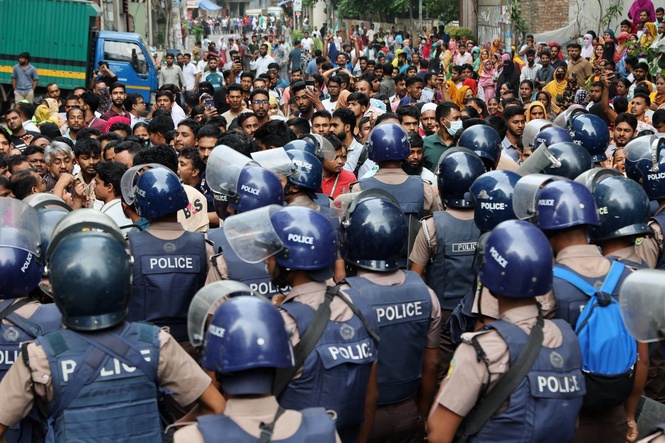
A young garment factory worker died after being grievously injured while attempting to record videos of violence during protests in Bangladesh.
Toufiq Sheikh, 21, succumbed to his injuries while undergoing treatment at Shin-Shin Japan hospital in Dhaka on Tuesday.
The local police said Sheikh was attacked in Gazipur city, 25km north of the Bangladeshi capital, while recording vandalism by alleged protesters during the demonstration.
There were no police personnel present at the scene during the incident, said Mohammad Belayet Hossain, additional commissioner of Gazipur metropolitan police.
Sheikh used to live in a rented house in Gazipur and had worked at a garment factory for five years.
Police said workers were protesting in front of a factory when a group allegedly tried to vandalise the factory premises. When Sheikh reportedly tried to record the attack on his mobile phone, he was beaten up and left grievously injured.
He was rescued by fellow workers who rushed him to Shin-Shin hospital in Dhaka, Prothom Alo reported.
More than 50 garment factories in Gazipur have shut operations temporarily amid the workers' protest demanding wage hikes.
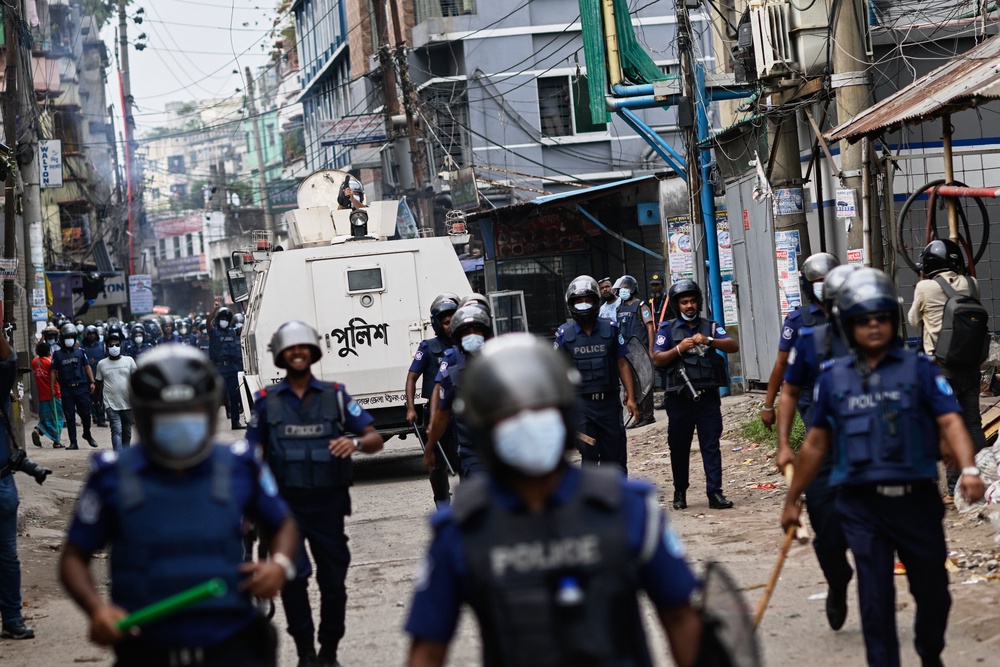
The Bangladesh government deployed paramilitary forces on the streets of the industrial suburbs near Dhaka as protests over minimum wage hike entered its fifth day on Wednesday.
Protesters were still on the streets on despite the government's announcement of a board to review the minimum wage in the industry that employs millions of Bangladeshis, mostly women, and generates the bulk of the country's export earnings.
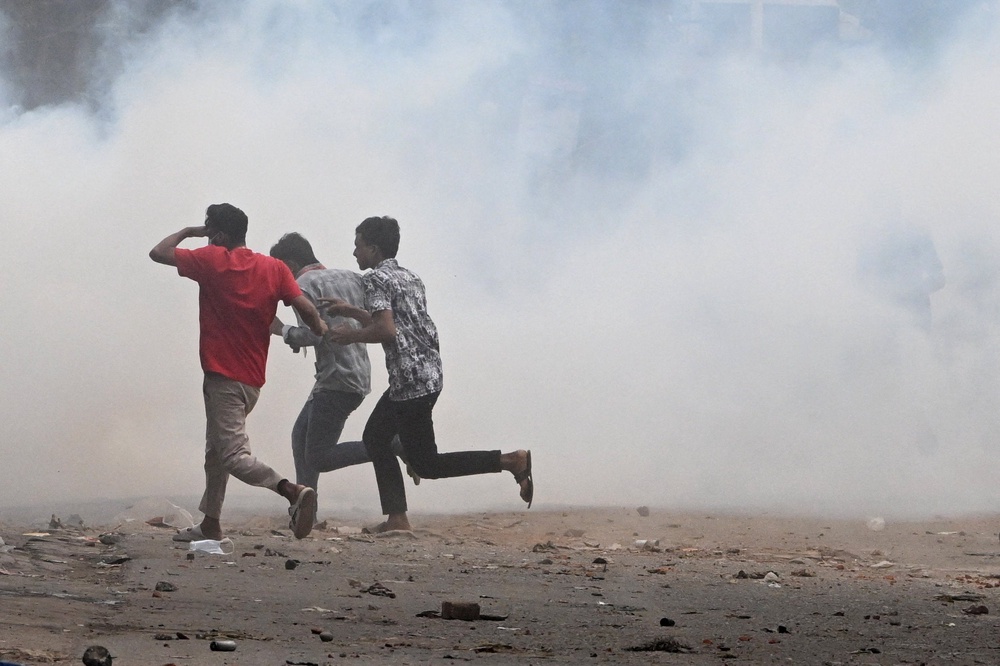
Police fired tear gas and sound grenades to disperse garment workers in the Narayanganj area on Wednesday morning, the Daily Star reported.
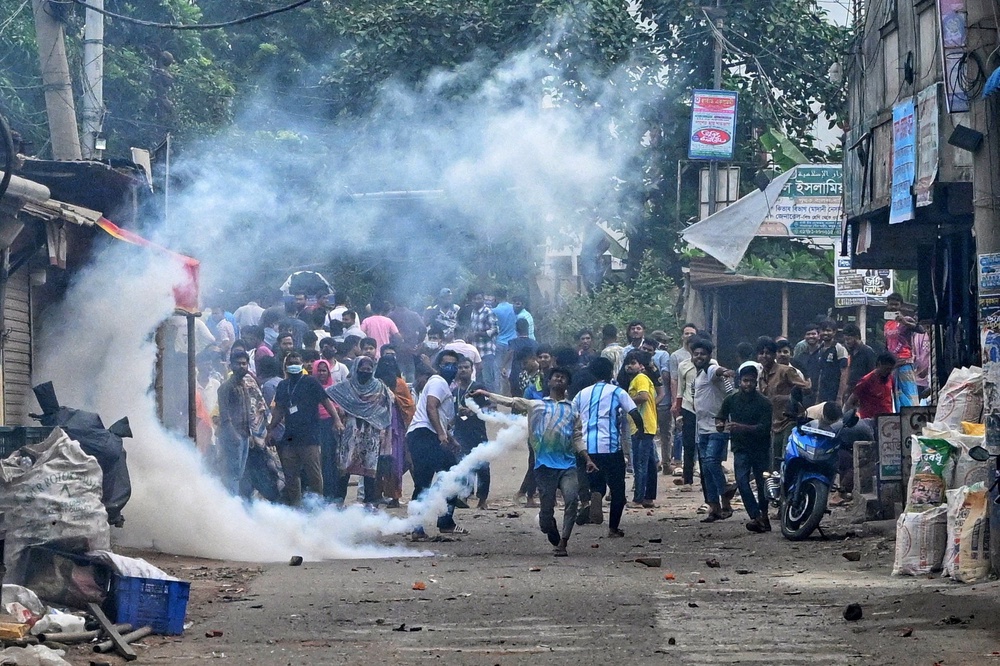
Clashes broke out between workers and police in Savar and Gazipur, two major garment hubs on the outskirts of Dhaka. Demonstrators blocked roads and highways, while police used tear gas and sound grenades.
Meanwhile, Bangladesh's newly formed wage board agreed on Wednesday to implement a revised pay structure for garment workers from December, as protests over wages entered their fifth day and disrupted production in the country's key apparel sector.
The board did not discuss the size of any wage increase and will hold further meetings to determine the new pay structure, Babul Akter, the workers' representative on the board, said after its first meeting.
"The new wage structure will be implemented from December, and workers will receive their first salaries under the revised pay scale in January," Mr Akter said. The six-member board was formed this week amid growing labour unrest and includes representatives of workers and factory owners. It is responsible for reviewing pay in Bangladesh's garment industry.
The workers have demanded a minimum monthly wage of 30,000 taka or $245, more than twice the current minimum of 12,500 taka ($101). Workers from at least 670 factories walked out on Monday, the industry representatives said.
Police on Monday and Tuesday had also resorted to tear gas to disperse demonstrators and a few factories have also reportedly been vandalised.
"Some factories are closed and workers have taken to the streets," home minister Salahuddin Ahmed, said on Tuesday. "Some miscreants are trying to incite violence and make the situation more complicated."
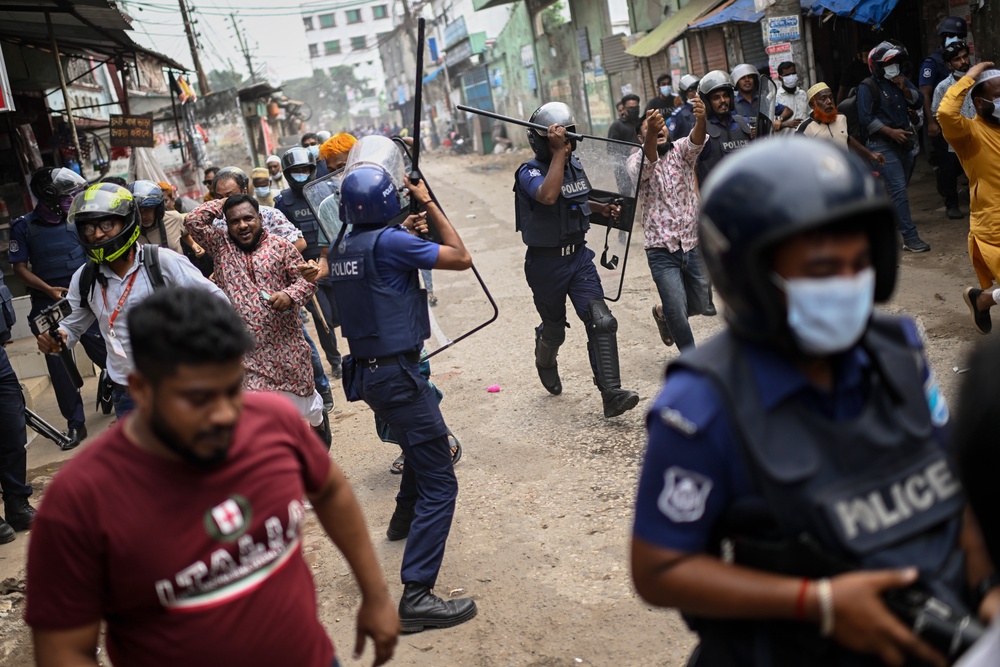
Clashes were reported across industrial belts around Dhaka, including Ashulia, Gazipur and the capital's Mirpur area, as workers staged fresh demonstrations and attempted to block major highways.
Bangladesh's garment sector, the world's second-largest apparel exporter after China, is worth about $40bn and contributes about 10 per cent of the country’s GDP.
The industry employs about four million workers, supplies global brands such as H&M, Zara and Gap, and accounts for more than 80 per cent of the country's export earnings.
Despite the contributions to the economy, Bangladesh offers one of the world’s lowest wages, compared to Vietnam, China and Cambodia.
The workers say their current earnings have become insufficient to cover everyday expenses, including food, rent, cooking gas and electricity, as inflation continues to put pressure on household budgets.
"Every month is a struggle," said Bithi Begum, a garment worker. "After working hard all day, the money we earn is hardly enough to cover even our basic needs."
The last pay increase in Bangladesh was in 2023, when wages went up by more than 56 per cent following a nationwide protest during then prime minister Sheikh Hasina's tenure.
H&M told Reuters some factories had temporarily closed, although it had not experienced major supply-chain disruptions.
Manufacturers said the industry was already under pressure from rising costs, stronger regional competition, uncertainty in energy markets linked to conflict in the Middle East and weaker demand in key export markets.
Read MoreBangladesh’s garment industry is being rocked by protests. Here’s what it means
Questions grow after Saudi Arabia executes Bangladeshis for ‘immoral act’ in mosque
Climber to make rare winter attempt to scale Mount Everest in world-first
Two tourist helicopters involved in deadly collision near Mount Everest
Bhutan takes major step towards construction of world’s first ‘mindfulness city’
Six tourists stranded by heavy snow near Nepal’s deepest lake