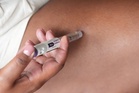
A generic version of the world’s only twice-yearly injectable drug for preventing HIV has been approved by the U.S. Food and Drug Administration, marking a significant step toward delivering affordable, rapid access to the medication across 120 low- and middle-income countries.
The pharmaceutical manufacturer released the announcement on Monday morning alongside global organizations that worked to accelerate development of the preventative treatment, lenacapavir.
The medication is projected to cost $40 per person annually in the designated recipient nations—matching the current price of daily preventative oral pills.
However, the injections provide a far more convenient alternative to daily tablets due to their reduced administration frequency, and they virtually eliminated new HIV cases during two groundbreaking clinical trials involving individuals at high risk.
Maintaining a daily medication regimen poses ongoing challenges, "and if you do not take it, you cannot get protected against HIV," said Carmen Pérez Casas, HIV lead for the grant-making organization Unitaid, a global health agency. "With lenacapavir, we are much more hopeful."
Health advocates emphasize that widespread access to the drug could significantly decrease overall HIV and AIDS diagnoses as well as related fatalities.
Data from the World Health Organization shows that 41 million people globally were living with HIV last year, with 570,000 deaths recorded from HIV-related conditions.
With an affordable, high-quality generic medication now available, "we could help to scale this to the 20 million people around the world who need PrEP," prescription medicine taken by people at risk of HIV before being exposed to the virus, said Carolyn Amole, who leads the HIV program for the Clinton Health Access Initiative, a global health organization.
"And if we scale to those levels," she added, "we can actually begin to bring an end to the HIV epidemic."
The generic form of lenacapavir cannot be marketed within the U.S. because the brand-name version, Yeztugo, manufactured by Gilead Sciences and cleared by regulators last year, remains protected under active patent laws.
In the U.S., Yeztugo's list price, before insurance adjustments, stands at $28,218 per year.
Gilead representatives state that this cost is comparable to other available forms of PrEP, an acronym for pre-exposure prophylaxis.
The FDA granted approval for the generic treatment through a long-standing regulatory pathway created to verify the quality of HIV drugs provided to foreign countries by the U.S. government.
Receiving clearance from the U.S. FDA often expedites national regulatory approvals in other jurisdictions.
This approval carries a "tentative" status, which is the FDA's standard classification for generic equivalents while an original drug's patent remains in effect.
Until this point, Gilead operated as the exclusive supplier of lenacapavir, resulting in global demand outstripping supply across developing regions.
Last year, Gilead finalized royalty-free licensing agreements with six generic drug producers to expand manufacturing. These voluntary licensing agreements apply to a defined list of nations located in sub-Saharan Africa, Asia, and Latin America.
"We share the sense of urgency around expanding access to lenacapavir for HIV prevention," a Gilead spokesperson said in a statement. "We believe we have enabled the fastest and most sustainable path to expanding access for communities most affected by HIV."
The new generic option was developed by India-based Dr. Reddy’s Laboratories under an arrangement coordinated by Unitaid, the Clinton Health Access Initiative, and Wits RHI, an African health research institute. The participating partners sought to speed up development while ensuring the medication could be offered at an accessible price point.
Common side effects linked to lenacapavir include reactions at the injection site, headache, and nausea. Individuals must also undergo HIV testing prior to starting treatment and before receiving each subsequent shot; instances of drug-resistant HIV have been recorded when the medication was administered to individuals with undiagnosed HIV infections.
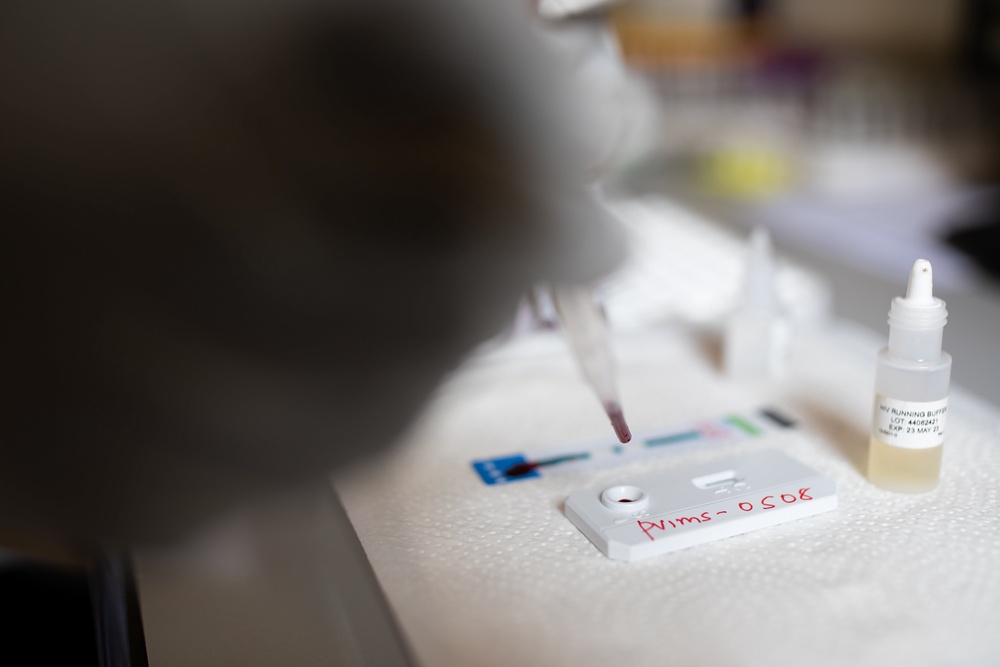
"For any kind of PrEP … you need to have HIV testing in advance," said Saiqa Mullick, director of implementation science with Wits RHI. "For many of the low- and middle-income countries, that is a rapid test."
Rollout of generic lenacapavir is anticipated to begin in certain regions within weeks, according to representatives involved in the initiative, though timelines may take longer in countries where local regulatory agencies must complete independent approval procedures before public distribution can begin. Generic versions produced by the other licensed generic manufacturers have not yet received FDA approval.
"The work is not done. Now, we need the funding to actually buy it for everyone who needs it and then we need to do the hard work of getting it to the millions of people who need it and want it," Amole said. "But this is a great milestone."
Casas expressed optimism that scientific progress, supported by sustained political will and financial backing, can empower the international community to curb the spread of HIV.
"Now," she said, "we have the tools."