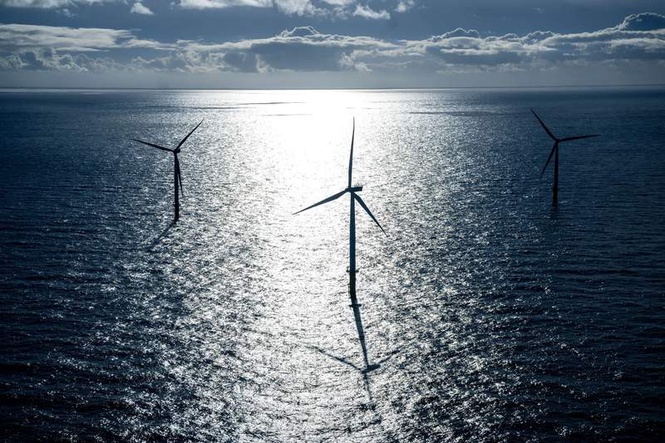
Germany was a net exporter of electricity in the first quarter of the year for the first time since late 2023, official data showed on Tuesday, with wind proving the single biggest source of generation.
Electricity imports fell by 15.5% over the first three months of the year, whilst exports rose by just over 20%. The net result was a surplus of 3.1 billion kilowatt-hours.
In total, 126.6 billion kilowatt-hours of electricity were produced in Germany and fed into the grid in the first quarter. Over half (53.3%) of this came from renewable sources such as wind and solar.
Whilst electricity generation from renewable sources rose by 14% to 67.5 billion kilowatt-hours, production from conventional energy sources fell by 2% compared with the same quarter last year to 59.1 billion kilowatt-hours.
The rise in electricity generation from renewable energy sources in the first quarter was primarily due to a sharp increase in wind power.
Compared with the same quarter in 2025, electricity production from wind power rose by 29% to 42.8 billion kilowatt-hours, with its share growing to one-third of total generation.
By contrast, electricity generation from photovoltaics fell by 7.4% compared with the same quarter last year to 10.3 billion kilowatt-hours.
Among conventional energy sources, electricity generation from coal fell by just over 5% in the first quarter to 30.5 billion kilowatt-hours, remaining the second most important energy source and forming 24.1% of total production.
Electricity production from natural gas, meanwhile, rose by 3.2%. Chancellor Friedrich Merz's government is planning to invest billions in the construction of new gas-fired power plants to secure the electricity supply, with a draft bill being passed in Cabinet last month.
According to figures from the Federal Network Agency, Austria was the largest importer of electricity from Germany in the first quarter.
The largest increases were recorded in exports to Denmark and Norway. By contrast, significantly less electricity was supplied to France.