
In recent months, news surrounding the FAM naturalisation controversy gripped Malaysian minds. It became the talk of the town—and, more importantly, the talk of mamak stalls across the country. Reports circulated claiming that FIFA documents had revealed discrepancies regarding the ancestral origins of several naturalised players. Among the names thrust into the spotlight was Facundo Garcés, whose reported Malaysian ancestry was said to trace back to Penang. Instead, the documents allegedly pointed to Santa Fe, Argentina. Likewise, prolific JDT striker João Figueiredo was reportedly linked to Abre Campo, Brazil, rather than Johor as previously claimed in some quarters. The players were reportedly handed one-year football bans and fined CHF 2,000 (approximately RM10,500).
The revelations sent shockwaves through Malaysian football. FAM found itself under intense scrutiny, while football fans oscillated between disbelief and gallows humour. Social media detectives were quick to point out that Malaya had indeed been colonised by the Portuguese, the Dutch, the British and the Japanese—but unless history textbooks had omitted an especially fascinating chapter, Brazil and Argentina had somehow slipped through the cracks.
Another question soon dominated public discourse. Although not a strict prerequisite, it is often emphasized that one of the criterias for obtaining Malaysian citizenship should be a reasonable command of the national language, Bahasa Melayu. Yet several of the players caught up in the controversy reportedly spoke little to no Malay. Naturally, many Malaysians began asking: how, then, had citizenship been granted?
Opinions flew from every direction. Some defended the process, others condemned it. Television panels debated it, keyboard warriors exhausted their keyboards, and eventually, as most controversies do, the storm gradually blew over. Then came the World Cup, and once again the spotlight shifted towards the ancestral roots of footballers—this time under far happier circumstances.
One player who particularly caught the attention of Malaysians was Australia's 25-year-old Melbourne Victory winger, Nishan Velupillay.
His father, Sasinath Velupillay, is Malaysian and of Sri Lankan Tamil heritage. Reports indicated that the Football Association of Malaysia had explored the possibility of securing his services. Ultimately, however, Velupillay chose to represent the country where he had grown up—Australia—over the nation from which part of his family traced its roots.
When he came on in the 61st minute of Australia's victory over Turkey, many Malaysians celebrated as though one of their own had stepped onto football's grandest stage. Harimau Malaya may not have qualified for the tournament, but for many supporters, Velupillay represented something equally precious: hope. An omen that Malaysia's time will soon come. That optimism only grew when he earned a starting berth in Australia's 2–0 defeat to the United States. Unfortunately, Velupillay's campaign ended at the group stages and he did not feature in the Round of 32 match against Egypt, meaning the wait continues for a player of Malaysian heritage to feature beyond the group stage of the World Cup.
Another player who piqued my curiosity was DR Congo midfielder Samuel Moutoussamy. What immediately caught my eye wasn't his position or even his performances—it was his surname. "Moutoussamy" is unmistakably Tamil, and strikingly familiar to Malaysians, although we would more commonly spell it "Muthusamy."
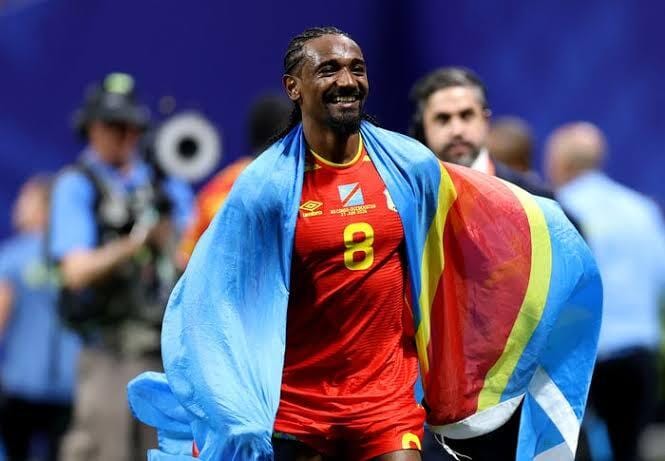
The moment I saw the DR Congo teamsheet, I instinctively put on my detective hat. Sure enough, a quick search revealed that his father is of Indo-Guadeloupean Tamil heritage, neatly explaining the surname. Mystery solved. Sometimes football scouting is less about expected goals and more about unexpected genealogies.
Every time Moutoussamy received the ball, I found myself equally impressed by something else: the commentators consistently pronounced his name with remarkable accuracy. It brought to mind a practice familiar to many Malaysians living abroad. Quite often, people adopt Western nicknames—not because they dislike their own names, but because they assume others will struggle to pronounce them.
The thought immediately reminded me of the memorable 2003 Petronas Deepavali advertisement, Boys in da Hood, directed by the late Yasmin Ahmad. In the short film, a young boy named Muthusamy introduces himself simply as "Sam" while attending Deepavali celebrations with his friends. When one of the elderly grandmothers discovers that "Sam" is merely short for Muthusamy, she gently scolds him, reminding him that there is beauty in his given name and no reason to hide it.
Watching Samuel Moutoussamy proudly wear his surname across the back of his jersey—and hearing commentators from around the world pronounce it correctly—felt strangely satisfying. It quietly dismantled the long-held notion that some names must be shortened or Anglicised to fit into Western society.
Our names carry history. They carry family, language and identity. Diversity is not merely reflected in the colour of our skin or the flags we wave—it lives within our names as well. Whether it is Velupillay, Moutoussamy or Muthusamy, each tells a story worth preserving. And if the world's biggest sporting stage can learn to pronounce them correctly, perhaps the rest of us can too.

Share your passion for football through #GilaBola and stand a chance to win cash prizes worth up to RM1,200!
Find out how to join here. Don't miss out! T&Cs apply.
Thillak Sekaran (thillaksekaran@gmail.com) is a content creator under the Newswav Creator programme, where you get to express yourself, be a citizen journalist, and at the same time monetize your content & reach millions of users on Newswav. Log in to creator.newswav.com and become a Newswav Creator now!
The User Content (as defined on Newswav Terms of Use) above including the views expressed and media (pictures, videos, citations etc) were submitted & posted by the author. Newswav is solely an aggregation platform that hosts the User Content. If you have any questions about the content, copyright or other issues of the work, please contact creator@newswav.com.