

As the curtain rose on a 2017 friendly between Tunisian giants Club Africain and French heavyweights Paris Saint-Germain, it was not Neymar's dazzling footwork nor Edinson Cavani's movement that first captured the lenses of photographers.
Instead, it was a banner.
Stretching across the stands in bold lettering, it carried a message so simple that one could read it in three seconds, yet spend three days pondering its meaning:
Few banners have ever summarised modern football so eloquently.
The sentence was neither bitter nor angry. It was simply... true.
Somewhere along the way, football wandered so far from its humble beginnings that it scarcely recognises its own reflection. Today, supporters think little of paying over US$2,000 for a single World Cup ticket. Corporate executives sip champagne in climate-controlled VIP lounges while billionaire owners applaud footballers worth more than the GDP of some small island nations.
Sometimes, it feels as though the game forgot who first taught it how to walk.
Long before television rights, hedge funds and sovereign wealth funds discovered football's commercial potential, it belonged to ordinary people.
Its ancestry stretches back more than two thousand years to cuju, a military training game played in ancient China. The Romans had similar variations, but the football we recognise today began to emerge—rather chaotically—in medieval England.
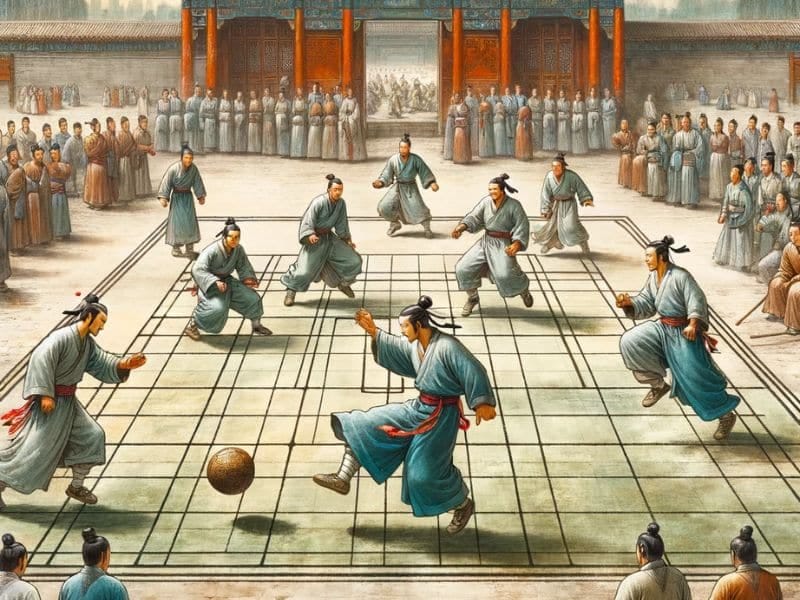
Calling those early contests "organised" would be remarkably generous.
Entire villages kicked inflated pig bladders towards the opposing village's parish church. There were no touchlines, no referees and certainly no VAR—although judging by modern social media discourse, medieval villagers would probably have hated VAR just as much.
The matches were wonderfully violent. Broken bones were commonplace, property damage was expected, and the occasional unfortunate spectator probably discovered they had unwillingly become part of midfield.
English monarchs repeatedly attempted to ban the game, believing it distracted men from practising archery. Football, however, possessed an annoying habit of refusing to die.
Pig bladders gradually became leather balls. Chaos slowly yielded to rules.
Most players were labourers.
They spent long days in factories, docks and workshops before gathering to play after work. Football was not their profession. It was their escape.
Then came the Industrial Revolution.
Ironically, the very era that transformed Britain almost extinguished football. Factory workers endured shifts stretching sixteen hours or more. Leisure became a luxury few could afford.
Yet when working conditions gradually improved, football returned with renewed vigour. In the aftermath of the resolution, there was rapid urbanisation. Social circles swelled and there were structured periods of leisure, praving the way for football to flourish.
Unlike golf, tennis or horse racing, football required remarkably little. Golf demanded clubs. Tennis required courts. Horse racing, rather inconveniently, required a horse.
Football required only one ball.
If nobody owned one, human ingenuity usually found a suitable substitute.
That simplicity made football perhaps history's greatest sporting equaliser.
The Football Association was established in England in 1863, while FIFA followed in Paris in 1904 to oversee the sport's growing international reach. By 1930, Uruguay hosted the inaugural FIFA World Cup.
Money inevitably followed.
By 1970, top-flight English footballers earned around £70 per week, more than three times the average worker's wage of £21. Today, adjusted for inflation, that equates to roughly £56,000 annually against an average salary of around £21,000.
Back then, footballers earned more than ordinary people.
Today, some earn more in a week than ordinary people accumulate over several lifetimes.
Football had completed an astonishing transformation.
A game born in muddy fields had become a trillion-dollar industry.
Yet every now and then, just often enough to restore one's faith, the sport remembers where it came from.
Every so often, amid the supercars, private jets and designer endorsements, emerges a footballer whose story reminds us that the beautiful game still possesses a beautiful soul.
One such story began not in Madrid, Manchester or Paris.
It began on a tiny Atlantic archipelago called Cabo Verde.
Standing between its goalposts was a man named Josimar José Évora Dias.
The footballing world simply calls him...
Vozinha.
Glitz and glamour were worlds Vozinha had never known.
While football's biggest stars were arriving at training grounds in Lamborghinis and signing boot deals worth millions, Vozinha was simply trying to make a living.
His childhood nickname, loosely translating to "little granny" in Portuguese because he was largely raised by his grandparents, would one day become known across the footballing world.
His journey could hardly have been more different from those of modern football's manufactured prodigies.
Today's elite youngsters have agents, sponsorship deals and professionally managed social media accounts before they are old enough to vote.
Vozinha possessed something considerably less glamorous.
And, according to numerous reports, the keys to a bus.
Football did not immediately pay the bills.
Real life did.
While Europe debated whether Lionel Messi or Cristiano Ronaldo deserved another Ballon d'Or, Vozinha was concerned with earning enough to keep his dream alive.
Professional football only became a genuine reality in his twenties, when most elite players are already approaching their peak. He began with clubs in Cabo Verde before embarking on a journeyman career through Angola, Moldova, Portugal, Cyprus and Slovakia.
Even in his mid-twenties, reports suggested he earned little more than US$600 per month.
Six hundred dollars.
In today's game, that is roughly what some Premier League footballers accidentally leave in yesterday's jacket pocket.
Yet he persevered.
No complaints.
No self-pity.
No dramatic speeches about adversity.
He simply kept turning up.
Sometimes persistence is less glamorous than talent.
But it is often far more powerful.
In 2012, perseverance finally paid its dividend.
Vozinha earned his first cap for Cabo Verde and became part of the generation that transformed the nation's footballing history.
The following year, against all odds, Cabo Verde qualified for the Africa Cup of Nations for the first time ever.
For footballing superpowers, qualification is expected.
For Cabo Verde, it felt like a national miracle.
Families gathered around television sets. Children who had spent their lives cheering for other nations finally had a team of their own.
For perhaps the first time, tens of thousands looked at international football and thought:
"That is us."
Yet outside Africa, scarcely anyone noticed.
Vozinha remained one of football's best-kept secrets.
The world had no idea what was coming.
Sometimes football introduces its heroes at seventeen.
Sometimes it waits until forty.
And perhaps that is why the beautiful game remains beautiful.
Because every now and then, just when we think every fairytale has already been written, football reaches into one of its smallest corners, dusts off a forgotten manuscript and whispers:
"Here's one you haven't read yet."
Then came 15 June 2026.
Under the bright lights of Atlanta's Mercedes-Benz Stadium, the footballing world gathered expecting little more than a routine result.
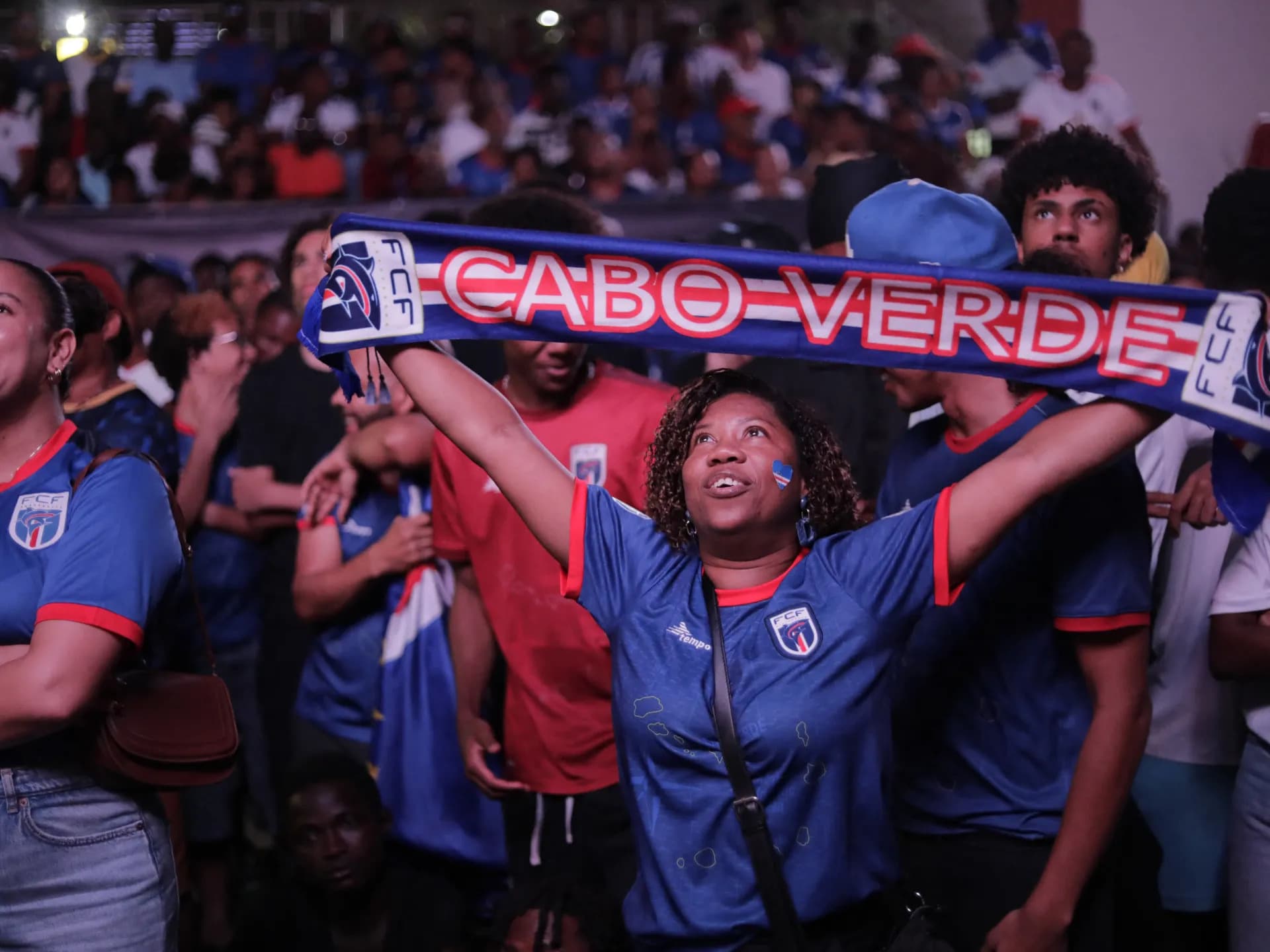
On paper, it looked almost cruel.
Spain arrived boasting a squad worth well over a billion euros. Lamine Yamal. Mikel Oyarzabal. Ferran Torres. Marc Cucurella. Household names from Europe's biggest clubs.
Standing opposite them was a nation of barely half a million people.
Most pundits had already written the obituary before kickoff.
"Professional performance."
"Comfortable Spanish victory."
"Damage limitation for Cabo Verde."
Football, however, has always possessed an unhealthy addiction to ignoring scripts.
From the opening whistle, Spain attacked in relentless waves. Every possession seemed destined to end in a goal.
Yet every time the ball travelled towards goal, one man stood in the way.
Vozinha.
Yamal could scarcely believe it.
Oyarzabal threw his hands into the air.
Torres tried one angle, then another.
Cucurella bombarded the box from the left.
Nothing worked.
The forty-year-old goalkeeper was producing the sort of display that commentators eventually stop trying to explain because words simply run out. Every save appeared more improbable than the last.
One save.
Then another.
Then another.
The whispers from Cabo Verde became applause from the rest of the world.
By the final whistle, social media had exploded. His following swelled from 40k pre World-Cup to 20 million at present.
Who was this goalkeeper?
Where had he come from?
Why had nobody heard of him before?
Almost overnight, Vozinha transformed from one of football's hidden gems into one of the stories of the tournament. His Instagram following skyrocketed as millions around the globe rushed to discover the veteran who had frustrated one of football's aristocrats.
But Cabo Verde were not finished.
Having emerged from the group stage unbeaten with three draws, they booked an improbable place in the Round of 32.
Their reward?
Only the reigning world champions.
Argentina.
If Spain had been Everest, Argentina looked like Everest with worse weather.
Once again, the predictions rolled in.
"This is where the fairytale ends."
"Reality finally catches up."
Football politely declined the invitation.
Argentina monopolised possession and launched attack after attack. Yet the little island nation refused to blink.
At the heart of everything stood the familiar figure in gloves.
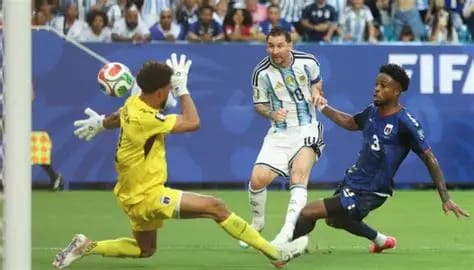
Vozinha.
Again.
Again.
And again.
The longer the match remained level, the more uncomfortable Argentina became. One could almost hear the collective heartbeat of Buenos Aires travelling across the Atlantic.
Then came the 103rd minute.
Sidny Lopes Cabral unleashed a thunderbolt.
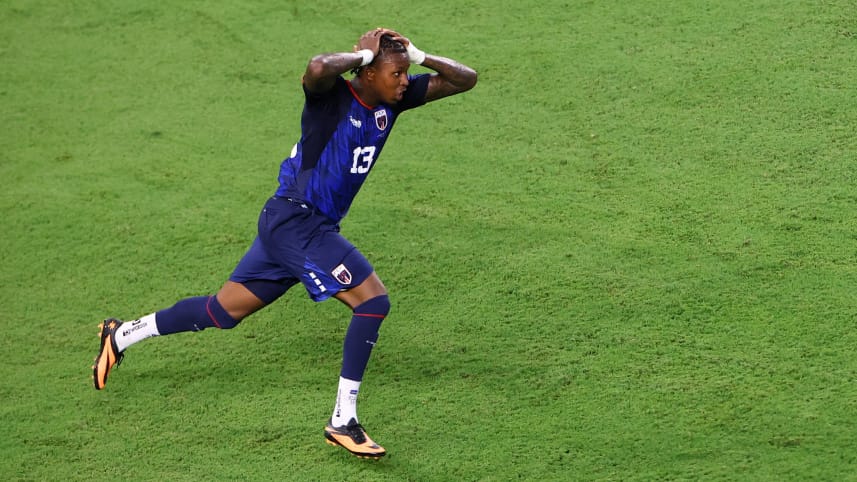
The ball screamed into the net.
Not curled.
Not floated.
Screamed.
For one glorious moment, the scoreboard displayed the impossible.
Argentina 2. Cabo Verde 2.
Fifteen minutes remained.
The impossible was no longer knocking politely on football's front door.
It had kicked the door clean off its hinges.
Argentina looked rattled. The favourites, so accustomed to controlling destiny, suddenly found themselves staring into the abyss of one of World Cup history's greatest upsets.
In the end, fate proved cruel.
An unfortunate own goal restored Argentina's lead, sealing a dramatic 3-2 victory and finally bringing Cabo Verde's astonishing adventure to an end.
One imagines several million Argentinians immediately rediscovered the ability to breathe.
And perhaps a few television sets narrowly escaped being launched through living-room windows.
Argentina won the match.
Cabo Verde won the world's heart.
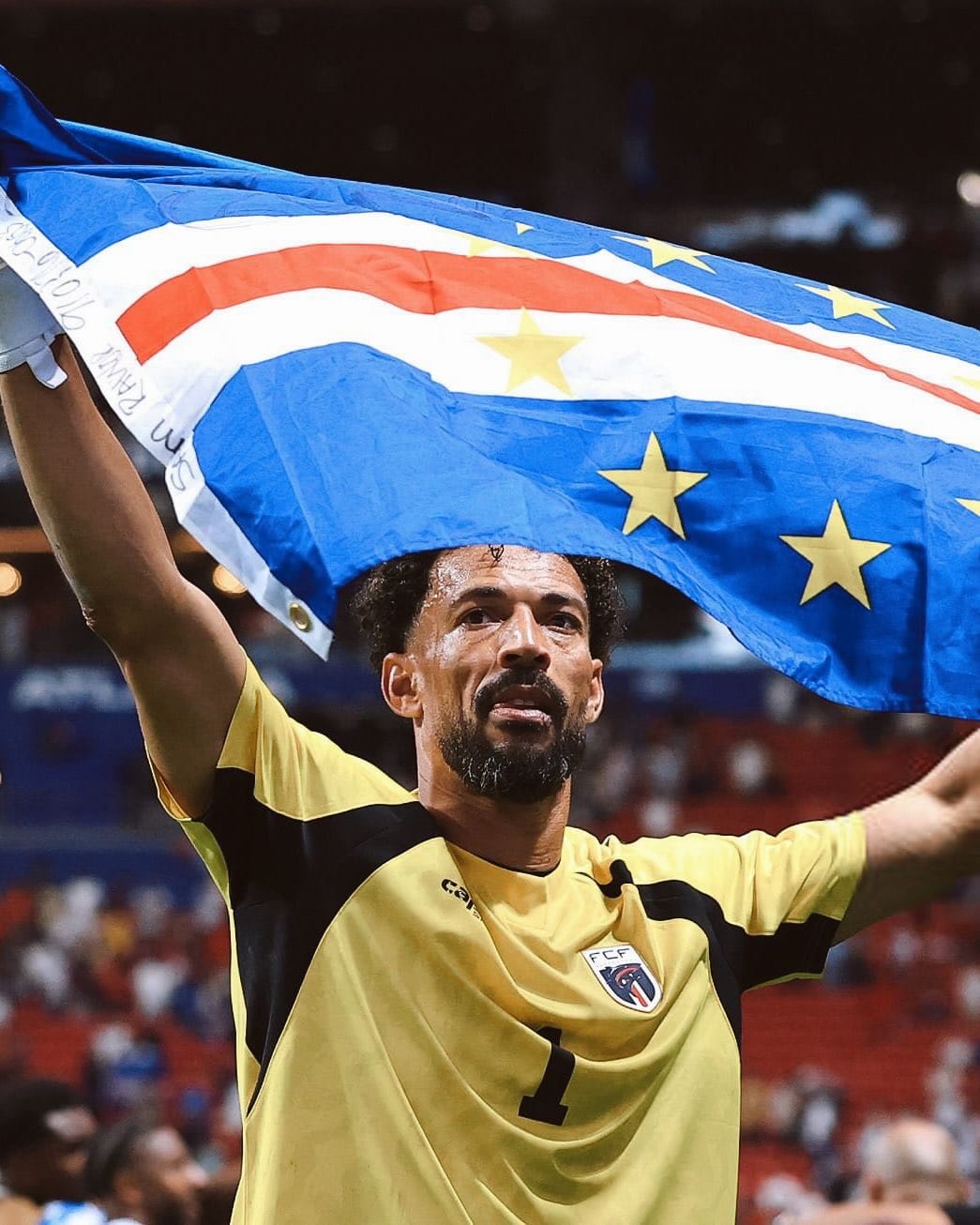
Because football has always remembered those who dared, not merely those who survived.
Ask anyone about the United States shocking England in 1950.
North Korea in 1966.
Cameroon in 1990.
Senegal in 2002.
Costa Rica in 2014.
Morocco in 2022.
Now add another chapter.
Cabo Verde, 2026.
At forty years of age, this may well have been Vozinha's final World Cup.
Not as a superstar.
Not as the owner of a cabinet overflowing with medals.
Not as football's highest-paid goalkeeper.
But as something arguably greater.
A reminder.
A reminder that football's greatest currency has never been money.
It has always been hope.
Hope that the smallest nation can humble the largest.
Hope that the unknown goalkeeper can outshine the global superstar.
Hope that somewhere, on a dusty pitch in a forgotten town, another child is chasing a ball with nothing more than impossible dreams and a pair of worn-out boots.
And perhaps that is why that banner in Tunisia still resonates.
"Created by the poor. Stolen by the rich."
Perhaps.
But only partly.
Because every now and then, football quietly steals itself back.
For one unforgettable tournament, the billionaires surrendered the spotlight, the underdogs became giants, and the beautiful game remembered precisely where it came from.
Back where it has always belonged.
With ordinary people.
With impossible dreamers.
With men like Vozinha.
Vozinha and his teammates may now be back beneath the sunshine of Praia, but what they achieved belongs to the world. Long after the goals have faded into highlight reels and the scorelines into statistics, football fans will remember a tiny island nation that reminded the richest sport on Earth of its poorest—and proudest—origins.

Share your passion for football through #GilaBola and stand a chance to win cash prizes worth up to RM1,200!
Find out how to join here. Don't miss out! T&Cs apply.
Thillak Sekaran (thillaksekaran@gmail.com) is a content creator under the Newswav Creator programme, where you get to express yourself, be a citizen journalist, and at the same time monetize your content & reach millions of users on Newswav. Log in to creator.newswav.com and become a Newswav Creator now!
The User Content (as defined on Newswav Terms of Use) above including the views expressed and media (pictures, videos, citations etc) were submitted & posted by the author. Newswav is solely an aggregation platform that hosts the User Content. If you have any questions about the content, copyright or other issues of the work, please contact creator@newswav.com.