
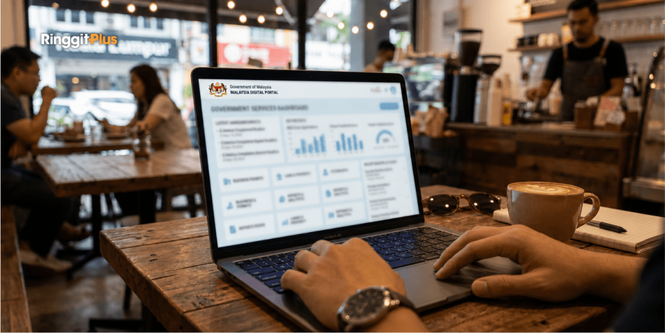
A new online dashboard tracking global supply pressures will be accessible to the public from 15 May, jointly developed by the Ministry of Economy and the Department of Statistics Malaysia (DOSM).
Economy Minister Akmal Nasrullah Mohd Nasir announced the launch at a global supply crisis briefing on Tuesday. The dashboard is designed to serve as a central reference point for monitoring how international economic pressures are playing out domestically.
Ten Submenus Covering Energy, Prices, and Trade
The public-facing version is organised into 10 main submenus, covering energy, commodities, cost of living, economic performance, foreign exchange rates, and trade flows, among others.
The breadth of those submenus reflects how interconnected current pressures are. A shift in global oil prices, for example, can feed through to transport costs, food prices, and imported goods at different speeds and with varying delays. Having these indicators in one place makes it easier to see how they are moving in relation to each other, rather than tracking them separately across different government releases.
Two Versions Serving Different Purposes
Alongside the public dashboard, the government operates a separate internal version used to assess crisis developments, detect early risks, and coordinate mitigation strategies based on near real-time data. The public version draws from the same underlying picture but presents it in a format intended for general access rather than operational use.
Akmal Nasrullah described the initiative as a shift in how the government manages crises, moving toward near real-time data to detect pressures earlier and coordinate responses more systematically.
World Bank Priorities Aligned with Government Measures
The government also welcomed the World Bank’s four priorities for Malaysia, covering energy security, strengthening fiscal space, managing energy demand, and directing support to households and businesses genuinely affected by cost pressures.
Akmal Nasrullah said these priorities align with measures already at various stages of implementation. The World Bank’s assessment is that global pressures are layered, with rising prices for oil, fertilisers, and food carrying different but interconnected effects on production costs and the cost of living. Policy responses, the minister said, need to account for both the direct impact on consumers and the knock-on effects on businesses and supply chains.
Current government actions include coordinating export controls on certain fuels, ensuring the supply of essential goods, managing purchase quotas, promoting energy conservation, and maintaining close cooperation with industry players. Any policy adjustments will be implemented in a targeted and temporary manner, with priority given to protecting consumers, stabilising supply, and managing the country’s fiscal position.
The National Economic Action Council (NEAC) will continue issuing updates on energy and fuel supply conditions to keep domestic needs prioritised and to support industry confidence in operational continuity.
A Shared Reference Point as Costs Stay Unpredictable
The practical significance of the dashboard is easier to see in the context of where things stand right now. Food prices have held relatively steady at the checkout, but business costs are rising. Fuel costs have remained unpredictable. False claims about price and electricity changes have been circulating widely online, prompting the government to call for firmer action against misinformation.
A publicly accessible platform with regularly updated data offers something more reliable than forwarded messages or screenshots without clear sources. If you are a business owner tracking input costs, a household monitoring how far your monthly budget is stretching, or simply someone trying to verify information before passing it on, having access to the same indicators the government is using changes the starting point for those judgements.
The government is already working from this data. From 15 May, so is everyone else. For households and businesses navigating unpredictable costs, the more relevant question is whether the dashboard stays current and legible enough to be more useful than waiting for the next official press statement.
Follow us on our official WhatsApp channel for the latest money tips and updates.
The post Global Supply Crisis Dashboard Opens to the Public from May 15 appeared first on RinggitPlus.