
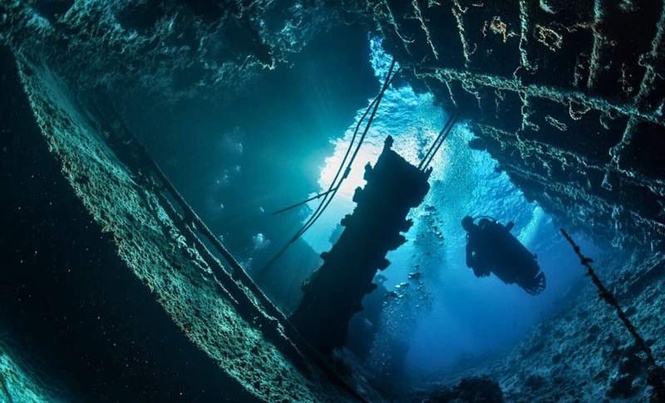
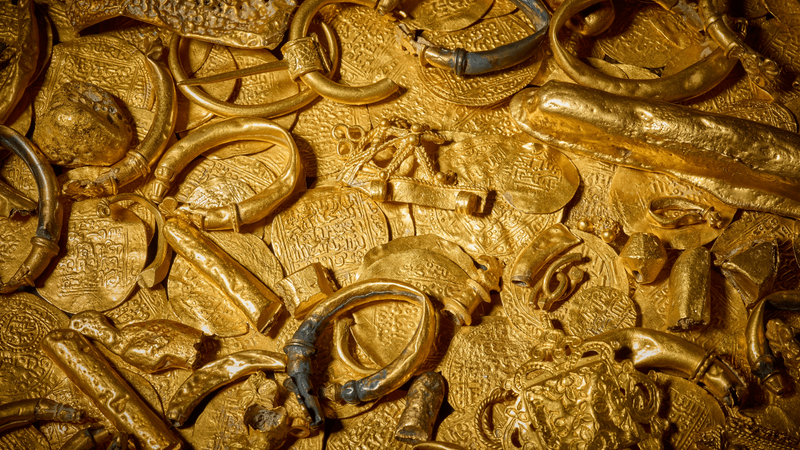
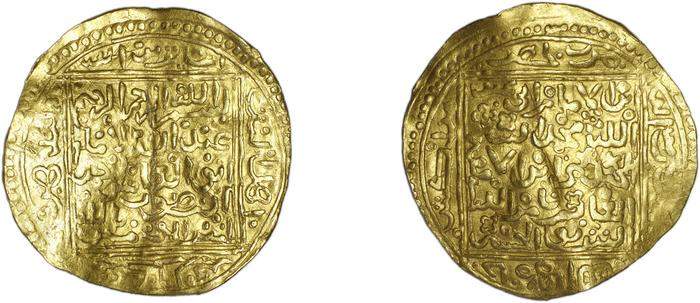
More than 400 gold coins recovered from the seabed off Salcombe, Devon, have helped solve a long-running shipwreck mystery on England’s south coast. The wreck, first found in 1995, has now been identified as the Dutch trading ship Dom van Keulen, which sank in the autumn of 1633 while sailing from Morocco to the Netherlands.
The identification is described in the British Museum publication The Story of the Dom van Keulen and its Remarkable Cargo. It brings together archival records with coins, anchors, cannons, and smaller objects recovered from the seabed.
The cargo places the wreck within 17th-century trade between Morocco, the Netherlands, and England. Along with Moroccan gold, the vessel carried gum arabic, saltpetre, and goat skins, goods that moved through maritime routes linking North Africa and northern Europe.
Gold Coins Linked the Wreck to the Dom Van Keulen
The wreck remained unidentified for decades after the South West Maritime Archaeology Group discovered it in 1995. The breakthrough came when historian Ian Friel found records in the United Kingdom’s National Archives that matched the site and its cargo.
Those records describe a ship that left Morocco for the Netherlands, met “much tempestuous weather,” sprang a leak, and sank near Salcombe. The records also state that the crew survived, a detail that helped connect the documents to the wreck now identified as the Dom van Keulen.
According to EurekAlert, Dave Parham, Professor of Maritime Archaeology at Bournemouth University, reported that the ship carried 9,000 Barbary ducats and other Moroccan gold coins. Most of the cargo was probably salvaged soon after the sinking, but hundreds of coins remained on the seabed.
The coins were useful evidence because they carried geographic and commercial clues, not only monetary value. Their origin, number, and association with other cargo helped researchers connect the wreck to a specific voyage rather than an anonymous 17th-century loss.
The Cargo Traces a Wider Trade Network
The gold coins came from the Barbary Coast, recognized today as Morocco. In the 16th and 17th centuries, Dutch merchants exchanged manufactured goods for West African gold that reached markets through North African ports.
The Dom van Keulen’s cargo shows how varied that trade could be. Alongside the coins were 150 bags of gum arabic, 64 bags of saltpetre, and 320 goat skins, each with its own commercial use and value in European markets.
The voyage also fits the broader expansion of Dutch maritime power. ThoughtCo’s overview of the Dutch Empire describes how Dutch companies and merchants built trading networks across five continents from the 17th century onward.
The Dom van Keulen was not simply a treasure ship. It was a merchant vessel carrying cargo through an established trade route at a time when Dutch shipping tied European ports to markets across Africa, Asia, and the Atlantic world.
The Wreck Still Holds Archaeological Evidence
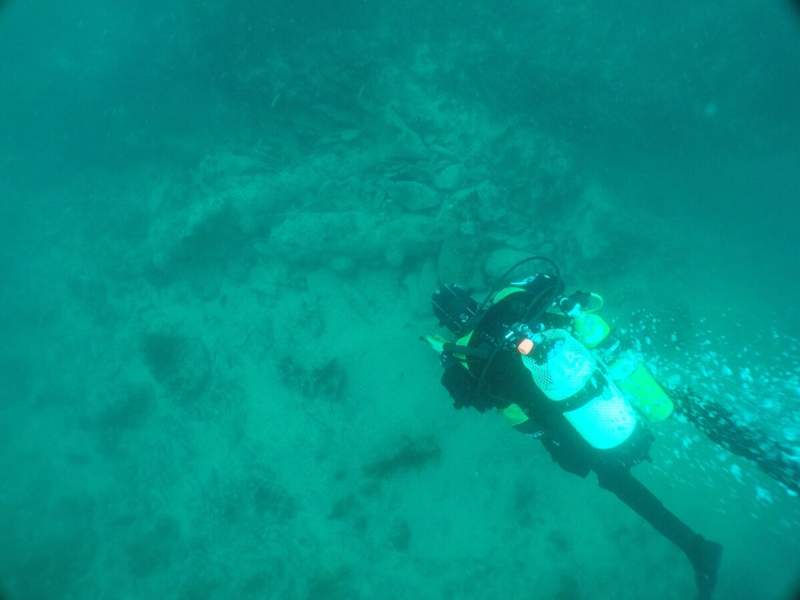
The wreck site is about 30 metres long and lies around 18 metres deep off the Devon coast. Researchers still know little about the ship’s original size or appearance, and no known painting of the vessel survives.
The seabed still holds important physical evidence. Cannons, anchors, and smaller cargo items remain part of the site, giving archaeologists material clues that can be compared with written records.
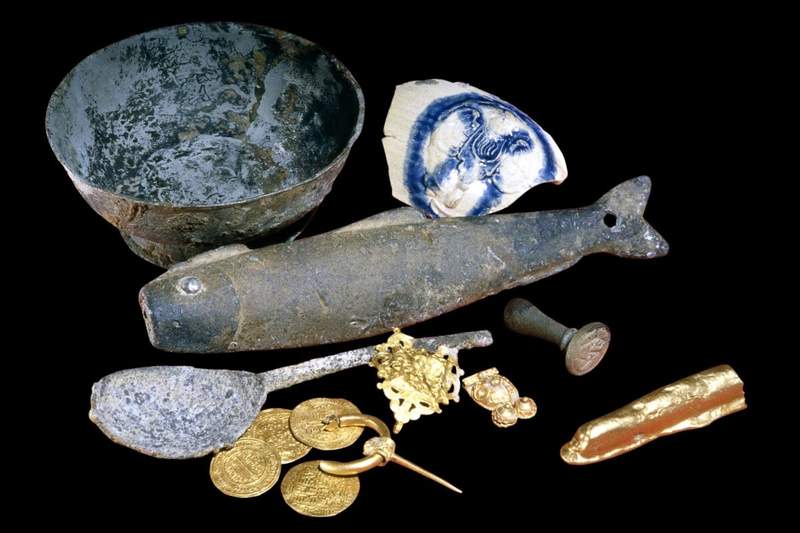
Objects from the wreck now owned by the British Museum include a pewter bowl and spoon, gold jewellery, a fish-shaped sounding weight, a stamp seal, pottery, and a gold finger nugget. These items show the ship as a working vessel, not simply a container for coins.
The strength of the identification comes from the way the records and artifacts match each other. Documents can name the ship and describe the voyage, while artifacts show what survived underwater after sinking, salvage, and centuries of exposure.
Protected Wrecks Need Careful Management
The Dom van Keulen site is designated under the Protection of Wrecks Act 1973 and is managed by Historic England. That status restricts diving to licensed divers and helps protect the wreck from damage or illegal recovery.
The site is also monitored by the National Coastwatch Institution at Prawle Point. Devon and Cornwall Police patrol the area through Operation Birdie, a national effort aimed at preventing interference with historic wreck sites.
The site still holds information that depends on context: where objects lie, how the wreck settled, and what material remained after early salvage. Removing objects without proper recording can erase details that help archaeologists reconstruct the ship’s final voyage.
The Dom van Keulen gives researchers a clearer picture of a Dutch ship carrying North African gold through a busy 17th-century trade network. The wreck links a named ship, a dated voyage, a documented cargo, and a protected archaeological site off Devon.