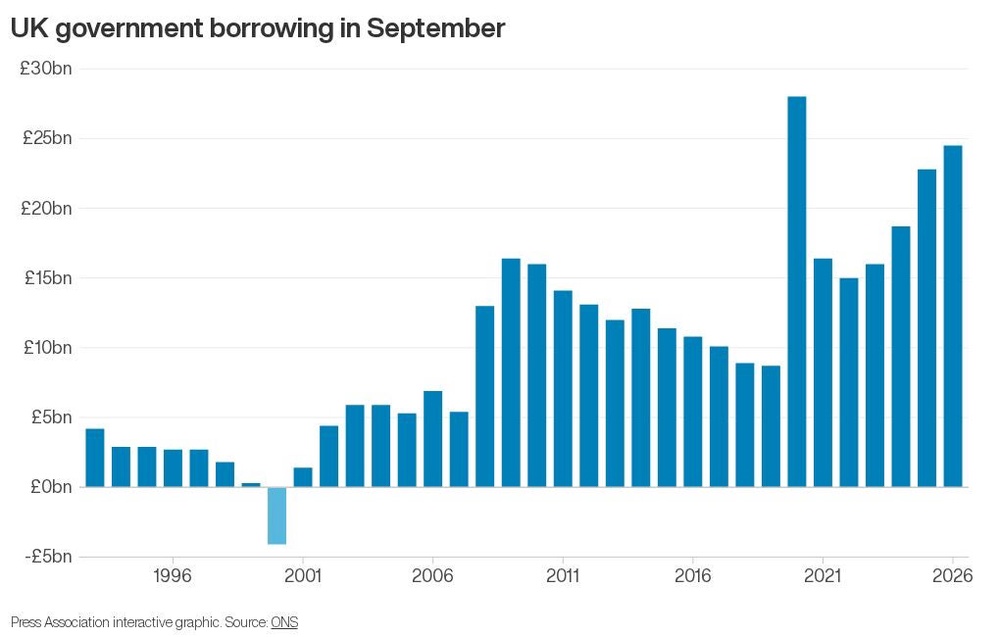
UK government borrowing rose by more than expected to £24.5 billion for last month, underscoring the constraints in the public finances ahead of the Chancellor’s Budget next week.
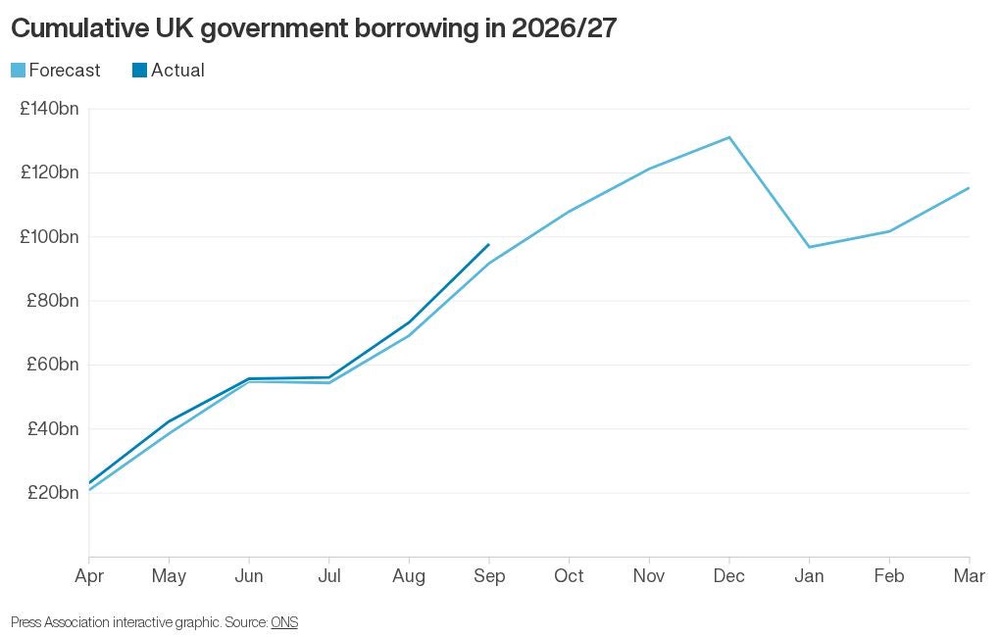
The Office for National Statistics (ONS) reported that public sector net borrowing increased by £1.8 billion compared with the same month last year.
It was also £1.9 billion ahead of Office for Budget Responsibility (OBR) forecasts, and above the £24.1 billion widely predicted by economists.
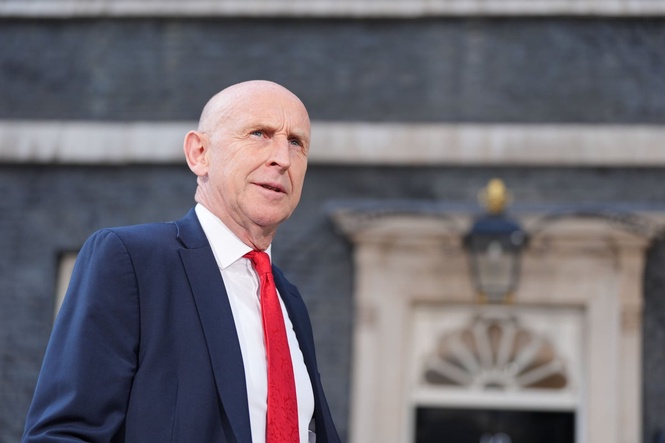
It comes only a week ahead of Chancellor John Healey’s first Budget, where he is expected to increase bank taxes as higher borrowing costs weigh down on fiscal headroom.
The latest figures showed that the UK Government spent £24.5 billion more than it brought in through taxes and other measures during the month.
Total Government spending rose by 5.6% to £111.3 billion in September, compared with a year earlier.
The rise came on the back of higher debt interest payments, linked to the increase in global borrowing costs largely linked to the conflict in the Middle East.
Central government debt interest costs were £10.9 billion for September, up £1.6 billion against the same month last year, and marking the largest September figure on record.
Meanwhile, net spending on social benefits rose by £1.6 billion to £30.6 billion for the month.
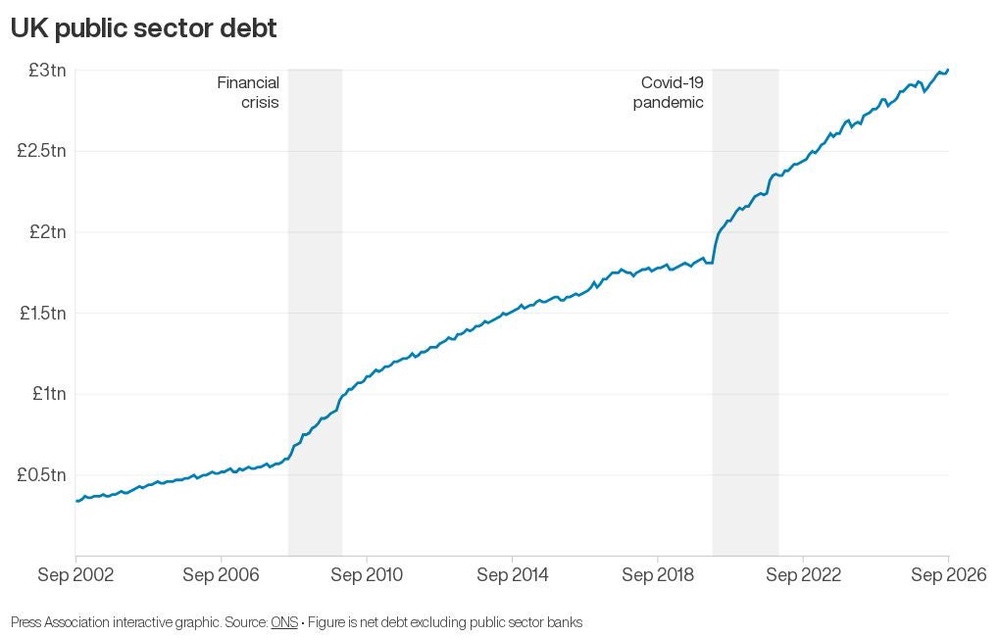
The data also showed that public sector net debt surpassed £3 trillion for the first time, up £91.7 billion compared with a year earlier.
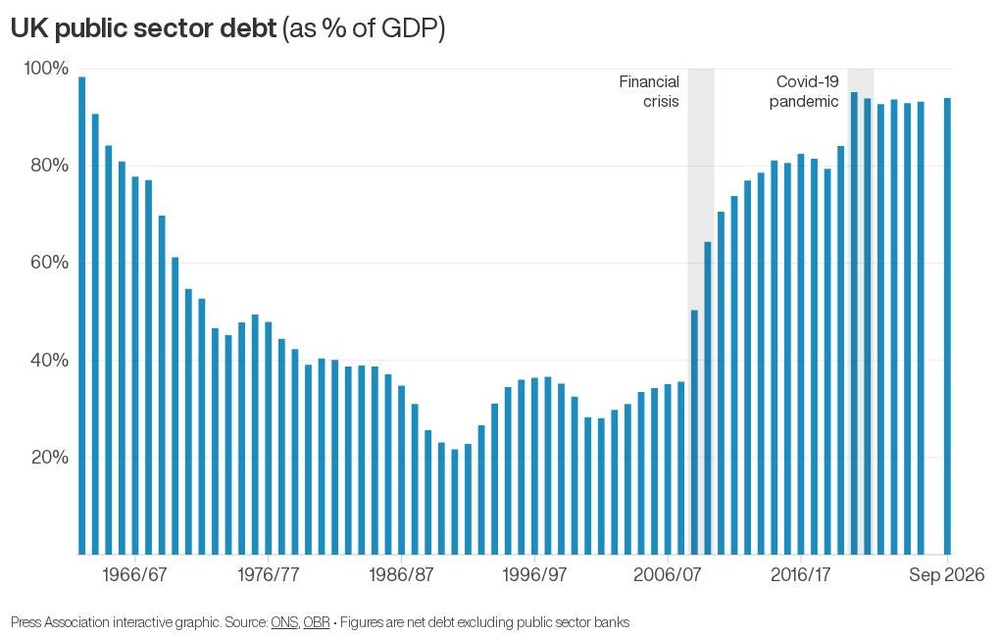
However, debt as a proportion to GDP (gross domestic product) decreased by 0.7 percentage points to 94%.
ONS chief economist Grant Fitzner said: “Borrowing in the first six months of the current financial year remained below the same period last year, thanks to higher receipts, although it was still above the official forecast.
“Preliminary figures suggest that although debt in cash terms continues to rise, as a proportion of GDP it has fallen over the year.
“On this latter basis it remains at levels last seen in the early 1960s.”
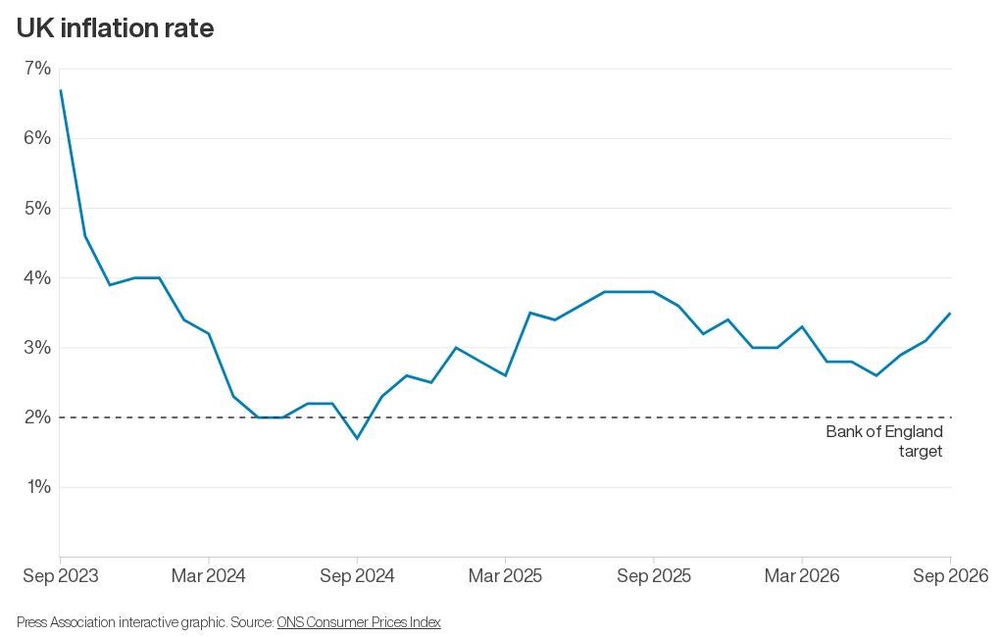
It came as separate data from the ONS showed that UK inflation lifted to an 11-month-high of 3.5% last month, partly driven by rising fuel costs linked to the Iran war.
Greg Thwaites, interim chief economist at the Resolution Foundation, said: “Rising inflation and record levels of debt illustrate the double dilemma facing the Chancellor – how to ease cost of living pressures for families while keeping a lid on Government borrowing.
“Borrowing is already off track this year, debt has hit £3 trillion, and markets are closely scrutinising government’s ability to keep on top of the public finances.
“The Chancellor must confront this double dilemma head on in his Budget next week rather than duck reality.”
Matt Swannell, chief economic adviser to the Item Club, said: “The public finances remain in a fragile position, and next week’s Budget looks set to be a relatively low-key affair.
“Higher gilt yields have dented the Chancellor’s fiscal headroom, likely leaving between £10 billion and £15 billion of margin for error against his primary fiscal rule.
“With little room for manoeuvre, any giveaways are likely to be modest and temporary.”
Read MoreAmazon to create 30,000 jobs for young people to solve Neets crisis
Government’s long-awaited decision on Jackdaw gas field to be announced
Halfords sales jump after warm weather boosts summer trading
French supermarket chain suffers €1.6 billion hit after riots and looting
Why has inflation risen and what does it mean for me?
Jackdaw announcement must provide certainty to north east, says Swinney