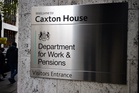
A government minister has said a “serious cyber incident” forced the Department for Work and Pensions to take services offline as Downing Street refused to rule out a malicious attack.
Almost all public-facing DWP services were taken down out of “precaution” following the incident, in what MPs have warned must be a “wake-up call” for the government.
No 10 said there was no evidence that a “malicious actor” has targeted other government departments, but the prime minister’s official spokeswoman declined to rule out that the incident that knocked DWP services offline had been a hack.
Work and pensions secretary Pat McFadden said there is a “constant effort” to ensure systems are secure as he described the event as a “serious cyber incident”.
“It’s a serious cyber incident. I can’t say more at this stage about what caused it,” Mr McFadden said.
“But we did the right thing by taking our systems down in order to protect the public, in order to protect their personal information, and we made sure that regular payments could continue unaffected.”
No 10 said there is currently no evidence of customer data loss, but the UK’s data protection watchdog said it is in contact with the DWP about the incident.
The department said it was working with GCHQ’s National Cyber Security Centre and government experts to investigate the suspected hack after unusual activity was first identified on Thursday.
It said it had taken some pensions and benefits services offline “as a precaution”, with users unable to login to their accounts, including the UK’s 8.4 million Universal Credit claimants, who were unable to access their online journals as a result of the issue.
The department, which is responsible for administering the welfare system, said regular benefit and pension payments have not been affected and will be paid as normal.

Commons Science and Technology Committee chairwoman Dame Chi Onwurah said the disruption should be a “wake-up call” amid growing concerns over cybersecurity.
“People rely on these systems for some of the most essential services the state provides, and they should be able to trust that the tech and data underpinning them are secure and resilient,” she said.
“My committee has repeatedly warned that the government cannot achieve its digital transformation of public services without addressing weaknesses in its digital infrastructure and improving standards of data hygiene.
“Public bodies hold citizens’ data on trust, and that demands the highest standards.”
Responding Dame Chi’s intervention, Mr McFadden said: “When an incident like this happens, the most important thing is to take the system offline as early as possible to protect it, then to investigate the causes, and at the same time to make sure that payments to the public can continue as normal.”
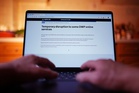
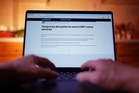
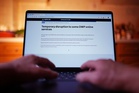
Those attempting to login to their DWP accounts on Friday morning were met with an error message following the incident, though the department has not confirmed the nature of the cyber incident.
“We have taken some DWP online services offline as a precaution after we identified a cyber incident affecting our systems,” a statement published on Friday said.

“We are working closely with the National Cyber Security Centre and Government Cyber Coordination Centre to investigate and to bring services back online as quickly as possible and to minimise any disruption.
“Regular benefit and pension payments are not affected and will be paid as normal.
“If an online service you need is unavailable, please try again later. As always, we will never message you to ask for bank details or ask you to click on links.”
No 10 said work is being carried out “as quickly as possible” to restore services after millions of claimants were left unable to access accounts or apply for benefits online.
A No 10 spokeswoman said on Friday: “The investigation is ongoing. I’m not going to get ahead of it.
“There’s no other evidence that a malicious actor (has) targeted any other government departments.”
But she declined to rule out that the incident knocking DWP services offline had been a hack.
“It’s a live and ongoing incident, and we’re working as quickly as possible to restore the services,” she said.
“As soon as we’ve got more details, we’ll let you know, but as I’ve said, there’s no evidence that it’s targeted at other departments.”
Work and Pensions Committee Chair Debbie Abrahams said DWP’s decision to take “swift action” was “absolutely the right thing to do”.
It comes amid increased concern over cyber threats facing the country.
Earlier this month, a number of UK meat suppliers said their fridges heated up overnight as they were affected by hacks targeting software used by supermarkets across Europe.
In recent weeks, fashion retailers Next and Asos have both separately flagged incidents that saw unauthorised access gained to some data.
Last year, Marks & Spencer suffered from a major cyber attack that forced it to stop all online sales for about six weeks and led to some empty shelves in shops.
On a visit to Watford General Hospital earlier this month, prime minister Andy Burnham admitted cyber attacks are a “growing risk” to the UK.
“We are deterring cyber attacks on a daily basis, not just in the NHS, but, you know, more broadly. We have strong defensive systems across the country, but it's a growing concern,” he told LBC.
“It's one we have got a very close eye on, and we'll continue to work hard to keep people's data safe.”
Suzy Pallett, president of the Black Hat cybersecurity conference, said: “What we’re seeing with the DWP incident today is a clear reminder that the question is no longer if an organisation will face a cyber incident, but when.”
Earlier this month, the UK’s financial regulators have proposed new guidance to help financial services firms prepare for and recover from cyber incidents, amid concerns that attacks are becoming more frequent, complex and dangerous.
Dr Richard Horne, National Cyber Security Centre (NCSC) chief executive, said at the time: “We know cyber threats are becoming increasingly frequent and sophisticated, making it more important than ever that organisations can withstand and recover from cyber incidents.
“The National Cyber Security Centre welcomes this proposed guidance, which will help firms better understand, assess and strengthen their cyber resilience, in line with our Cyber Assessment Framework.”
Read More‘Serious cyber incident’ forced DWP to take down online systems – McFadden
No evidence ‘malicious actor’ targeted other departments after DWP incident
DWP removes some online services amid cyber incident
Government confirms ‘contingency plans’ in place if Capita collapses
How PIP and other benefits could change for millions under Labour’s welfare options
Cost of Burnham’s EU deal will be in ‘the low tens of millions’, officials say