.png)
THE Government is accelerating efforts to introduce comprehensive legislation protecting the rights and welfare of older citizens as concerns grow that the country is unprepared for the social and economic pressures of a rapidly ageing population.
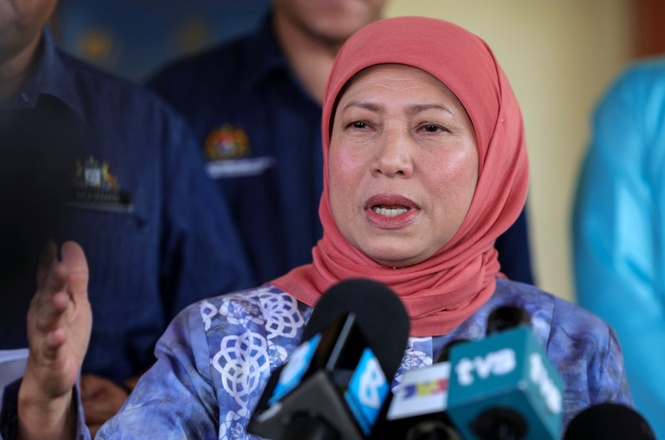
Women, Family and Community Development Minister Datuk Seri Nancy Shukri said her ministry was pushing to table the Senior Citizens Bill at the next Parliament meeting after years of delays caused by extensive stakeholder consultations and repeated revisions.
She said the legislation had become increasingly urgent as Malaysia moves towards becoming an aged nation, warning that policy development must keep pace with demographic change.
“The consultation has never ended because there are always more views to be heard. When we were about to send it to the Attorney-General (AG) for approval, there were still more inputs.
“It's a good sign - meaning that the people are very, very caring and they want us to really take into account a lot of things for the sake of the senior citizens.
“However, we need it very badly. Actually, we have been needing it for a long time. And so, inshallah, it will be there. I have given my ministry six months to do it.
“The draft is already there. We are going to resubmit it.
“It's a matter of procedure with the other ministry as well. We have to send it to the AG again and let them provide us with guidance and input on what we need to improve,” Nancy said.
She spoke after officiating a seminar and stakeholder consultation programme titled “Malaysian Care Ecosystem – Assuring the Quality of Caregivers” at the Kuala Lumpur Convention Centre, jointly organised by the National Council of Women’s Organisations Malaysia and the Faculty of Medicine at Universiti Malaya.
The proposed legislation is expected to address a broad range of issues affecting elderly Malaysians, including welfare protection, caregiving standards, institutional support and the growing problem of elderly abandonment.
Nancy said the Bill would specifically include provisions addressing irresponsible children who neglect or abandon ageing parents, a social issue that has become increasingly visible as family structures evolve and urban living pressures intensify.
“The issue of abandoning elderly parents by children is addressed in the Senior Citizens Bill, too.
“We need more professional training for people to take care of the elderly - and that includes my welfare department officers - to train them to be professionals in caring for the elderly,” she said.
The minister also revealed that the government was examining new financial support mechanisms for private elderly care homes and families caring for ageing relatives, although she acknowledged that assistance models would require careful assessment before implementation.
“With regard to elderly people sent to private homes, we have been discussing and trying to support them, but there will be some technical aspects. We are putting our proposal to the Finance Ministry. It looks quite optimistic, but it needs to be studied, as we cannot just provide assistance to everyone at the same rate. We are also there to assist those who are sending their parents to private homes, and for the elderly,” Nancy said.
Malaysia is projected to become an aged society by 2048, when more than 14 per cent of the population will be aged 65 and above, intensifying pressure on healthcare systems, welfare infrastructure and long-term caregiving resources.
The demographic transition has prompted growing calls from lawmakers and advocacy groups for faster legislative action, with some also proposing the creation of a dedicated ministry focused exclusively on senior citizens and ageing-related policies. - May 21, 2026