
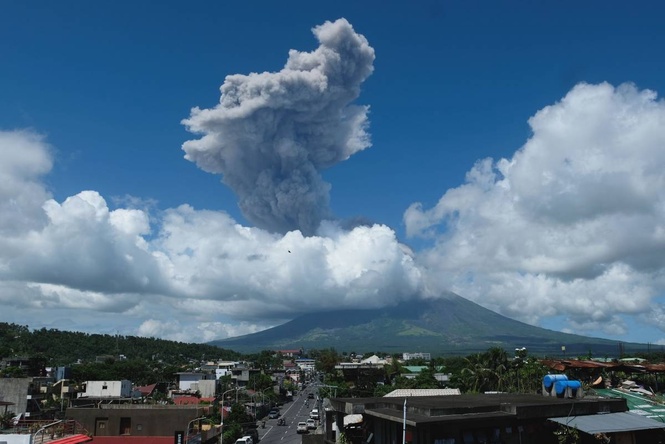
BENEATH Southeast Asia’s volcanoes lies a source of energy that does not depend on sunshine or wind. Geothermal power can run around the clock, supplying electricity through the peaks and lulls of demand. For Asean, much of whose territory sits along or near the Pacific Ring of Fire, that makes the heat beneath the ground more than a geological feature: it is a strategic energy asset.
The region is estimated to hold 34 to 35 gigawatts of geothermal potential, nearly 48 percent of the global total. Yet its promise remains only partly realized. Indonesia and the Philippines account for most of Asean’s current geothermal generation, while countries including Thailand, Vietnam, Myanmar, Malaysia and Lao PDR are also assessing their resources. The gap between what the region may have and what it produces is a central challenge for its energy transition.
The barriers are not simply technical. Developing a geothermal field requires costly exploration before a project can generate revenue, and drilling may reveal less usable heat than expected. Permitting can stretch across years. Even a successful project may struggle to deliver power if its remote location is poorly connected to major demand centers.
These challenges are especially pronounced across archipelagos. Indonesia and the Philippines have volcanic resources scattered across islands, while their largest population and industrial centers may be far away. Without sufficient transmission infrastructure including subsea connections and high-voltage networks, potentially dependable clean power can remain stranded near the source.
The economics adds another layer. In 2024, the global weighted-average cost of geothermal electricity fell 16 percent to US$0.06 per kilowatt-hour, according to data cited in the media release. That is progress, but solar and onshore wind remain cheaper on average, at US$0.043 and US$0.034 per kilowatt-hour, respectively. They can also be built more quickly and with less upfront exploration risk.
But comparing geothermal with variable renewables on price alone misses part of the value. Solar and wind generation changes with weather and time of day. Geothermal can provide firm power around the clock, complementing other renewable sources and helping stabilize a cleaner electricity system. The policy question is whether electricity markets and power contracts recognize that contribution or whether projects are judged primarily against the lowest immediate price.
The contrast between Indonesia and the Philippines illustrates how policy and market conditions can shape development. Indonesia is estimated to have around 28 gigawatts of geothermal potential, roughly 40 percent of global resources, but operates at less than 8 percent of that capacity.
The Philippines, by comparison, uses more than 44 percent of its potential, supported by a more established sector and regulatory conditions that have helped attract private participation. The comparison is not a simple prescription: each country has different geology, institutions and grid needs. But it points to the importance of rules that make long-term investment possible.
Reducing exploration risk is one promising approach. A proposed Philippine Geothermal Resource De-Risking Facility, valued at US$170 million, is an example of how public and private finance might share the early uncertainty that deters developers. The logic is straightforward: if governments or dedicated facilities can absorb some of the risk before a reservoir is proven, viable projects may have a better chance of reaching construction and attracting private capital.
That support must be part of a broader framework. Streamlined permitting can reduce delays; coherent national legislation can make responsibilities clearer; and procurement rules can reward dependable, clean power rather than treating every megawatt as interchangeable. Grid investment is equally essential. A productive geothermal field cannot contribute much to regional energy security if the network cannot carry its electricity to consumers.
Regional cooperation could help expand the opportunity.
The Asean Power Grid aims to strengthen cross-border electricity links, potentially enabling countries to share clean power and improve system flexibility. Commercial partnerships can also transfer experience between established producers and emerging markets. First Gen’s Energy Development Corporation, for example, has formed a joint venture with Indonesia’s Sinar Mas group to pursue up to 440 megawatts of geothermal capacity. The ambition is significant, though turning it into operating plants will depend on exploration results, financing, permits and infrastructure.
Asean’s geothermal leadership will not be secured by resource estimates alone. It will depend on whether governments can align energy policy with the realities of drilling, build transmission ahead of demand, and design markets that value reliable low-carbon electricity. It will also require patience: geothermal projects take time, and the risks arrive well before the rewards.
The prize, however, is broader than additional generation. Developing geothermal power could strengthen energy security, diversify national electricity mixes and create a durable foundation for industrial growth with lower emissions. For a region seeking to grow while decarbonizing, the heat beneath its feet is an opportunity worth organizing around.
Asean has the resources to become a global geothermal force. Its next task is to make that potential investable, connectable and valuable so the Earth’s steady heat can help power the region’s future.