A 10-Year Outlook for the Chinese Automotive Brands making a strong impression in Malaysia
The Malaysian automotive landscape is experiencing a structural pivot. Over the next decade, Chinese original equipment manufacturers (OEMs) including BYD, Geely (via Proton), Chery/Omoda & Jaecoo, Great Wall Motor (GWM), XPeng, JAC Motor and SAIC/MG are transitioning from market disruptors to core industry anchors.
Driven by superior Battery Electric Vehicle (BEV) and Plug-in Hybrid Electric Vehicle (PHEV) technology, aggressive localised Completely Knocked Down (CKD) investments, and digital-first ecosystem integration, Chinese brands are reshaping consumer expectations and regional supply chains.
By 2035, Chinese automotive platforms either under native badges or strategic national joint ventures are projected to control 35% to 45% of Malaysia’s Total Industry Volume (TIV), directly challenging Japanese incumbents and redefining price-to-value benchmarks.
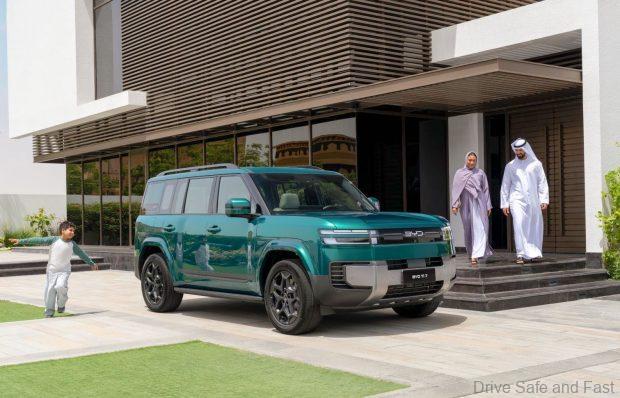
1. Macro-Environmental Drivers & Policy Tailwinds
Malaysia’s automotive transition is propelled by clear policy mandates and evolving regulatory frameworks designed to foster localised manufacturing.
National Energy Transition Roadmap (NETR) & Low Carbon Mobility Blueprint: Government targets aim for 15% xEV (EV + Hybrid) market share by 2030 and 80% by 2050. Chinese OEMs are the primary volume providers capable of delivering models at price points that make these targets realistic.
The Post-CBU Exemption Era (2026 Onward): With tax exemptions for Completely Built Up (CBU) imported EVs expiring, Ministry of Investment, Trade and Industry (MITI) policies prioritise CKD operations, local component sourcing, and export quotas. Chinese carmakers are investing heavily in local assembly hubs to secure long-term tax advantages and cost competitiveness.
Revised EV Road Tax Structure: The implementation of power-output-based (kW) road tax algorithms delivering up to an 85% cost reduction compared to legacy ICE engine displacement calculations lowers ownership friction for high-performance Chinese BEVs.
Strategic Growth Phases

Phase 1: Local Assembly Infrastructure & CKD Scaling (2026–2027)
Following tighter CBU regulations, Chinese OEMs are scaling local assembly. Geely’s strategic injection into the Automotive High-Tech Valley (AHTV) in Tanjong Malim, alongside Chery’s Shah Alam assembly operations and Stellantis/Leapmotor production in Gurun, forms a robust industrial foundation.
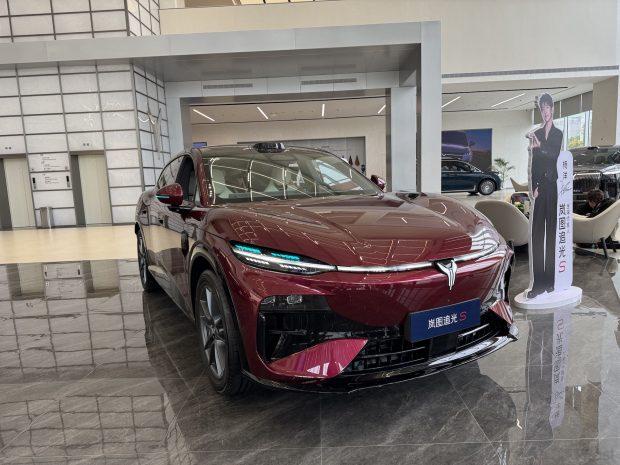
Phase 2: Powertrain Diversity & Rural Market Penetration (2028–2030)
Recognizing infrastructure limitations outside key urban centers (Klang Valley, Penang, Johor Bahru), Chinese OEMs are expanding their portfolio beyond pure BEVs. Plug-in Hybrids (PHEVs) and Extended-Range Electric Vehicles (EREVs) provide non-linear growth options for suburban and East Malaysian drivers who demand multi-hundred-kilometer range without charging anxiety.

Phase 3: Software-Defined Vehicles (SDVs) & ASEAN Export Leadership (2031–2035)
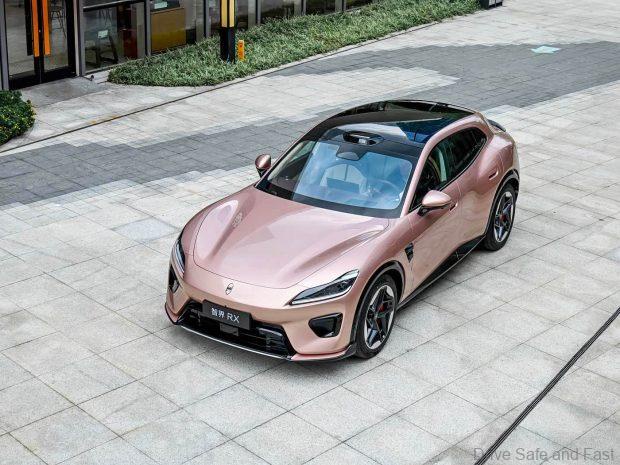
Malaysia is positioned to become a central Right-Hand Drive (RHD) manufacturing and export base for ASEAN and Commonwealth markets.
Vehicles built in Malaysia will leverage China’s software ecosystem featuring AI-assisted autonomous navigation, over-the-air (OTA) updates, and connected vehicle services.
3. Sustainability, Ecosystem, & Supply Chain Development
Long-term sustainability relies on localized supply chain integration and aftermarket services.
Tier-1 & Tier-2 Supply Chain Localization: Transitioning from simple bolt-on assembly to deep localized manufacturing. Investments in local battery pack assembly, power electronics, and structural stamping reduce exposure to currency fluctuations and logistics disruption.
Infrastructure Charging Collaborations: Chinese OEMs are partnering directly with local Charge Point Operators (CPOs) such as Gentari, ChargEV, and ChargeSini to deploy ultra-fast DC chargers along key transport arteries.
Battery Lifecycle & Second-Life Recycling: As early EV deployments reach mid-life, Chinese battery supply chain partners (e.g., CATL networks) are introducing circular economy frameworks establishing diagnostic, repair, and second-life energy storage systems (ESS) within Malaysia.
4. Key Opportunities & Strategic Challenges
Strategic Opportunities
Dominance in the Sub-RM100,000 Market: Localized assembly allows Chinese OEMs to offer high-spec EV/PHEV options below the RM100k threshold, filling a gap left by Japanese incumbents slower to electrify.
Fleet Modernization & Commercial Transport: Beyond passenger vehicles, Chinese OEMs (e.g., Geely and BYD Commercial) are positioned to supply electric commercial vans, trucks, and public transport buses for corporate ESG compliance.
R&D and Talent Transformation: The expansion of tech centers creates high-skilled jobs in software engineering, battery management systems (BMS), and automotive mechatronics.
The post Growth & Sustainability Of Chinese Automotive Brands In Malaysia Over The Next 10 Years first appeared on DSF.my.