

One of the most common and potentially health-damaging psychological situations that people encounter regularly is chronic stress.
Prolonged stress can have a significant impact on both mental and physical health, leading to issues like (click to read more): oxidative stress, inflammation, brain shrinkage, insulin resistance, gut microbes imbalance, anxiety, sleep disturbances, digestive problems, high blood pressure and a weakened immune system.
In short, prolonged stress ruin our health.
Therefore, managing and reducing chronic stress is crucial for overall well-being.
1. The nervous system
To understand how to reduce our stress level, we have to understand the nervous system.
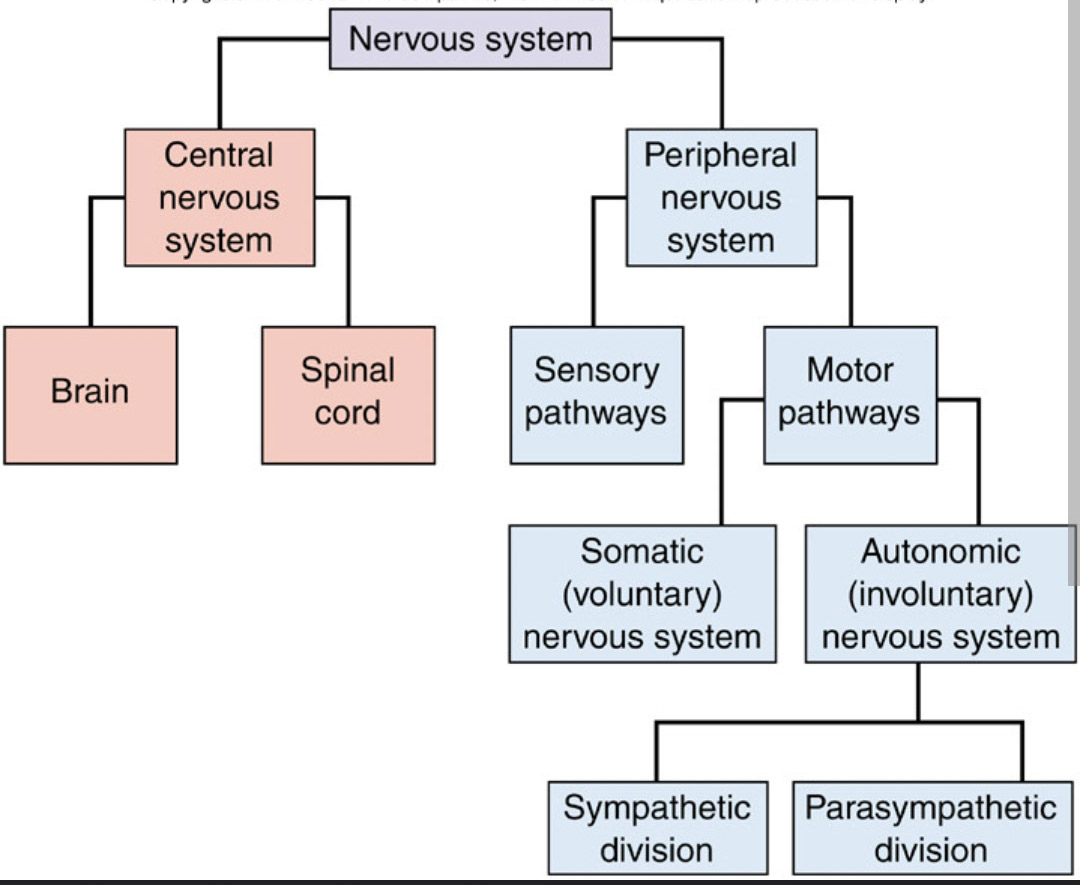
(a) The central nervous system - the brain and spinal cord) controls our actions (muscle contractions and secretion of hormones)
(b) There are 2 types of nerves receiving signals from the brain and spinal cord :
(i) the somatic nervous system - connected to the skeletal muscles (muscles connected to the skeletons) which are the voluntary muscles
- therefore we can control when we want to walk, dance etc.
(ii) the autonomic nervous system (autonomic = involuntary) - connected to the muscles of the heart, digestive system and glands (that secrete hormones)
- we cannot control this part of the nervous system
- this is the part of our nervous system that controls our responses to stress.
- therefore we cannot control our heart rate, secretions of hormones and digestion directly.
(c) The autonomic nervous system consists of :
(i) Sympathetic Nervous System:
- activated during "fight or flight" situations
- prepares the body for action.
- increases heart rate, redirects blood flow to muscles and releases energy.
(ii) Parasympathetic Nervous System:
- known as the "rest and digest" system
- promotes relaxation and recovery.
- slows heart rate, stimulates digestion, and conserves energy.
- helps restore balance
2. The harmful effects of shallow breathing during stress - why we have the agitated feeling during stress
Typically, an anxious person takes small, shallow breaths, using their shoulders rather than their diaphragm to move air in and out of their lungs.
Shallow breathing will cause
(a) high carbon dioxide levels in the blood
(b) increased heart rate and breathing rate
These two situations give rise to the agitated feeling during stress.
Shallow breathing during stress
(a) limits the depth of your breaths, reducing the exchange of oxygen and carbon dioxide in your lungs. This can lead to inadequate oxygenation of blood and poor removal of carbon dioxide.
(b) contribute to a collapse of small air sacs in the lungs called alveoli, as they need sufficient air exchange to remain inflated (When we are stressed some of the 500 million balloon like air sacs in the lungs become collapsed)
(a) and (b) will decrease the efficiency of air exchange in the lungs which in turn will lead to increased heart rate and breathing rate to compensate for the low levels of oxygen in the blood.
The high levels of carbon dioxide also give rise to the agitate feeling during stress.
3. Controlling our bodies vs. controlling our minds
Controlling our bodies = Controlling our muscles (and hence our movements) - this is easy, we just need to contract our muscles.
Control our minds = Controlling the autonomic nervous system - this is difficult. How can we slow down our hearts' rates when we are stressed?
In our words, if we can achieve the difficult task of controlling our minds, we can control our stress level
4. Techniques in controlling our minds
There are two categories of techniques.
(a). Mindfulness and meditiation :
- do not directly manipulate the body
- focus on the mind and emotions directly
- aim to reduce stress-related thoughts and emotions
- so as to achieve a mental state that can indirectly influence responses that can lead to relaxation and stress reduction over time.
- summary :
(i) control the mind first
(ii) to control the body (causing it to reduce heart rate and breathing rate)
- take a longer time to reduce stress level but with long-term benefits
- difficult to practise we have to "speak" to the mind
- not the focus of this article.
(b). Breathing techniques :
- directly manipulate the body
- focus on breathing (the body) directly
- aim to reduce heart rate indirectly
- by achieving a physical state where increased heart rate is not necessary
- summary :
(i) control the body first (by controlling breathing)
(ii) to control the mind (telling it that a low heart rate and breathing rate is enough) - (iii) the mind will then control the body
(causing the parasympathetic system - see above - to really slow down the heart rate and breathing rate )
- shorter time to reduce stress level but with short-term benefits
- easy to practise because now we control our voluntary muscles in our chest cavity
- the focus of this article.
5. The Physiological Sigh
There are dozens of breathing techniques and patterns that help reduce stress and anxiety.
In this article, we focus on a technique discovered in the 1930s called ‘The Physiological Sigh’ which can help us regain control quickly from feelings of stress and anxiety.
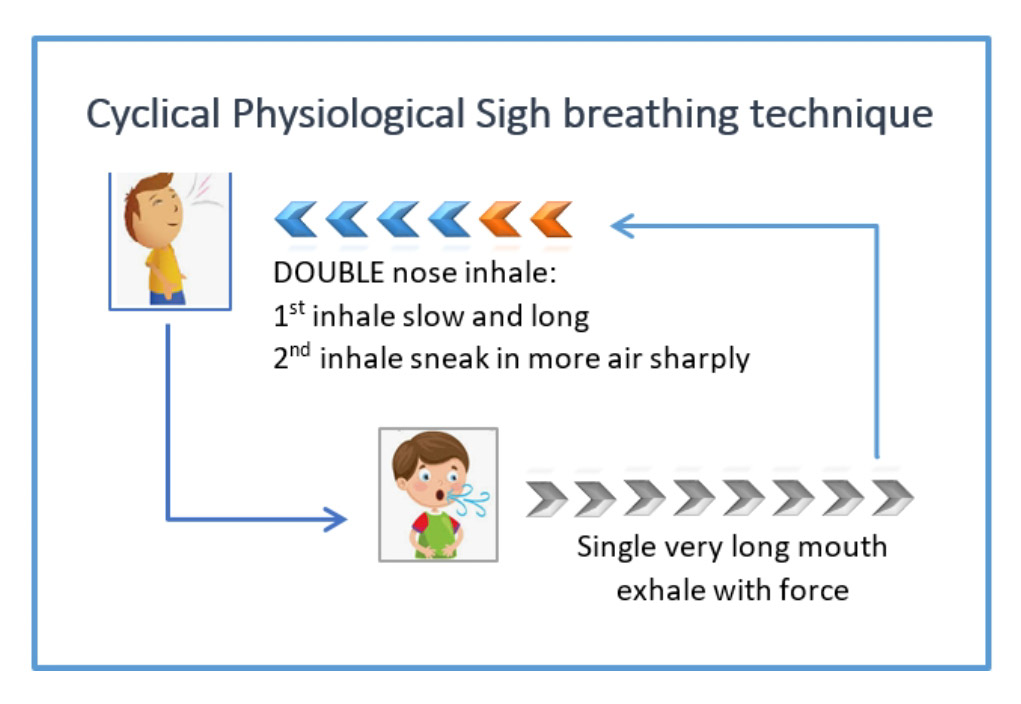
A sigh is a particular breathing pattern when two inhales take place followed by a long exhale.
It’s something we do all the time involuntarily- around every 5 minutes including the moments before we are about to fall asleep, during sleep, and when we cry.
Sighing is essential for lung function and without it our lungs would fail.
By mindfully (purposely) sighing a few times, you can manually reduce two key symptoms of stress within a few seconds - agitated feeling and increased heart rate and breathing rate.
6. How can a mindful (conscious) sigh manually reduce these two symptoms of stress
To mindfully or purposely carry out a sigh we take two inhales followed by a long exhale
When we inhale twice the collapsed alveoli reinflate with air. This increases the surface area of the lungs and removes carbon dioxide from the body much more efficiently. This makes the body feel more relaxed.
When we exhale, the diaphragm moves up, leading to less volume, pressure on the heart increases, the receptors in the heart sense the increase in pressure, signals are sent to the brain to slow down the heart rate.
This creates a relaxed feeling.
The best thing about this method is that it uses the body to control the mind, rather than trying to use the mind to control the mind.
Trying to control the mind directly is significantly harder to do and takes training and practice. Mindfulness, mediation and yoga are popular examples of this.
In Part 2 of this series, we will look at more breathing techniques to reduce stress.
Kevin Wong is a content creator under the Newswav Creator programme, where you get to express yourself, be a citizen journalist, and at the same time monetize your content & reach millions of users on Newswav. Log in to creator.newswav.com and become a Newswav Creator now!
The User Content (as defined on Newswav Terms of Use) above including the views expressed and media (pictures, videos, citations etc) were submitted & posted by the author. Newswav is solely an aggregation platform that hosts the User Content. If you have any questions about the content, copyright or other issues of the work, please contact Newswav.