1. What is the vagus nerve and why do we want to stimulate it.
The vagus nerve is the longest cranial nerve in the human body, running from the brain to the colon.
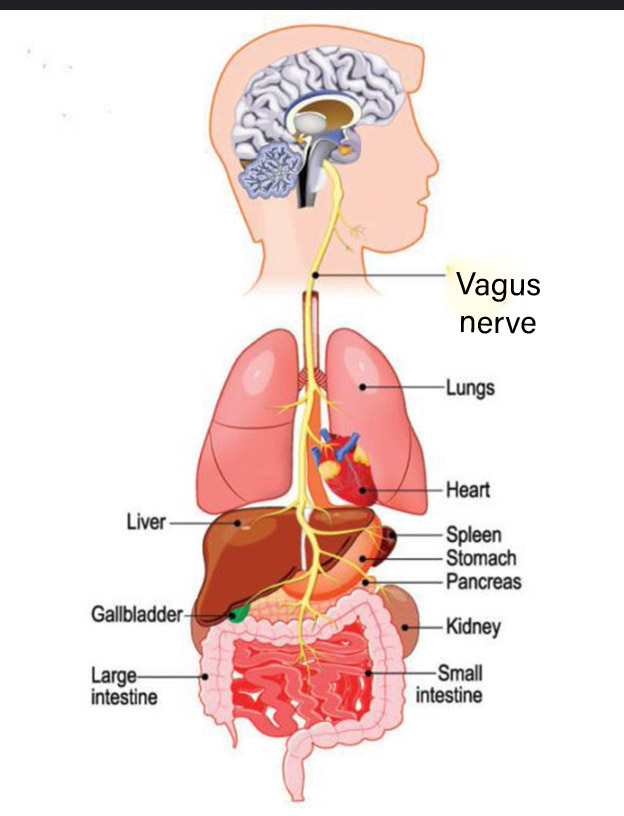
The vagus nerve is part of the parasympathetic nervous system, which calms your body after you've been in a stressful situation.
Refer to Part 1 for an explanation of the sympathetic and parasympathetic nervous systems.
The vagus nerve represents three-quarters of the parasympathetic nervous system which helps us rest and digest.
In other words the vagus nerve helps your body exit its fight-or-flight mode.
The vagus nerve carries signals from your brain to other parts of your body, like your heart or intestines, to initiate the process of calming the body.
When the vagus nerve is under strain a variety of health complications can occur ranging from an upset stomach and a bad mood to heart problems and autoimmune diseases.
Therefore stimulating the vagus nerve can help to reduce the stress level of a person by regulating many involuntary functions in the body including mood, heart rate and digestion.
By stimulating the vagus nerve (controlling your body) , you can send a message to your mind that it’s time to relax and de-stress,
It is important to note that stimulating the vagus nerve is not a substitute for medical treatment. If you have any health concerns, please consult a healthcare professional.
Also, note that the methods suggested here are all not invasive. They do not involve inserting any objects or devices into the body. Electrical stimulation is also not suggested
2. Ways to stimulate the vagus nerve
The vagus nerve is the longest nerve in the body, stretching from the brain to the tongue, throat, neck, heart, lungs, abdomen and gut.
So it is better to split the vagus nerve into three distinct zones:
(A) The upper vagus — the neck, face, jaw, and throat.
(B) The middle vagus — the diaphragm, rib cage and lungs.
(C) The lower vagus — is in the organs of the abdomen such as the kidneys and spleen.
Here are some ways to stimulate the upper, middle, and lower vagus nerve:
(A) Upper Vagus Nerve:
(a) Create eye pressure
Applying gentle pressure on the eyes stimulates something called the oculocardiac reflex which reduces our heart rate. So, this naturally has a soothing effect on the nervous system.
Here's a study on the above fact if you want to read about it (quite technical)
This can be achieved by applying a piece of material over the eyes or using an eye mask (nothing too heavy! ).
Gently placing the palms of your hands over your eyes works wonderfully too.
(b) Create "soft eye" view
Our eyes, like our breath, often reflect our current mental state.
Sharp, dilated, focused eyes, for example, reveal a heightened sense of alertness.
Soft, open eyes, on the other hand, reflect a sense of ease and relaxation.
So, by creating “soft eyes” the nervous system relaxes as a result.
This practice is great for relieving stress, reducing anxiety, and relaxing the body.
It’s a quick and effective way to tap into the parasympathetic nervous system and stimulate the vagus nerve.
(i) Sit comfortably and allow your body to relax
(ii) Look straight ahead and land your gaze on an object in the distance
(iii) Begin to connect to your side (peripheral) vision while continuing to look ahead
(iv) Now, expand your awareness to the spaces up and down and to the sides without moving your eyes off the object in front of you.
(v) Allow your focus to be on ‘all things’ at the same time as your eyes begin to ‘soften’ (ie not focused on just one object).
(vi) Remain here for as long as it feels good to do so
(c) Carry out activities to involve the throat and voice box.
The upper vagus nerve is responsible for controlling the muscles in the throat and voice box.
Therefore you can stimulate the upper vagus nerve by singing, humming, chanting "om" (om-ing) and gargling water.
Humming also releases a gas called nitric oxide. Nitric oxide improves blood circulation and blood flow, reduces inflammation and tension, improves heart health and lowers blood pressure.
Read this article if you want to know about other ways to increase the nitric oxide level in the blood.
(B) Middle Vagus Nerve:
The middle vagus nerve is responsible for controlling the heart and lungs.
Therefore this part of the vagus nerve is all about working the diaphragm, rib cage, and lungs.
(a) Breathing exercises :
Breathing exercises or correct breathing techniques can stimulate the middle vagus nerve.
To read up on the correct breathing techniques, refer to Part 1 for the physiological sigh, Part 2 for abdominal breathing and Part 3 for nose breathing, 4-7-8 breathing and box breathing.
(b) Exercises :
A small 2016 study (quite technical) found that participants who performed one cycling session experienced increased vagus nerve activity.
Cardio exercise, also known as cardiovascular exercise or aerobic exercise the best methods for vagus nerve stimulation because it requires you to work to control your breathing.
It sends your body into a highly activated state, which then triggers the vagus nerve in order to return to a calmer state.
(C) Lower Vagus Nerve:
The lower vagus nerve is responsible for controlling the digestive system. You can stimulate the lower vagus nerve by
(a) massaging the abdomen.
This vagus nerve can be stimulated by massaging the abdomen because the vagus nerve ends in the gut.
Start by gently massaging your belly, applying pressure to all the organs and digestive tract. Then apply more pressure if it feels good to do so.
Benefits of an abdominal massage include:
(i) Stimulates the vagus nerve.
(ii) Improves digestion because the vagus nerve is responsible for controlling the digestive system.
(iii) Relieves constipation.
(iv) Releases physical tension and emotional stress.
Research also shows that foot massage can stimulate the vagus nerve and reduce anxiety and depression.
(b) cold immersion/exposure
Acute cold exposure has been shown to activate the vagus nerve and lower heart rate.
You can read about a research here (quite technical)
There are 3 ways to carry out cold exposure :
(i) Applying a cold compress to the front or sides of your neck, or the center of your upper chest
(ii) Dunking your face in cold water:
You can also ease yourself into cold exposure by simply sticking your face in ice-cold water. Immerse your forehead eyes and at least 2/3 of both cheeks into cold water.
(iii) Taking a cold shower, or switching to cold water for the last 2-5 minutes of your shower
Cold immersion or cold shower have other benefits like improving the immune system.
Kevin Wong is a content creator under the Newswav Creator programme, where you get to express yourself, be a citizen journalist, and at the same time monetize your content & reach millions of users on Newswav. Log in to creator.newswav.com and become a Newswav Creator now!
The User Content (as defined on Newswav Terms of Use) above including the views expressed and media (pictures, videos, citations etc) were submitted & posted by the author. Newswav is solely an aggregation platform that hosts the User Content. If you have any questions about the content, copyright or other issues of the work, please contact Newswav.