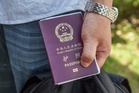
China on Tuesday began enforcing sweeping new travel rules that allow the Communist government greater control over the movements of citizens.
The rules bar any citizen deemed a potential threat to national technology security from leaving the country in what’s seen as an effort to target alleged violations of technology import and export rules.
The regulations place heavy restrictions on civil servants, Communist Party members, state-owned enterprise employees, as well as private citizens.
Although Chinese citizens are generally free to travel, the government monitors the trips of those considered to present a security risk.
The new rules take China back to the height of the Cold War, when few people could venture overseas due to a prohibition on foreign travel.
Any citizen who returns after committing “illegal or criminal acts” abroad that harm national security or interests will face penalties under the new rules, including an exit ban ranging from six months to three years.
Foreign nationals may also be denied entry for one to five years for making false statements in visa applications.
The new rules were enacted through the State Council Regulations on Exit and Entry Administration, a law signed by premier Li Qiang on 22 July and put into effect on Tuesday. The law is seen as an effort by Beijing to create tighter regulations to counter foreign sanctions while preventing the outflow of tech secrets.
The government, through its "rumour-refuting" platform, claimed the new rules "do not restrict the travel of ordinary citizens, but rather serve as a preventative measure against high-risk destinations and individuals with unusual travel patterns".
A Chinese citizen found violating "export control or technology import and export regulations that may endanger national industrial or technological security” would be prevented from "leaving the country", according to article 4 of the law.
Another article encourages private sector immigration agencies to report “public officials, military personnel, or other individuals” who are trying to go overseas “in violation of the rules”.
Curbs on personal foreign travel have long applied to senior government officials and state executives with access to confidential information.
Human rights organisation Safeguard Defenders said in a 2024 report that China had been steadily expanding its use of exit bans.
In March, Beijing imposed a travel ban on two co-founders of Chinese AI company Manus, which Meta had planned to acquire for $2bn.
In 2023, Chinese civil servants and employees of state-linked enterprises said they were facing tighter limits on private travel abroad and scrutiny of foreign connections as Beijing waged a campaign against foreign influence.
In June, Myanmar expert and US citizen Min Zin was arrested by Chinese authorities over accusations of endangering national security.
The new rules prompted Taiwan, which Beijing claims as part of its territory, to warn its people to take extra care while visiting China.
The rules "legalise" previously legally unfounded border control practises and boost the discretionary authority of enforcement agencies, said Shen Yu chung, deputy head of Taiwan's China-policy-making agency Mainland Affairs Council.
In comments on Monday, he highlighted as a particular concern new language on "export control" and "technology import-export management" as grounds for restricting exit, especially for Taiwanese who work in the tech sector.
China dismissed those concerns, saying the rules provided better legal protection for Taiwanese people.
Read MoreUN calls for AI to be reined in as China and Trump downplay threat
Hyrox champion shocks rivals by finishing race despite soiling herself
Xi unveils AI and trade initiatives as China moves to strengthen ‘Greater Brics’
Brics demands greater say in global affairs as bloc’s leaders meet in Delhi
Hyrox apologises and changes rules after athlete soils herself during Beijing race