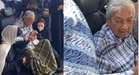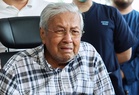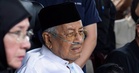
Tun Dr. Mahathir remarked to Al-Sultan Abdullah, the Sultan of Pahang, “I did not anticipate Hasmah’s passing today (Monday); she appeared in good health yesterday.”
The news on the morning of September 28, 2026, deeply affected the family and prompted widespread mourning across Malaysia. The somber occasion left the former Prime Minister unprepared for the loss of his wife.
According to Mukhriz Mahathir, his mother had expressed readiness to depart from her family. After seven decades of marriage, seven children, and a long association with Tun Dr. Mahathir, she passed away at approximately 9:20 a.m. at the National Heart Institute (IJN).
At age 100, the late Tun Dr. Hasmah left numerous recollections among friends and associates; however, her broader legacy remained less familiar to the general public. Few Malaysians inquired about her identity, and relatively few records documented the contributions of this “Mother of the Nation.”
Nevertheless, the book My Name is Hasmah, published ten years prior to her death, highlighted her pivotal influence on the development of Tun Dr. Mahathir Mohamad, who served as Prime Minister for 22 years.
The late Tun Dr. Hasmah noted that her husband’s primary interest was politics, alongside his medical career. This was consistent with Dr. Mahathir’s early writing under the pseudonym C.H.E. Det, beginning in 1947.
Two years prior, at age 20, Dr. Mahathir became the inaugural secretary of the Kedah Malay Union. The following year, he contributed to efforts to mobilize Malay opposition to the 1946 Malayan Union proposal by designing, printing, and distributing posters at night to evade British authorities.
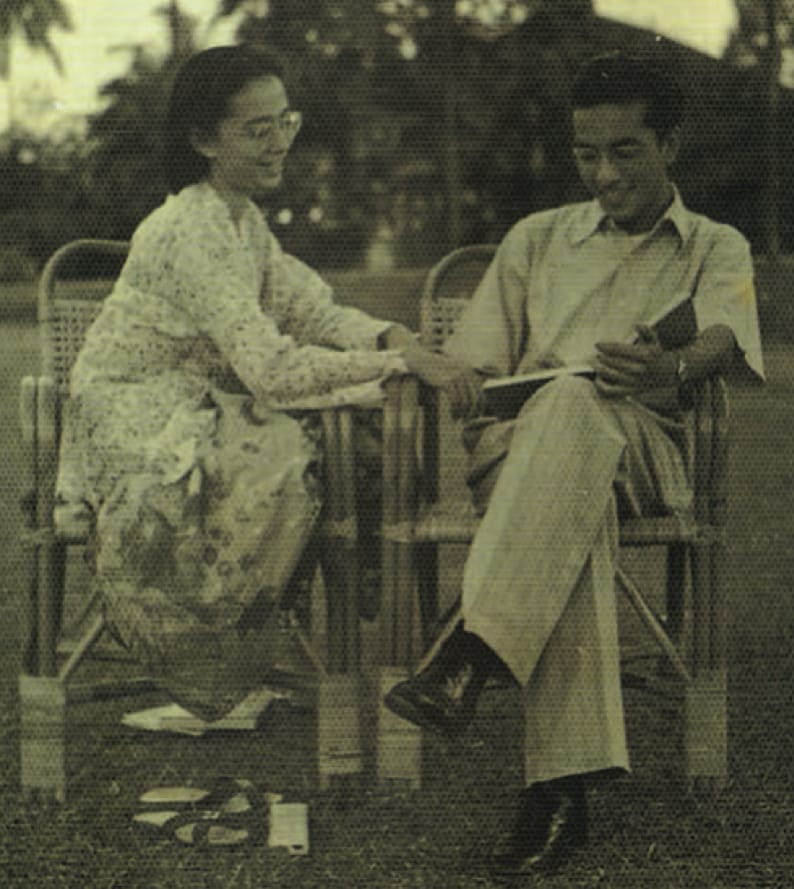
In 1947, while pursuing medical studies at King Edward VII Medical College in Singapore, Dr. Mahathir met the late Dr. Hasmah, the sole Malay woman among 87 male students that year.
During the Islamic Student Union’s annual dinner, Dr. Hasmah delivered a speech on behalf of incoming students. Afterward, Onn Jaafar, then Menteri Besar of Johor, remarked that he admired contemporary Malay women more than men, characterizing them as more progressive.
From this encounter, Dr. Mahathir recognized Dr. Hasmah’s ambition and exceptional courage.
By coincidence, both individuals shared a common resolve: to preserve national sovereignty and reconstruct Malay society to eliminate the indignity of intellectual complacency. Both had endured significant hardship during the extended colonial period.
Recognizing that political engagement demands fortitude, Dr. Mahathir drew inspiration from his wife’s childhood triumph over fear at age nine. Previously, Dr. Hasmah had been deeply unsettled by the sight of a long orange scarf her mother used in burial rites.
The scarf, employed to shroud the deceased, caused persistent anxiety. One day, Hasmah decided to confront this fear by wrapping the fabric around herself and remaining still until the apprehension subsided. She successfully overcame the phobia.
Consequently, Hasmah reported no apprehension during third-year anatomy instruction involving cadavers. In contrast, Dr. Mahathir nearly withdrew from the course due to his discomfort with cadavers. He initially remarked, “If female students such as Hasmah can manage this, I can as well.”
Ultimately, Dr. Mahathir requested a colleague to accompany him to the anatomy laboratory, lifted the covering from a cadaver, and placed both hands on the body—a method identical to Hasmah’s approach to overcoming fear.
From that point forward, Dr. Mahathir adopted the same principle as Dr. Hasmah: courage requires direct confrontation. Avoiding fear offers no advantage in political challenges against global powers such as the British.
After seven years of a developing relationship marked by various experiences, the couple married in August 1956. According to acquaintances, the Mahathir-Hasmah partnership was exemplary—two doctors who never disagree. This marked the beginning of Dr. Hasmah’s involvement alongside Dr. Mahathir in politics, national administration, and international diplomacy.
One of Dr. Hasmah’s early indirect contributions occurred in 1964, as recounted by veteran journalist A. Kadir Jasin in recent Facebook's commentary. At age 39, Dr. Mahathir campaigned in a village in Pendang, Kedah, during that year’s general election.
The account of a candidate’s spouse entering a villager’s kitchen, drawing water from a traditional clay vessel (buyung), and drinking it became widely circulated and legendary. This narrative helped establish the image of an urban physician couple who were comfortable eating and drinking in rural homes.
Dr. Mahathir defeated the incumbent from the PAS party by a margin exceeding 4,000 votes. Dr. Hasmah played a significant role in facilitating her husband’s victory, particularly among female voters.
Following that electoral success, public interest in Dr. Mahathir increased as he assumed a more prominent role as a principal spokesperson for the Alliance Party. In 1965, he was appointed to Malaysia’s delegation to the United Nations.
In 1966, while serving as Chairman of the Afro-Asian Peoples’ Solidarity Organization, Dr. Mahathir publicly criticized British Prime Minister Harold Wilson, alleging indecision during the Rhodesian crisis. Shortly thereafter, in Parliament, he proposed the gradual nationalization of Malaysia’s import-export enterprises as an initial measure to reduce British economic influence in Malaya.
His assertive stance toward Britain intensified during his tenure as Prime Minister, most notably through the 1981 Dawn Raid and the “Buy British Last” campaign. Between 1984 and 1986, the Carcosa building was returned to Malaysia, a development often cited as a milestone in the nation’s full sovereignty.
Dr. Mahathir’s decisive policies extended to Bosnia, Palestine, and the Gulf states. Of particular significance was his rejection of International Monetary Fund (IMF) intervention, a strategy credited with shielding Malaysia from the 1998 Asian Financial Crisis and resisting perceived global geopolitical agendas.
Perhaps the most enduring legacy is Dr. Mahathir Mohamad’s decisive dismissal of Anwar Ibrahim, then Deputy President of UMNO and the presumed successor. No prime minister had previously demonstrated such resolve in removing the party’s most popular figure; in doing so, Dr. Mahathir risked his own standing within UMNO.
Between 1964 and 2003, Malaysia transitioned from the influence of Britain and global powers to become one of Asia’s most rapidly developing nations. The international community began to question the source of this national fortitude.
Dr. Mahathir provided a compelling answer in 2001 by dispatching his wife, Dr. Hasmah Mohamad Ali, to lead a humanitarian delegation to Baghdad. At age 75, Dr. Hasmah guided 15 professional women to observe firsthand the impact of economic sanctions on the Iraqi population.
A notable demonstration of courage occurred when Dr. Hasmah, acting on instructions from Iraqi officials, met Saddam Hussein alone—without the knowledge of her delegation or security detail.
Through this episode, Dr. Mahathir sought to highlight Dr. Hasmah’s bravery to the global community, suggesting that she had been a foundational source of strength throughout his tenure as prime minister.
This event underscores the extraordinary courage of a woman willing to accept personal risk in a humanitarian context, despite the dangers inherent in one of the world’s most volatile regions at the time.
September 28 marked the beginning of a national inquiry into the identity of “Hasmah.” The 2016 publication that followed became a key reference for understanding her role as a stateswoman.
Only then did the public fully grasp why the passing of a spouse at age 101 evoked such profound emotion. It was not merely a narrative of enduring love; it originated as a story of courage forged in political struggle.
The union of two individuals driven by shared ambition gave rise to a nation initially perceived as modest, yet ultimately capable of standing alongside global powers.
Malaysia emerged as a courageous, formidable, and respected entity. It was shaped by the late Tun Dr. Siti Hasmah Mohamed Ali—the “Mother of a brave Nation”—whose resolve inspired Tun Dr. Mahathir Mohamad in his roles as husband, father, and Prime Minister, exemplifying courage and the conquest of fear.
May Allah SWT grant the late Tun Dr. Siti Hasmah Mohamed Ali a place among the faithful and the martyrs.
“One thing that will happen in the future. Things will change. Even the most cherished thing will change. So enjoy yourself now.” —Dr Mahathir, 21 Ogos 2026
Amir Al Fateh (malaydigest@gmail.com) is a content creator under the Newswav Creator programme, where you get to express yourself, be a citizen journalist, and at the same time monetize your content & reach millions of users on Newswav. Log in to creator.newswav.com and become a Newswav Creator now!
The User Content (as defined on Newswav Terms of Use) above including the views expressed and media (pictures, videos, citations etc) were submitted & posted by the author. Newswav is solely an aggregation platform that hosts the User Content. If you have any questions about the content, copyright or other issues of the work, please contact creator@newswav.com.