KUALA LUMPUR: Malaysia must move beyond announcing new legislation and establish a workable legal framework to investigate and hold companies accountable for transboundary haze pollution as deteriorating air quality forces school closures and disrupts daily life.
Universiti Kebangsaan Malaysia’s Associate Professor of Law, Dr Shahrul Mizan Ismail said the government should prioritise legislation to prevent fires, establish responsibility, secure evidence and provide remedies for those affected, rather than introduce another law simply to demonstrate action.
“People are not asking for anything extravagant. They want their children to go to school, their parents to stay well, and to get on with earning a living without worrying about the air they breathe,” he told Twentytwo13.
His remarks come as environmental groups and elected representatives press the government to enact specific legislation addressing transboundary haze, including possible action against Malaysian-linked companies operating in Indonesia if investigations establish their responsibility for fires.
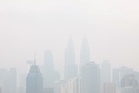
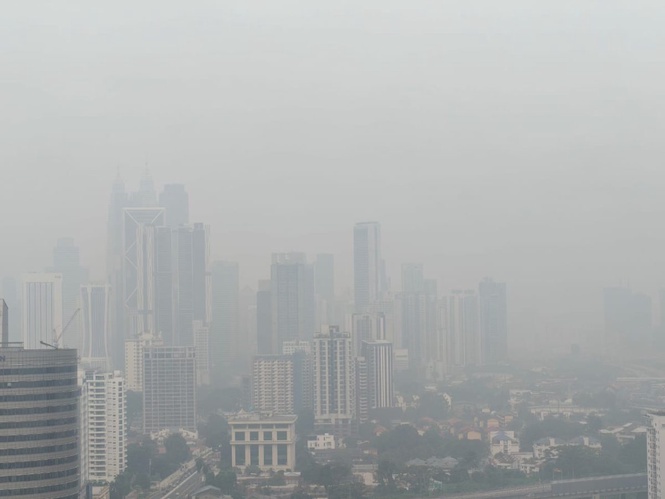
The urgency is underscored by haze from regional forest and land fires, which continues to affect Malaysia.
This week, schools in Johor, Melaka, Negeri Sembilan and Selangor, as well as Kuala Lumpur and Putrajaya, were ordered to close. Schools in Rompin, Pahang, were also affected as authorities responded to unhealthy air quality.
The Department of Environment reported that 37 areas recorded unhealthy Air Pollutant Index readings on Friday morning. The Youth and Sports Ministry also postponed National Sports Day celebrations scheduled for Oct 10 at Bukit Jalil, citing public health and safety concerns. Similar events in several states were also put on hold.
For Shahrul Mizan, the consequences extend beyond environmental damage.
The Human Rights Commission of Malaysia (Suhakam) has warned that outdoor workers and lower-income communities have fewer options to protect themselves from prolonged exposure to polluted air.
“Telling everyone to stay indoors is not much of an answer to someone whose income depends on working outside,” he said.
A tragedy amid the haze
The crisis has coincided with a tragedy in Pontian, Johor, where three siblings aged 18, 11 and eight were killed when their motorcycle collided with a lorry on Thursday.
The younger siblings had reportedly insisted on going to school despite being told that classes had been cancelled because of the haze. Their eldest brother took them on his motorcycle to check, and the collision occurred as they travelled back from school.
The two younger children reportedly died at the scene, while their 18-year-old brother died on the way to hospital.
Police said the motorcycle was believed to have collided with a lorry travelling in the opposite direction. The cause remains under investigation.
The deaths underscore the human cost of the haze emergency, which has disrupted daily routines, prompted school closures and forced authorities to curtail outdoor activities.
Malaysia has laws — but cross-border enforcement is different
Shahrul Mizan stressed that Malaysia was not starting from scratch.
Section 22 of the Environmental Quality Act 1974 addresses atmospheric pollution, while Section 29A prohibits open burning within its statutory framework. The Environmental Quality (Clean Air) Regulations 2014 and amendments to the Act have also strengthened the regulatory framework.
However, controlling pollution within Malaysia differs from establishing responsibility for fires in another country.
“Making a law applicable to overseas conduct and enforcing it in another country’s territory are different things,” he said.
He cited Singapore’s Transboundary Haze Pollution Act 2014 as a model worth examining. It provides for action against qualifying conduct outside Singapore that causes or contributes to haze there, including criminal liability, civil claims and preventive measures.
Malaysia would still need to address jurisdiction, access to evidence and cooperation with Indonesian authorities.
Investigators, Shahrul Mizan said, must establish who controlled the operations, who made land-clearing decisions, what fire-prevention duties applied and whether evidence linked the conduct to pollution affecting Malaysia.
A satellite-detected hotspot, he cautioned, was an investigative lead, not proof of wrongdoing.
He also called for a dedicated investigative team comprising environmental scientists, corporate investigators and prosecutors, backed by adequate funding, lawful evidence-gathering powers and information-sharing arrangements with Indonesia.
Greenpeace findings raise questions over corporate accountability
Pressure intensified this week after Greenpeace Malaysia, Greenpeace Indonesia and Indonesian peatland watchdog Pantau Gambut released findings identifying companies and corporate actors linked to haze-source points and fire-affected areas in Indonesia.
The findings included Malaysian- and Singaporean-linked corporate interests, renewing calls for greater transparency over concession ownership, fire locations and investigations.
One entity identified was PT Menteng Jaya Sawit Perdana (PT MJSP), an Indonesian plantation company linked to Malaysian plantation group Kuala Lumpur Kepong Berhad (KLK).
Greenpeace included KLK among the corporate groups connected to its 2026 haze-source dataset, based on fire and smoke-source points detected in Indonesia between August and early October.
However, hotspots or fire-source points within or near a concession do not, by themselves, establish that a company deliberately started a fire or is legally responsible for it.
KLK said in a statement that fires associated with PT MJSP originated outside its concession areas and that all incidents had been extinguished.
The group said it maintained a zero-burning policy in line with its membership of the Roundtable on Sustainable Palm Oil and had stepped up firefighting, satellite and drone surveillance, plantation patrols and other preventive measures.
It added that the incidents had been documented and reported to the relevant Indonesian authorities.
Twentytwo13 has sought further clarification and comment from KLK but has yet to receive a response.
The distinction between a company being linked to a fire-affected area and being legally responsible for the fire is central to the debate.
Shahrul Mizan said Malaysian-linked companies should be investigated where credible allegations exist, but warned against treating corporate links as proof of liability.
“We should neither protect a company because it is Malaysian nor condemn it simply because its name appears in a report. The investigation has to follow the evidence,” he said.
From promises to an enforceable framework
Greenpeace Malaysia, Himpunan Advokasi Rakyat Malaysia and other civil society groups took their demands to Parliament on Wednesday, calling for stronger powers to investigate and hold companies accountable for environmental harm linked to Malaysian corporate interests overseas.
Greenpeace Malaysia campaign manager Heng Kiah Chun said the government must translate its consideration of new legislation into concrete, time-bound action.
Kuching MP Kelvin Yii Lee Wuen also called for an anti-transboundary haze law, arguing that existing regional cooperation had failed to prevent recurring crises.
The Natural Resources and Environmental Sustainability Ministry said the government was examining options for specific transboundary haze legislation, including approaches adopted by Singapore. A special committee has been established to study possible measures.
Suhakam has separately urged the government to expedite a Clean Air Act to establish legally enforceable ambient air-quality standards, strengthen environmental justice and improve accountability for businesses whose activities cause environmental harm.
Shahrul Mizan said a new framework should impose clear fire-prevention duties on companies, improve access to compensation for proven harm and require authorities to explain their actions when pollution reaches specified thresholds.
He added that the Asean Agreement on Transboundary Haze Pollution provides a basis for regional cooperation, information-sharing and preventive measures, but does not automatically compensate families affected by haze.
The challenge, he said, was to make domestic legislation and regional cooperation work together.
“Political will is not just the willingness to announce a law. It is the willingness to enforce it when doing so becomes uncomfortable,” he said.
With schools closing, outdoor activities curtailed and families struggling with deteriorating air quality, the government faces pressure not merely to manage another haze episode but to show that future crises can be prevented and those responsible for environmental harm held to account.