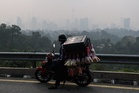
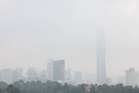
CLEAN air is fundamental to a healthy and productive society. The recent haze affecting parts of Sarawak and Sabah is a timely reminder of how quickly air quality can disrupt daily life, affecting schools, hospitals, businesses, construction activities, transportation and communities.
Haze is not only an environmental and public-health concern. It is also an engineering challenge which involves fire prevention, land and water management, monitoring systems, technology, infrastructure, emergency response and regional cooperation.
Engineers are trained to anticipate risks, analyse complex systems and turn knowledge into practical solutions. That perspective can help Borneo prepare more effectively for future haze events.
Understanding the Haze ChallengeHaze is largely caused by fine particles released through burning. During dry periods, vegetation, agricultural areas and peatlands become more vulnerable to fire.
Smoke can travel considerable distances depending on wind, rainfall and other weather conditions. Unlike a road, bridge or building, haze has no fixed boundary.
Smoke can cross districts, states and national borders. Therefore, an effective approach should cover the entire fire and haze management cycle. It should begin by predicting risks, followed by preventing fires, detecting them early, responding quickly, protecting people and essential services, and finally restoring affected land and ecosystems.
1. Predicting Haze EarlyMalaysia already has air-quality, weather and satellite monitoring capabilities. These sources can be better integrated to provide a clearer picture of fire and haze risks.
Fire hotspots, rainfall, wind, temperature, humidity, soil moisture and air-quality readings can be analysed together. Data analytics and artificial intelligence could support a Borneo Haze Early-Warning System, providing useful risk information 24 to 72 hours ahead. Early information would allow schools, hospitals, local authorities, industries and communities to take appropriate precautions before conditions deteriorate.
2. Preventing Fires Through Land and Water ManagementPreventing fires is generally more effective than fighting large fires. Peatlands require particular attention because dry peat can become highly vulnerable to fire.
Appropriate measures could include maintaining suitable water levels, improving water-control structures, restoring degraded peatlands and providing firebreaks.
Agricultural and plantation areas can also incorporate suitable access roads, water points and emergency access. These measures can improve preparedness while supporting more effective land management.
3. Strategic Water InfrastructureWater is critical for firefighting, especially in remote areas. GIS technology can identify fire-prone locations and suitable sites for firefighting water storage. Depending on local conditions, these could include reservoirs, retention ponds, agricultural ponds and water tanks. A network of strategically located water sources can help reduce the time required to obtain water during an emergency.
4. Digital Technology for Faster DetectionTechnology can improve fire detection over large and remote areas. Satellites can identify hotspots, drones can provide detailed information at selected locations, and ground sensors can monitor temperature, smoke and air quality. Connecting these sources through digital platforms can provide emergency teams with better situational awareness. Artificial intelligence can also help identify patterns indicating increasing fire risk.
Technology should support, rather than replace, professional judgement.
5. Haze-Resilient BuildingsProtection should also extend indoors. Schools, hospitals, childcare centres, offices and other essential facilities can progressively incorporate effective air filtration, suitable ventilation, indoor PM2.5 monitoring, improved building sealing and clean-air rooms where appropriate. Indoor air quality can increasingly be considered alongside structural safety, energy efficiency, flood protection and fire safety in future building design.
6. Protecting Workers and Construction ActivitiesConstruction activities can be affected significantly by poor air quality because many tasks are conducted outdoors.
During unhealthy conditions, project managers should monitor API levels and adjust outdoor activities where necessary. Workers should have suitable respiratory protection, clean-air rest areas, drinking water and appropriate working arrangements.
Good project management should always place health and safety before productivity.
7. Better Agricultural and Biomass ManagementAgricultural waste can, where practical, be managed through mulching, composting, mechanical clearing and biomass utilisation. Biomass can potentially become a resource for energy, compost and other applications. Encouraging such alternatives can reduce dependence on open burning while improving resource efficiency.
8. Strengthening Regional CooperationBecause smoke can cross administrative and national boundaries, cooperation is essential. Malaysia can continue working with Indonesia, Brunei and ASEAN partners on hotspot monitoring, meteorological information, fire-risk forecasting, firefighting techniques, peatland management and technical knowledge.
As part of the wider Borneo ecosystem, Sabah and Sarawak can promote greater information sharing and mutual assistance based on science, technology and practical experience.
Towards a Borneo Haze Resilience FrameworkSabah and Sarawak could explore a coordinated framework involving government agencies, local authorities, engineers, scientists, universities, industry and communities.
A practical fire and haze management framework can be organised into six stages. First, we predict fire and haze risks so that potential problems can be identified early.
Second, we prevent fires by reducing the conditions that may cause them. Third, we detect fires as quickly as possible through effective monitoring. Fourth, we respond quickly by mobilising the necessary people, equipment and resources. Fifth, we protect communities, infrastructure and essential services from the effects of fire and haze. Finally, we restore affected land and ecosystems so that they can recover and return to a healthy condition.
The Role of EngineersEngineering is not simply about constructing physical infrastructure. It is about applying knowledge, science, technology and careful planning to solve real problems.
Civil and environmental engineers can contribute to land, water and infrastructure planning. Mechanical engineers can improve ventilation and filtration. Electrical and electronic engineers can develop sensors and monitoring systems, while digital engineers can support forecasting and data analysis. An integrated, multidisciplinary approach can produce solutions that are practical, efficient and suited to local conditions.
A Healthier Future for BorneoHaze is a complex challenge, but it is one that can be managed more effectively through foresight, innovation and cooperation. The public can help by avoiding unnecessary open burning, reporting fires early and following official health and safety advice. Government agencies, industry, professionals and communities must work together to turn knowledge into timely action.
Our ambition should be clear: a Borneo where fires are prevented wherever possible, risks are detected early, people are protected and clean air is treated as a shared priority. That is engineering at its best and not simply building for today, but designing a safer, healthier and more sustainable future for generations to come.