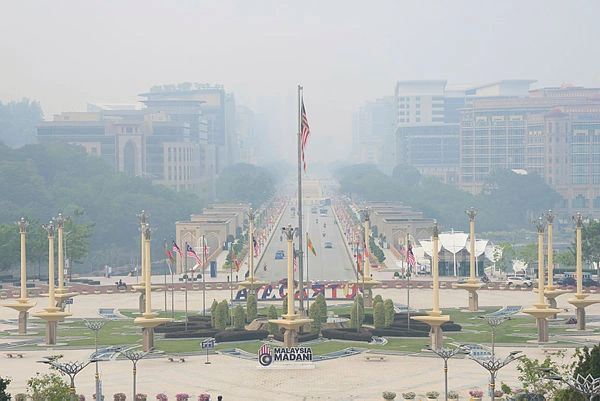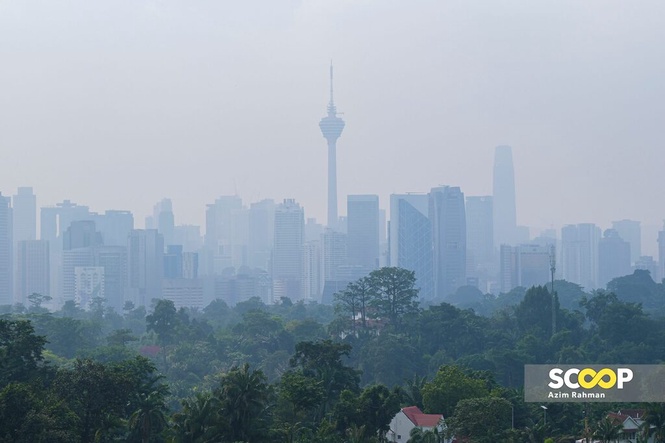
KUALA LUMPUR — The Asean Intergovernmental Commission on Human Rights (AICHR) has urged the grouping to accelerate its regional haze control centre to demonstrate collective commitment to tackling recurring transboundary haze pollution.
Warning that transboundary haze poses serious risks to public health and livelihoods, AICHR noted that the Asean Specialised Meteorological Centre (ASMC) has maintained regional Alert Level 3, the highest transboundary haze alert, since August 26, 2026.
“The scale of exposure is severe,” AICHR said in a statement today, noting that unhealthy to hazardous air quality has disrupted education, livelihoods, daily activities, and is a serious health risk to vulnerable groups such as children, the elderly, pregnant women, and those with pre-existing heart and lung conditions.
The regional haze control centre, or the Asean Coordinating Centre for Transboundary Haze Pollution Control (ACC THPC) would show Asean’s commitment to its Transboundary Haze Pollution agreement, AICHR added.
The agreement, which came into force in 2003, remained ASEAN’s principal framework for preventing and mitigating transboundary haze through national action and regional cooperation.
Asean had also committed to a haze-free region by 2030, AICHR noted, as set out under the Second Roadmap on ASEAN Cooperation towards Transboundary Haze Pollution Control (2023–2030).
“The present situation underscores the importance of the full and effective implementation of these existing regional commitments,” it said.
The commission urged member states to strengthen information sharing and coordination, improve public access to air quality data and health advisories, and enforce environmental laws targeting activities that contribute to forest, peatland and agricultural fires.
It also called on businesses to adopt responsible environmental practices, including through environmental due diligence and sustainable supply chain management.
AICHR said climate-informed fire prevention and the sustainable management and restoration of peatlands were also crucial to reducing recurring fires.
It reaffirmed its commitment to protecting human rights across the region, calling on ASEAN member states to strengthen national and regional mechanisms and cooperation to protect communities affected by transboundary haze pollution.
Former Asean and APEC leaders have recently urged Asean to move beyond discussions and implement existing regional agreements to tackle the recurring transboundary haze crisis affecting Malaysia and Singapore.
The current haze pollution has been the result of land and peat fires in parts of Indonesia, which has been offered firefighting assistance by other countries, including Malaysia, but has yet to approve actual deployment as Jakarta said it is confident of its own capabilities to put out the infernos. - October 22, 2026
The post Haze-free Asean goal four years away, time to speed up regional control centre: AICHR appeared first on Scoop.