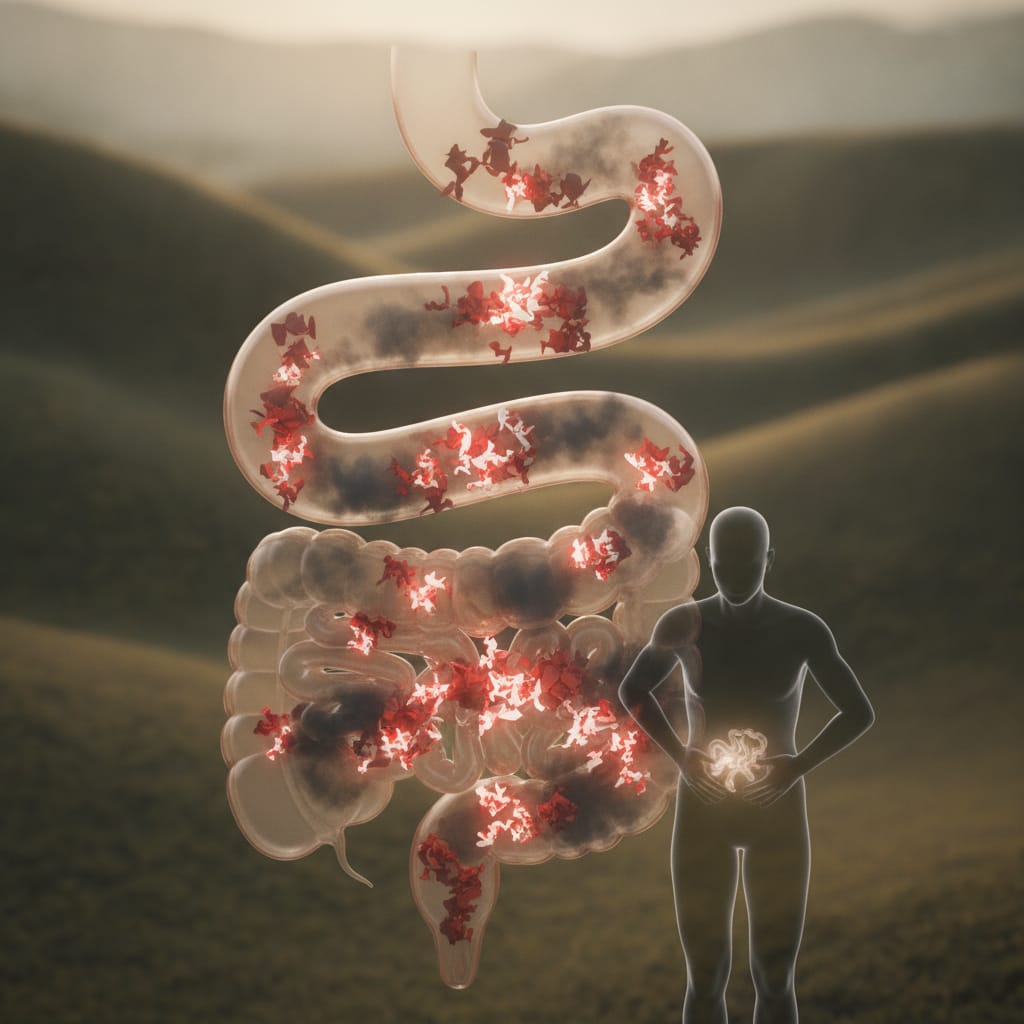
There are some stomach problems that most of us have experienced.
A dodgy takeaway.
A stomach bug.
Something that didn’t agree with you.
You have a few days of diarrhoea, perhaps some cramps, and then things settle down.
Crohn’s disease is very different.
For someone living with Crohn’s, the problem isn’t simply that they have a “bad stomach”.
It is an inflammatory disease that can affect the digestive system and, when it is active, can have a profound effect on everyday life.
And sometimes people around them simply don’t understand how difficult it can be.
So what exactly is Crohn’s disease?
Crohn’s is a type of inflammatory bowel disease (IBD).
It happens when the immune system becomes overactive and causes inflammation within the digestive tract.
It can affect anywhere from the mouth to the anus, although the small intestine and the beginning of the large intestine are commonly involved.
The inflammation can go deep into the bowel wall.
That is important because Crohn’s isn’t simply inflammation sitting on the surface.
Over time, persistent inflammation can cause narrowing of the bowel, ulcers, abscesses and abnormal connections called fistulas.
It is a long-term condition.
There are periods when the disease is relatively quiet — remission — and periods when symptoms become active again — a flare.
What does it feel like?
The symptoms vary considerably between people.
Common symptoms include:
Persistent diarrhoea.
Abdominal pain and cramping.
Urgency to open the bowels.
Weight loss.
Extreme tiredness.
Reduced appetite.
Blood or mucus in the stool in some people.
Some people can look perfectly well despite feeling absolutely dreadful.
That is one of the difficult things about Crohn’s.
You can’t always see it from the outside.
Someone may be sitting at work looking completely normal while quietly wondering where the nearest toilet is.
It’s not just a bowel problem
Crohn’s can affect the rest of the body too.
Some people develop painful joints.
Others develop skin problems, mouth ulcers or inflammation affecting the eyes.
Anaemia is common, particularly when there is ongoing inflammation or blood loss.
Nutritional deficiencies can occur because of reduced intake, poor absorption or previous bowel surgery.
Vitamin B12, folate, iron and vitamin D are among the nutrients that may need attention depending on the individual.
This is why managing Crohn’s is about much more than simply stopping diarrhoea.
What causes it?
This is where we still don’t have a complete answer.
We know genetics play a role.
We know the immune system is involved.
The bacteria living in the gut — the microbiome — also appear to be important.
Environmental factors, including smoking, can influence the disease.
But there isn’t one simple cause.
And Crohn’s is not caused by someone eating the wrong food.
Food can trigger symptoms in an individual, but that isn’t the same as causing the underlying disease.
How is it diagnosed?
There isn’t one simple blood test that says:
“Yes, you’ve got Crohn’s.”
Doctors may use blood tests to look for inflammation and anaemia.
Stool tests can help detect inflammation in the bowel and distinguish IBD from some other causes of diarrhoea.
But diagnosis often involves investigations such as colonoscopy, where the bowel lining can be examined and biopsies taken.
Imaging such as MRI or CT can also be important, particularly when doctors need to look at the small bowel or complications.
It can take time to reach the correct diagnosis.
That is one reason persistent diarrhoea, unexplained weight loss or ongoing abdominal pain shouldn’t simply be dismissed as IBS.
Can Crohn’s be cured?
At present, there is no straightforward cure for Crohn’s disease.
But that doesn’t mean it can’t be controlled.
The aim of treatment is to get the inflammation under control, achieve remission and prevent further damage.
And treatments have improved enormously.
Steroids
Steroids such as prednisolone can be extremely effective at bringing an active flare under control.
But they are generally not a good long-term solution because prolonged steroid use can cause significant problems including weight gain, diabetes, osteoporosis, high blood pressure and increased infection risk.
Think of steroids as a powerful fire extinguisher.
Very useful when there is a fire.
Not something you want running permanently.
Immunosuppressants
Medicines such as azathioprine and mercaptopurine can be used in certain patients to help maintain control of the disease.
They require monitoring because they can affect blood counts and the liver, among other potential problems.
Biologic medicines
This is where treatment has changed dramatically.
Biological medicines such as infliximab, adalimumab, ustekinumab and vedolizumab target specific parts of the inflammatory process.
There are also newer targeted medicines, including some oral treatments.
For people with moderate to severe Crohn’s disease, these treatments can make an enormous difference.
But they aren’t simple medicines.
Because they alter the immune response, infection risk and other potential complications need to be considered and monitored.
What about surgery?
Sometimes medication isn’t enough.
Crohn’s can cause narrowing of the bowel, fistulas, abscesses or other complications that require surgery.
Surgery can be life-changing when it is needed.
But Crohn’s can recur after surgery, so surgery isn’t necessarily a permanent cure.
The best approach is usually to prevent the disease getting to the point where surgery is unavoidable.
What should someone with Crohn’s eat?
There is no universal “Crohn’s diet”.
What one person tolerates perfectly may send another person running for the toilet.
During a flare, some people find fatty foods, spicy foods, high-fibre foods or certain dairy products make symptoms worse.
But that doesn’t mean everyone with Crohn’s needs to avoid these foods permanently.
Keeping a food and symptom diary can sometimes identify personal triggers.
And during active disease, maintaining nutrition and hydration is particularly important.
If someone is losing weight or struggling to eat, a dietitian experienced in IBD can be extremely valuable.
Smoking matters
If you have Crohn’s and smoke, stopping is one of the best things you can do.
Smoking can worsen Crohn’s disease and increase the risk of complications and surgery.
This is one situation where stopping smoking isn’t just about protecting your lungs.
It can directly affect the disease you already have.
And what about stress?
Stress doesn’t cause Crohn’s disease.
But anyone who has experienced a flare will understand that stress and illness don’t make a particularly good combination.
Pain, diarrhoea, exhaustion and constantly worrying about finding a toilet can create enormous anxiety.
That anxiety can then affect sleep, appetite and quality of life.
Mental health is therefore part of Crohn’s management too.
My view as a pharmacist
One thing I would say to anyone with Crohn’s is this:
Don’t compare your disease with somebody else’s.
One person may have mild symptoms controlled with medication.
Another may have severe disease requiring biologic treatment or surgery.
Both have Crohn’s.
And if you know someone with Crohn’s, don’t assume that because they look well, they feel well.
There can be an enormous amount going on beneath the surface.
The good news is that modern treatment means many people with Crohn’s can work, travel, exercise, have families and live very full lives.
The aim isn’t simply to stop the diarrhoea.
It is to control the underlying inflammation, prevent bowel damage and give the person their life back.
So if you have persistent diarrhoea, unexplained weight loss, ongoing abdominal pain, blood in your stool or extreme unexplained tiredness, don’t keep blaming it on something you ate.
Sometimes your gut is trying to tell you something.
Until next time stay healthy.
The Daily Durian (zaynp100@yahoo.com) is a content creator under the Newswav Creator programme, where you get to express yourself, be a citizen journalist, and at the same time monetize your content & reach millions of users on Newswav. Log in to creator.newswav.com and become a Newswav Creator now!
The User Content (as defined on Newswav Terms of Use) above including the views expressed and media (pictures, videos, citations etc) were submitted & posted by the author. Newswav is solely an aggregation platform that hosts the User Content. If you have any questions about the content, copyright or other issues of the work, please contact creator@newswav.com.