
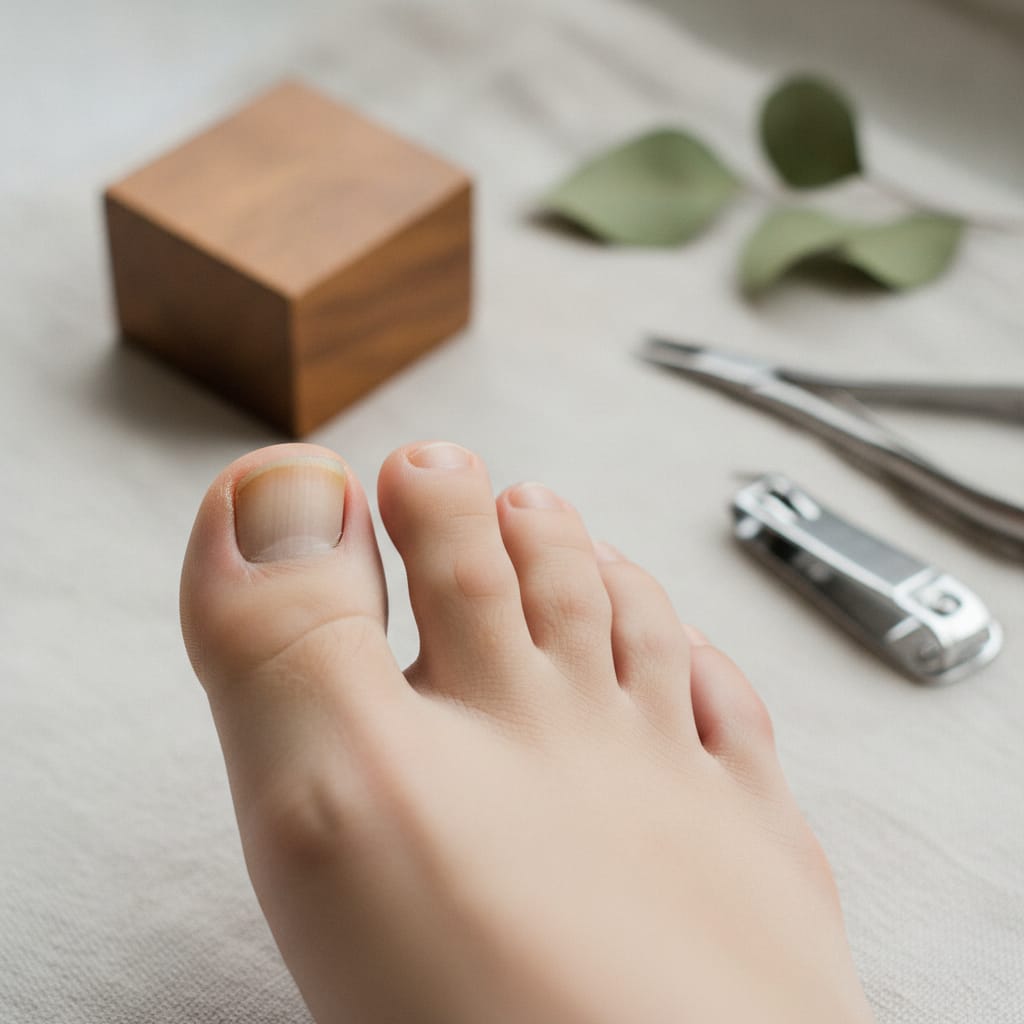
There are few things less glamorous than toenails. Most of us hardly give them a second thought until one starts changing colour, becoming thick, brittle or, worse still, begins to crumble when you trim it.
That is usually when someone walks into the pharmacy and says: “I think I’ve got a fungal nail. What can I put on it?”
Sometimes they are right. Sometimes they aren’t.
Fungal nail infection, medically known as onychomycosis, is common and usually not dangerous. But it can be stubborn, slow to disappear and surprisingly easy to confuse with other nail problems.
What does a fungal nail look like?
The classic picture is a toenail that gradually becomes yellow, white or brown, often starting at the edge of the nail and slowly spreading towards the base.
The nail may become:
- Thicker than normal
- Brittle or crumbly
- Distorted or misshapen
- Difficult to cut
- Separated from the nail bed
- Associated with debris collecting underneath it
Some people also notice an unpleasant smell, although this isn’t always present.
But here is where I would urge a little caution. Not every ugly toenail is fungal.
An old injury can leave a nail permanently ridged or distorted. Repeated pressure from footwear can do the same. Psoriasis and other skin conditions can affect the nails too.
I have seen plenty of people treating a damaged nail with antifungal products for months when fungus wasn’t actually the problem.
Why do people get fungal nails?
The fungi responsible thrive in warm, moist environments. That makes feet, particularly those enclosed in shoes for much of the day, an ideal home.
It often starts with athlete’s foot, where the fungus lives on the skin between or around the toes and eventually spreads into the nail.
There are several things that increase the risk. Walking barefoot in communal changing rooms, swimming pools and showers can expose you to the fungus. Sweaty feet, tight or poorly ventilated footwear and repeatedly wearing damp socks don’t help either.
Age is another factor. Fungal nails become more common as we get older, partly because nails grow more slowly and circulation to the feet may not be as good.
People with diabetes, reduced immunity or certain circulation problems can also be more susceptible.
And once you have had fungal nail infection, it has an annoying habit of coming back if the underlying athlete’s foot or environmental factors aren’t dealt with.
What happens if you ignore it?
For a healthy person, leaving a fungal nail untreated isn’t usually an emergency.
But it can progressively become thicker, more distorted and difficult to manage. The nail may eventually become uncomfortable in shoes or painful when walking.
There is also the possibility that the infection spreads to other nails or to the surrounding skin.
The bigger concern is for people with diabetes, poor circulation or reduced sensation in their feet. A damaged or thickened nail can contribute to pressure and skin injury, and foot problems in these groups deserve earlier professional attention.
So while a fungal nail isn’t something to panic about, it isn’t necessarily something to forget about either.
What can you actually do about it?
This is where expectations matter.
For a mild infection affecting only part of the nail, antifungal nail treatments can sometimes work. Products containing medicines such as amorolfine or terbinafine are available depending on the country and the specific product.
They don’t work overnight.
The treatment has to be applied regularly, and the healthy nail needs to grow out gradually. With a toenail, that can take many months.
For more extensive infection, particularly when several nails are involved or the nail is very thick, a doctor may prescribe oral antifungal treatment such as terbinafine.
Tablets can be considerably more effective for suitable patients because they reach the nail as it grows. But they aren’t appropriate for everyone and can interact with other medicines, so a pharmacist or doctor should check the person’s medical history and medicines first.
Sometimes a doctor will also arrange a nail clipping or other test before prescribing tablets. This makes sense because treating something for months with an antifungal when it isn’t actually fungal is a waste of time and medication.
Don’t forget the feet
One of the common mistakes I see is treating the nail while completely ignoring the skin.
If you have athlete’s foot, that infection needs treating as well. Otherwise, the fungus can simply migrate back onto the newly growing nail.
Keep feet clean and dry. Change socks regularly, allow shoes to dry properly and avoid sharing towels, socks or footwear.
If your feet sweat heavily, breathable footwear can make a noticeable difference.
And don’t keep applying an antifungal treatment indefinitely just because the nail still looks abnormal. Remember, the dead, damaged part of the nail doesn’t suddenly become normal when the fungus has gone.
What you are looking for is healthy nail gradually growing from the base and replacing the damaged portion.
So, will the nail ever look normal again?
Usually, if the fungus is successfully eliminated and the nail matrix has not been permanently damaged, a healthy nail can eventually grow back.
But patience is essential.
Toenails grow painfully slowly. Even after the infection has been successfully treated, the nail can continue looking ugly for months simply because the previously damaged nail has to grow out.
And sometimes it never returns completely to its original appearance, particularly if there has been previous trauma to the nail.
My pharmacist’s advice
If you have a slightly odd-looking toenail, don’t automatically assume it is fungus.
If the nail has gradually become yellow, thick and crumbly, particularly alongside athlete’s foot, fungus is certainly possible.
If one nail has been misshapen ever since you dropped something on it, kicked it, lost the nail or repeatedly damaged it with footwear, old trauma may be the better explanation.
And if you’re unsure, ask your pharmacist or doctor rather than spending months experimenting with different creams and nail paints.
The good news is that fungal nail infections are treatable. The bad news is that toenails don’t understand the meaning of the word “hurry”.
The aim isn’t to make the ugly nail look beautiful next week. It’s to get rid of the infection and allow a healthy nail to gradually take its place.
Until next time, look after those feet. They have a surprisingly difficult job carrying the rest of us around.
The Daily Durian (zaynp100@yahoo.com) is a content creator under the Newswav Creator programme, where you get to express yourself, be a citizen journalist, and at the same time monetize your content & reach millions of users on Newswav. Log in to creator.newswav.com and become a Newswav Creator now!
The User Content (as defined on Newswav Terms of Use) above including the views expressed and media (pictures, videos, citations etc) were submitted & posted by the author. Newswav is solely an aggregation platform that hosts the User Content. If you have any questions about the content, copyright or other issues of the work, please contact creator@newswav.com.