
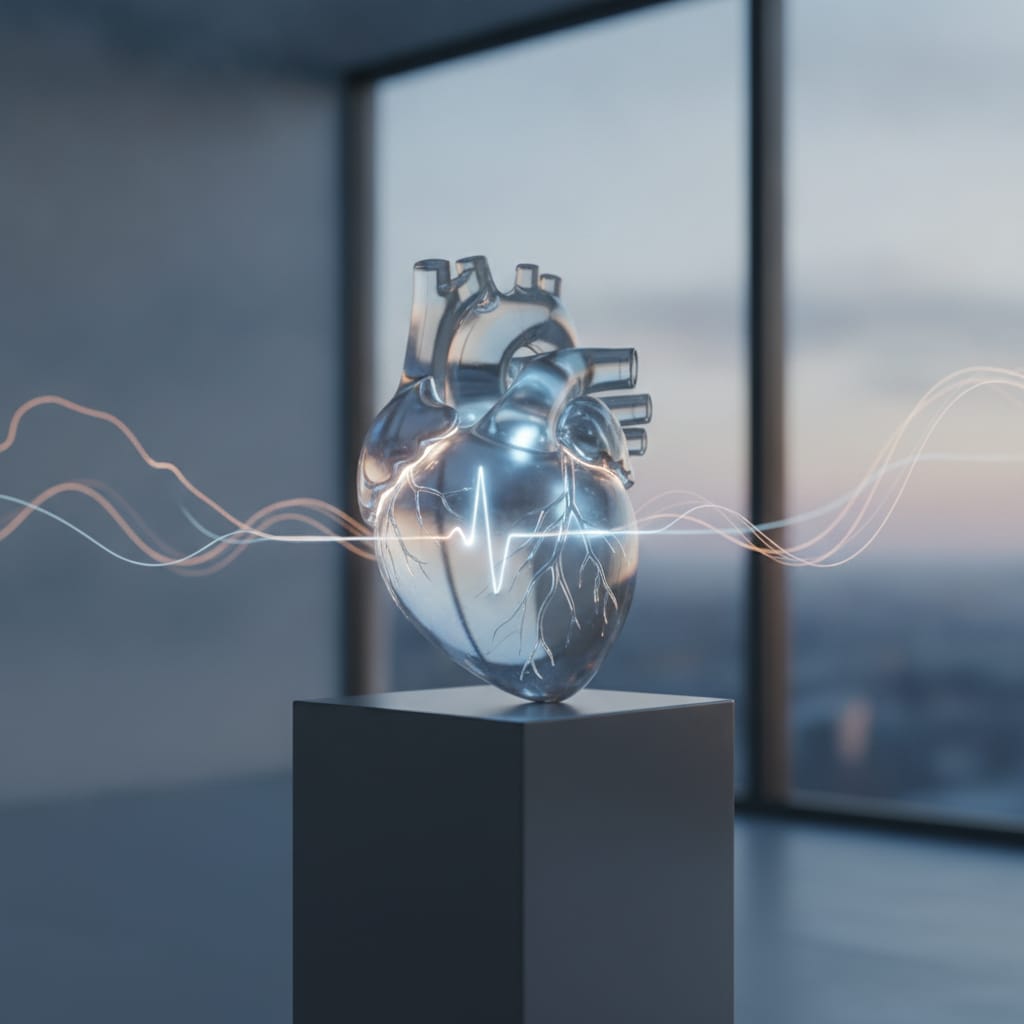
Few medical terms cause as much confusion as “heart failure.”
I’ve lost count of the number of people who have looked alarmed when they hear those words. The first question is almost always the same.
“So… does that mean my heart is failing?”
The answer is yes—but not in the way most people imagine.
Heart failure does not mean the heart has suddenly stopped beating. It doesn’t mean death is imminent, and it certainly doesn’t mean there is no hope. In fact, many people with heart failure continue to enjoy active, fulfilling lives for many years with the right treatment and lifestyle changes.
Perhaps the condition should have been given a different name.
A better description might have been “reduced heart pumping function,” but that isn’t quite as memorable.
The important thing is understanding what it really means.
Your heart is a pump
Think of your heart as one of the hardest-working pumps you’ll ever own.
It begins working before you’re born and never gets a day off. It doesn’t stop at weekends, take annual leave or ask for a break.
Around 100,000 times every day, it pumps blood carrying oxygen and nutrients to every part of your body.
Most of the time, we don’t even notice it.
But like any pump, it can become less efficient.
Sometimes it becomes weaker and cannot push enough blood forward with each beat.
Sometimes it becomes stiff and struggles to relax properly between beats, making it difficult for the heart to fill with blood.
Either way, the result is the same.
The body doesn’t receive the blood supply it needs as efficiently as before.
Why does heart failure happen?
Heart failure isn’t a disease on its own.
It’s usually the result of another condition that has damaged or placed extra strain on the heart over many years.
The most common cause is coronary heart disease, particularly after a heart attack, where part of the heart muscle has been permanently damaged.
High blood pressure is another major cause. If the heart has to pump against increased pressure year after year, it gradually becomes thicker and eventually less effective.
Problems with the heart valves, certain viral infections, some inherited conditions and abnormal heart rhythms such as atrial fibrillation can also lead to heart failure.
In many cases, several factors are involved rather than just one.
What symptoms should you look out for?
One of the earliest signs is becoming breathless more easily than before.
Perhaps you used to walk upstairs without thinking, but now you need to stop halfway.
Maybe your usual evening walk leaves you unusually tired.
Some people notice they need more pillows to sleep comfortably because lying flat makes them short of breath.
Others wake during the night feeling as though they can’t catch their breath.
Swollen ankles are another common sign.
When the heart isn’t pumping efficiently, fluid can build up in the legs, ankles and feet.
Some people also notice rapid weight gain over a few days because their body is retaining fluid rather than gaining fat.
Persistent tiredness is common too.
When less oxygen-rich blood reaches the muscles, even everyday activities can become exhausting.
These symptoms don’t automatically mean someone has heart failure, but they should never be ignored.
How is it diagnosed?
Your doctor will begin by asking about your symptoms and examining you.
Blood tests can help identify whether heart failure is likely.
An ECG looks at the heart’s electrical activity, while an echocardiogram—an ultrasound scan of the heart—shows how well it is pumping and whether the valves are working normally.
Together, these tests build a much clearer picture of what’s happening.
Can heart failure be treated?
Absolutely.
Although heart failure is usually a long-term condition, treatments have improved enormously over the past two decades.
Today, several medicines are known not only to improve symptoms but also to help people live longer and reduce the chances of needing hospital treatment.
Some medicines help the heart pump more efficiently.
Others reduce the strain on the heart or help the body get rid of excess fluid.
For some people, pacemakers or other implanted devices can improve the heart’s performance.
The treatment plan depends on the underlying cause and the type of heart failure involved.
Looking after yourself
Medicines are only part of the picture.
Keeping blood pressure well controlled is vital.
Regular physical activity, tailored to your ability, can actually strengthen your fitness and improve quality of life. Years ago, people with heart failure were often advised to rest as much as possible. We now know that sensible exercise usually does far more good than harm.
Eating a balanced diet, limiting salt if advised by your healthcare team, maintaining a healthy weight and avoiding smoking all play important roles.
Many patients are also encouraged to weigh themselves regularly.
A sudden increase in weight over just a few days may be an early sign that fluid is building up, allowing treatment to be adjusted before symptoms become severe.
Is heart failure the same for everyone?
Not at all.
Some people have only mild symptoms for many years.
Others require closer monitoring.
The outlook depends on many factors, including the underlying cause, age, other medical conditions and how well treatment is working.
This is why comparing yourself with someone else who has heart failure is rarely helpful.
Everyone’s journey is different.
A final thought
The name “heart failure” can sound frightening, but it shouldn’t take away hope.
Modern medicine has transformed the way we manage this condition.
Perhaps the biggest lesson is this.
Our heart is incredibly resilient. It often carries on working despite years of high blood pressure, blocked arteries or other illnesses.
But like any hardworking engine, it needs looking after.
The sooner problems are recognised, the more we can do to keep that remarkable pump working for as long and as well as possible.
Until next time, stay curious, stay informed and, above all, look after your health. It is one investment that will always pay dividends.
The Daily Durian (zaynp100@yahoo.com) is a content creator under the Newswav Creator programme, where you get to express yourself, be a citizen journalist, and at the same time monetize your content & reach millions of users on Newswav. Log in to creator.newswav.com and become a Newswav Creator now!
The User Content (as defined on Newswav Terms of Use) above including the views expressed and media (pictures, videos, citations etc) were submitted & posted by the author. Newswav is solely an aggregation platform that hosts the User Content. If you have any questions about the content, copyright or other issues of the work, please contact creator@newswav.com.
