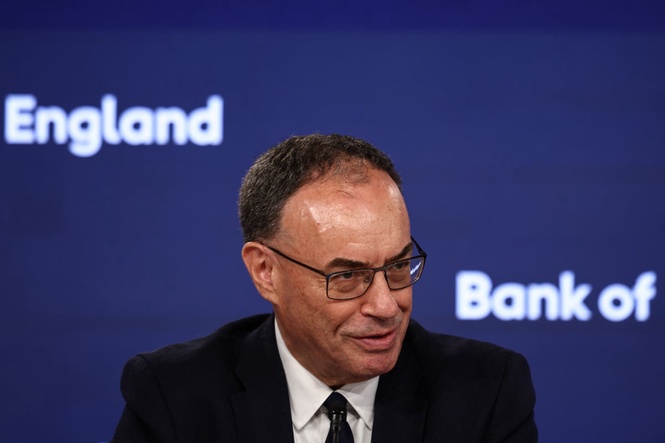
The governor of the Bank of England has said high energy prices will make it “harder” to maintain interest rates at their current levels and avoid an increase.
Andrew Bailey indicated that the Bank could have to increase interest rates if energy prices “remain higher” amid pressure linked to the conflict in the Middle East.
It comes only a day after a deputy governor at the Bank said a rate hike is looking “increasingly likely” if energy prices remain elevated.
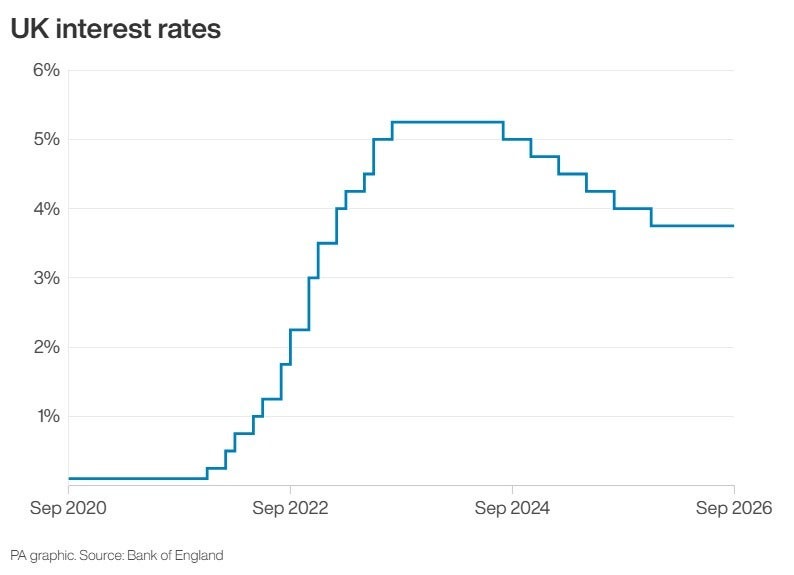
Mr Bailey was one of the six-to-three majority who voted to maintain UK interest rates at 3.75% earlier this month.
On Friday, he told an audience in Oxford: “There is no question we are seeing the direct effects of the energy shock, but we are currently seeing subdued pass-through, but it is very early days.
“The longer we go on with high energy prices, the harder it gets.
“We haven’t increased bank rates but it’s going to get harder to maintain that stance as energy prices remain higher.”
Inflation is widely predicted to keep rising over the coming months as higher energy costs continue to filter through, with households set to witness a roughly 4% rise in the energy price cap from next week.
The Bank has predicted that inflation will increase to around 3.7% in the fourth quarter of this year and 4.2% in the first quarter of 2027.
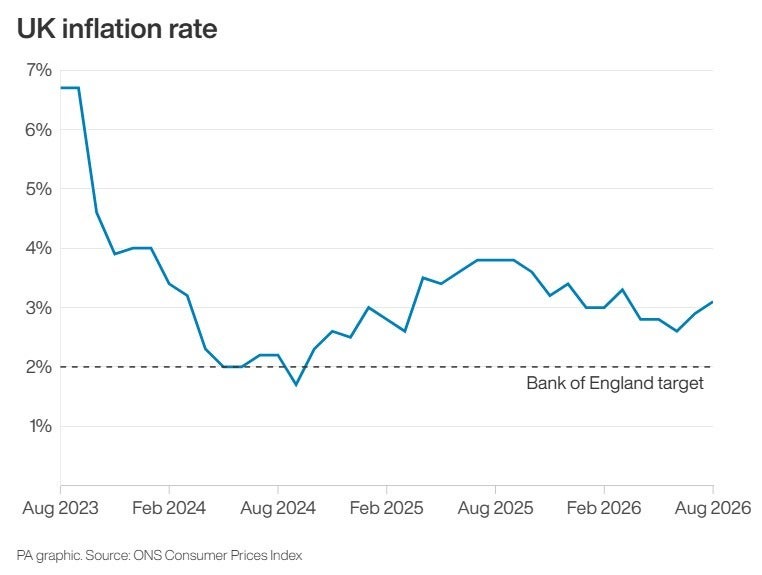
Economists have widely predicted that the central bank is likely to increase interest rates later this year in a bid to help bring inflation down back to the Bank’s 2% target level.
On Thursday, Clare Lombardelli, a deputy governor at the Bank, said during a speech in Warsaw that energy price pressure could drive rate-setters to tighten fiscal policy unless there is particular weakness in the economy.
She said: “The longer higher energy prices persist, the greater the risk that indirect effects build and that inflation expectations, wage bargaining and price-setting behaviour begin to adjust in response.
“On that basis, policy is increasingly likely to need to tighten if elevated energy prices persist, absent clear evidence of disinflation or weaker activity.”
Read MoreTop Trump FBI appointee Andrew Bailey abruptly quits after just one year
Shop price inflation slows as retailers ramp up promotions to drive demand
Andrew Bailey, an FBI deputy director, says he's leaving the post after just over a year in the job
AstraZeneca invests £1.5bn into US firm Summit for cancer drug tie-up
Sales grow at Card Factory despite ‘pressure on UK consumers’
Close Brothers ramps up cost cutting after posting another loss