
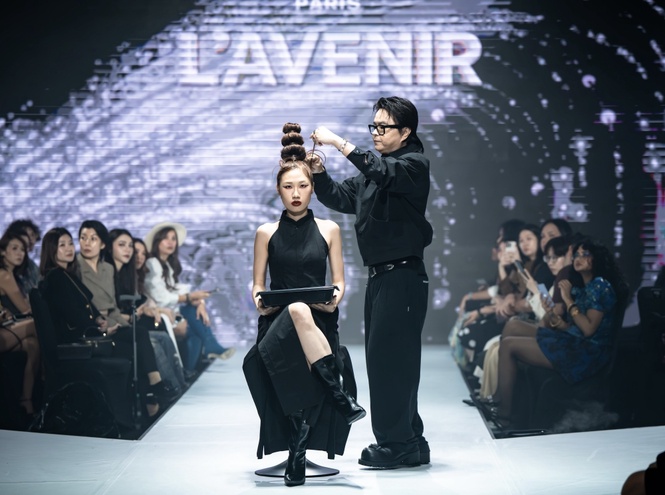
KUALA LUMPUR, Aug 24 — Dramatic hair transformations may dominate your social media feed, but when Malaysians actually sit down in the salon chair, what they increasingly want is something altogether more wearable.
Think softer colour, warmer tones, subtle dimension and — importantly — something that does not demand a trip back to the salon every few weeks.
According to L’Oréal Professionnel Paris head of education for Malaysia and Singapore Adam McGraw, soft dimensional colour and low-maintenance tints are among the hair colour trends currently gaining ground in Malaysia and Singapore.
High-contrast highlights have taken a back seat, he said, while smudged roots, face-framing highlights — commonly known as “money pieces” — and subtle balayage remain popular.
“Consumers want dimension that grows out gracefully without requiring constant salon touch-ups,” McGraw told Malay Mail.
At L’Oréal Professionnel, the approach is referred to as “French blending”.
The colour palette is warming up too.
McGraw said rich chestnuts, caramel browns, honey blondes and muted copper tones are increasingly favoured over stark, ash-heavy shades, particularly because of how they complement warmer Southeast Asian skin tones.
Younger consumers, however, are still finding ways to play.
Pastel shades including lavender, soft pink and smoky blue are appearing as hidden or “peek-a-boo” highlights — allowing wearers to experiment with colour while keeping it versatile enough for professional settings.
The changing preferences come as consumers become more conscious not only of how their hair looks, but also what happens to it in the colouring process.
Ammonia-free permanent colour, ammonia-free glossing and bleach-free highlights are among the trends McGraw is seeing across the Malaysian and Singaporean markets.
L’Oréal Professionnel Paris marketing manager for Malaysia and Singapore Chloe Loo said consumers increasingly expect colour performance and healthy-looking hair to go hand in hand.
“They don’t necessarily see beautiful colour and healthy-looking hair as two separate things — they expect both,” she said.
That expectation, Loo added, has pushed the professional hair industry to think beyond colour payoff alone.
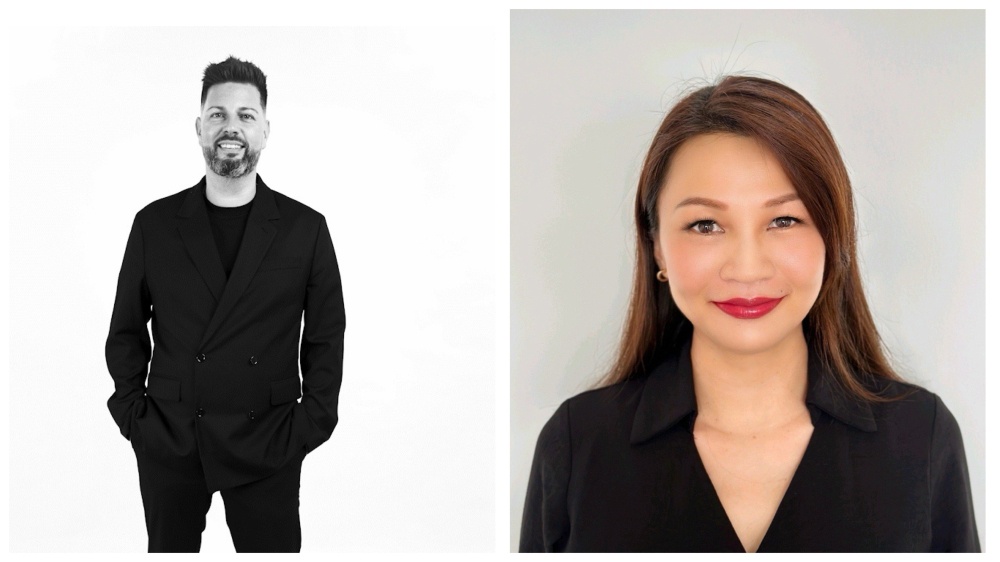 L’Oréal Professionnel Paris Education Head for Malaysia and Singapore Adam McGraw (left) and Marketing Manager for Malaysia and Singapore Chloe Loo share insights into how Malaysian hair colour preferences are evolving.
 Hair colour technology is increasingly focused on the hair fibre, the overall colouring experience and more personalised results.
“I would summarise the evolution as more performance, more precision, more care, which mirrors the consumer’s expectation,” she said.
When the runway meets the salon
The changing relationship between consumers and professional hair was also on display at Kuala Lumpur Fashion Week (KLFW) 2026, where L’Oréal Professionnel Paris staged its first iNOA Maison of Pro.
For McGraw, the showcase was intended to challenge the idea that hair simply completes a fashion look.
“The vision behind iNOA Maison of Pro was really about showcasing the artistry and expertise of professional hairdressers, and giving hair the same creative recognition as fashion,” he said.
“We wanted to demonstrate that hair is not simply an accessory to a look, but an important part of the creative expression that brings the entire vision together.”
The runway explored colour, texture and shape while demonstrating how technical hairdressing could be pushed creatively without entirely sacrificing wearability.
It also reflected a wider change happening behind the scenes of fashion shows.
Rather than being brought in at the end to “finish” a look, McGraw said hairstylists are increasingly becoming part of the creative process from the beginning.
A professional hairstylist, he said, considers how hair moves, how colour responds to lighting and fabric, and how its shape and texture alter the overall silhouette.
“When hair, makeup and fashion are developed together, the result becomes much more cohesive and impactful.”
That does not mean clients should expect to walk into their neighbourhood salon and emerge looking as though they have stepped straight off a KLFW runway.
Runway hair is designed to provoke and inspire, McGraw said, with the hairstylist then responsible for translating those ideas into something appropriate for an individual client.
A dramatic runway colour, for example, might become softer dimensional colour, while an exaggerated texture could inspire a subtler styling technique.
“A professional hairstylist’s role is to take the essence of a look and translate it according to the client’s personality, hair condition, lifestyle and expectations,” he said.
TikTok inspiration versus salon reality
Social media has complicated — and in some ways strengthened — that relationship.
Consumers now arrive at salons armed with an endless stream of reference pictures, tutorials, transformations and trending colours.
McGraw sees that increased knowledge as positive, but said it has also made consultation an increasingly important part of a hairstylist’s job.
“A picture can show you what someone likes, but it doesn’t necessarily tell you whether that colour, cut or technique is suitable for their hair,” he said.
Professionals must consider the condition and history of the hair, what is technically achievable and how to get as close as possible to the desired result without unnecessarily compromising the hair.
“Ultimately, the value of a professional isn’t just in creating the look — it’s in knowing how to make that look work for you.”
Loo said younger consumers’ constant exposure to professional hairstylists, techniques and colour transformations online has also made them considerably more knowledgeable about what can be achieved.
But rather than making professional expertise redundant, she believes it has helped consumers understand its value.
Social media, she said, may spark the idea, but a professional is ultimately responsible for translating it into a personalised result.
That intersection between fashion, online inspiration and professional expertise is likely to become even more pronounced.
McGraw said Malaysia’s diverse and increasingly fashion-forward consumer base presents greater opportunities for local hairstylists to collaborate with designers and other creative talents.
“I would love to see even more opportunities for local hairstylists to collaborate with designers and creative talents, and for professional hair to have an even stronger voice within the fashion industry.”
For Loo, the next step is narrowing the distance between the hair consumers aspire to online and what can realistically — and professionally — be created in a salon.
“I think the future is about making professional hair feel even more relevant, exciting and connected to the way people express themselves through fashion and beauty.”