.png)
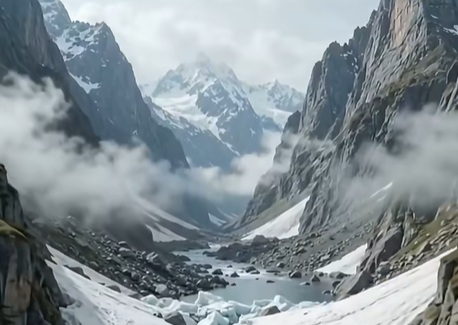
ACCELERATING Himalayan glacier melt is pushing the region towards “peak water” by mid-century, threatening water supplies and increasing the risk of landslides and glacial lake floods in valleys home to millions, according to a study released this month.
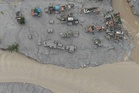
The findings come after the collapse of a Himalayan glacier along the Nepal-Tibet border in late August triggered cascading landslides and flash floods, with at least 1,300 people confirmed dead and more than 5,300 still missing across Nepal and China’s Tibet region.
The study found that as glaciers retreat, they leave behind unstable glacial lakes held back by loose rock and ice, creating a growing hazard for communities downstream.
It was produced by sustainability advisory firm Systemiq with the Integrated Mountain Initiative, the International Centre for Integrated Mountain Development and India’s G.B. Pant National Institute of Himalayan Environment.
Himalayan glacier mass loss has accelerated in recent decades, while only 21 glaciers are currently monitored on the ground out of an estimated 40,000 across the Hindu Kush-Himalaya region, which stretches across eight countries from Afghanistan to Myanmar.
Nearly 200 glacial lakes in India have been identified as high risk, including 56 classified as “very high risk”, potentially exposing millions of people downstream.
The region is also approaching “peak water” — the point at which melting glaciers cause river flows to rise before eventually declining as ice reserves diminish.
The shift could have profound implications for water security across the region, where the Himalayas underpin more than 20% of India’s gross domestic product and support hundreds of millions of people.
The Himalayan region accounts for about 18% of India’s land but roughly 35% of its natural disasters, the study found. - September 14, 2026