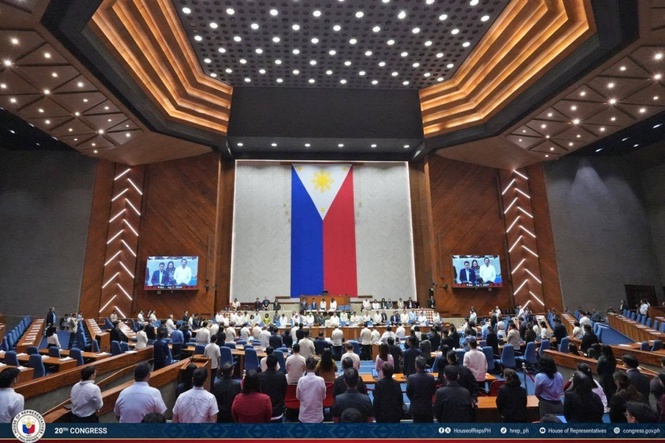
MANILA, Philippines — The House of Representatives on Thursday approved on third and final reading a measure seeking to strengthen the Philippines’ defenses against espionage, cyber-enabled spying, attacks on critical infrastructure and other emerging national security threats.
House Bill 9642, also known as the proposed “New Espionage Act,” was approved with 247 votes in favor, 10 against and no abstentions.
Authored by Majority Floor Leader and Ilocos Norte 1st District Rep. Sandro Marcos, along with Representatives Ysabel Maria J. Zamora, Lordan G. Suan, Jurdin Jesus M. Romualdo, Gerville “Jinky Bitrics” Luistro, Javier Miguel Lopez Benitez and other House members, HB 9642 seeks to update the country’s legal framework for protecting classified information, national defense assets and sensitive government operations.
The proposed law also seeks to keep the country's security measures in step with evolving threats.
It penalizes espionage and conspiracy to commit espionage with life imprisonment without parole and fines ranging from P10 million to P20 million. It also covers the unauthorized disclosure or handling of classified information, unlawful surveillance, interference with defense assets and critical infrastructure, and the prohibited use of drones, cameras, listening devices and tracking equipment.
The bill allows Philippine authorities to prosecute covered offenses committed abroad under specified circumstances, including crimes committed by Filipinos, aboard Philippine ships or aircraft, in Philippine diplomatic premises, against Philippine officials or directly against the Philippine government.
It also allows qualified military, law enforcement and intelligence personnel to seek authority from the Court of Appeals for surveillance and interception of communications in espionage investigations, subject to specified conditions. The Anti-Money Laundering Council would be empowered to investigate funds and property linked to espionage offenses.
Convicted government officials would face perpetual disqualification from public office, while military personnel could also face court-martial proceedings. Convicted foreign nationals would be deported after serving their sentences and permanently barred from returning to the Philippines.
The Department of National Defense, Department of Justice and National Security Council would have 120 days from the law’s effectivity to issue implementing rules and regulations. The measure would take effect 15 days after publication once enacted into law.