.png)
US President Donald Trump faces a widening strategic dilemma as the war with Iran enters its seventh month, with the advance of Tehran’s Houthi allies tightening pressure on US partners, disrupting another key shipping route and underscoring the limits of Washington’s ability to contain the conflict.
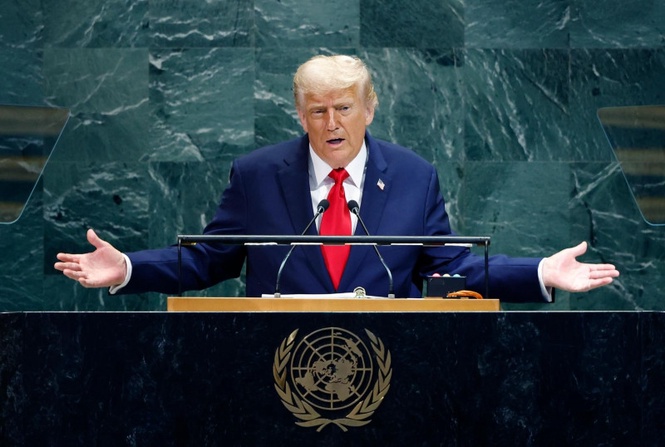
Trump is due to address the United Nations on Tuesday, a year after telling world leaders that US strikes on Iran’s nuclear facilities had “totally obliterated everything” and that he had brought peace between Israel and Iran.
But the conflict has instead hardened into an uneasy stalemate, with Trump’s stated objectives shifting as Tehran remains defiant despite heavy military and economic pressure.
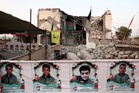
Reuters reported on Friday that Iran has obstructed oil shipments through the Strait of Hormuz and, in recent days, gained additional leverage through its Houthi allies in Yemen, whose fighters have pushed down the Red Sea coast, defeated Saudi-backed Yemeni government forces and seized islands near the mouth of the Bab el-Mandeb Strait.
The advance has dealt a setback to US ally Saudi Arabia and raised the risk of further disruption to a major shipping corridor, adding to pressure on global energy prices.
A senior Trump administration official said the United States was focused on protecting security interests, including freedom of navigation in the Red Sea, while “empowering our regional partners to take the lead in managing and resolving regional security challenges.”
The Houthi advance has also complicated Trump’s decision over whether to intervene directly after Saudi Arabia sought US military help against the group.
Trump has rebuffed those requests, despite concerns that allowing the Houthis to close a second major shipping corridor could further undermine regional security.
US officials met Houthi representatives in Oman last weekend, where the group said it was targeting Saudi shipping but did not intend to attack American vessels, according to five people familiar with the discussions.
“The US clearly has (military) capacity challenges but even so the cost of inaction here is likely to intensify tensions among Gulf allies,” said Jonathan Panikoff, a former deputy national intelligence officer on the Middle East.
The reluctance to intervene has added to concerns among Gulf states over the reliability of US security guarantees, analysts said. Those doubts had already been heightened by Trump’s decision to go to war despite objections from regional partners.
Nuclear Goal Remains Unmet
Trump’s claims about Iran’s nuclear programme also face renewed scrutiny.
In his UN speech last year, Trump said US B-2 bombers had dropped 30,000-pound bombs that “demolished” Iran’s uranium enrichment capacity. Experts subsequently determined that the strikes had seriously set back, but did not destroy, the programme.
Trump joined Israel in striking Iran on Feb 28, citing what he described as an imminent nuclear threat to the United States. Experts have disputed his assessment that Iran was close to developing a nuclear weapon, while Tehran has consistently denied seeking one.
Despite airstrikes that killed many of Iran’s senior leaders, Tehran has continued fighting back against the United States and Gulf states hosting US military bases.
Iran has also retained a stockpile of near-weapons-grade highly enriched uranium believed to have been buried ahead of the US strikes in June 2025.
White House spokeswoman Anna Kelly said Trump alone had “possessed the courage” to confront Iran over its nuclear programme and had achieved all his objectives, while sanctions and a US maritime blockade were crippling Iran’s economy.
Yet the conflict has continued well beyond Trump’s initial expectations.
Most European and Asian allies have declined his calls for assistance, concerned about a war they say Washington launched without consulting them and whose economic fallout has included higher energy prices.
Trump has offered shifting timelines for ending the conflict and told reporters on Wednesday that “hopefully we are towards the end”.
Analysts, however, expect the war to continue beyond the November midterm elections, when Republicans face the risk of losing control of Congress.
“We are seeing what happens when a president launches a war of choice without anticipating the unintended consequences,” said Aaron David Miller, a former Middle East policy adviser to Republican and Democratic administrations.
With the conflict now in its seventh month, Trump is caught between escalating economic pressure on Tehran and the risks of opening another military front against the Houthis while US forces remain heavily committed to the Iran war.
“Iran isn’t about to let him off the hook here while they have so much leverage to damage him in the midterms and make him a lame duck,” geopolitical analyst Brett Erickson, managing principal at Obsidian Risk Advisors, wrote on X.
Trump is expected to meet Gulf leaders on the sidelines of the UN gathering next week, according to Axios, as he seeks a way to contain the widening regional fallout while finding an exit from the war. - September 18, 2026