
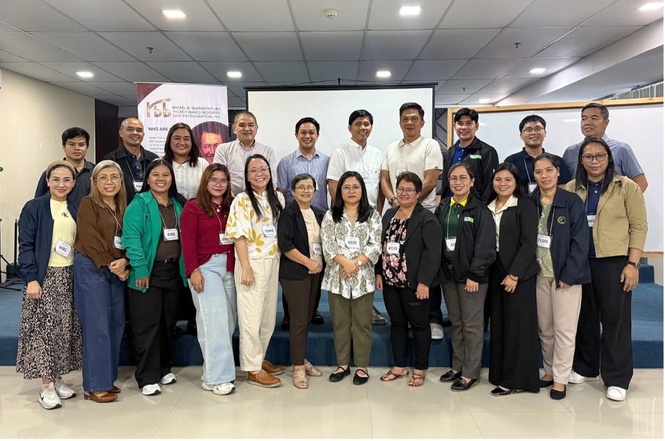
LAST August 2026, the Rafael B. Buenaventura Micro Finance Resource Center Foundation Inc., in partnership with Taytay sa Kauswagan Inc., hosted a three-day training-workshop, “Understanding Climate Risk: How Risk Management Strategies Can Lead to Sustainable Lending,” in Pavia, Iloilo, where I served as the resource speaker. The workshop brought together 24 participants to examine how climate change affects borrowers, livelihoods, loan portfolios and the sustainability of microfinance operations.
The workshop was grounded in a critical reality: climate change is no longer only an environmental concern. It is also a financial risk. When floods destroy crops, drought reduces household income or extreme weather damages businesses, borrowers may struggle to repay their loans. These disruptions can result in portfolio deterioration, loan restructuring and increased operational risks for microfinance institutions (MFIs).
The first session, “Global Climate Science: Evidence, Impacts and Solutions and Climate Change Impacts in the Philippines,” established the foundation for understanding why climate risks are intensifying. Rising temperatures, changing rainfall patterns, stronger storms, and more frequent extreme weather events are already affecting communities and economic activities. These changes can disrupt agricultural production, damage homes and businesses, and reduce household income.
The discussion then moved to “Translating National Adaptation Plan Evidence into Regional Financial Vulnerabilities,” which placed global climate trends in a local context. The Philippines is highly exposed to climate-related hazards, while many Visayan communities remain particularly vulnerable because households depend on agriculture, fisheries, tourism, informal trade and other climate-sensitive livelihoods. A single typhoon, flood, or prolonged dry period can damage productive assets and force families to use income intended for loan repayment to meet immediate recovery needs.
In “How Climate Change Affects Clients/MFIs/Rural Banks/Cooperatives,” participants examined how climate exposure affects borrowers and financial institutions. Vulnerability is not the same for every client. It depends on location, livelihood, income stability, access to resources, savings, insurance and the capacity to recover after a shock. Two borrowers may experience the same hazard but face very different financial consequences.
The session “The Taxonomy of Climate Risk in Lending” introduced three major categories. Acute physical risks include typhoons, floods, landslides and storm surges. Chronic physical risks involve prolonged drought, sea-level rise, increasing temperatures and changing rainfall patterns. Participants also considered transition risks, the financial challenges that may arise as economies shift toward low-carbon and climate-resilient systems. Changes in regulations, technologies, consumer preferences and market standards may affect businesses that rely on carbon-intensive processes or climate-sensitive supply chains.
Under “Tools to Identify and Map Climate Risks,” participants used HazardHunter, Project NOAH and the Climate Central Coastal Screening Tool. These tools demonstrated how MFIs can examine the geographic exposure of borrowers, businesses, branches and loan portfolios to floods, typhoons, landslides, coastal hazards and other climate-related threats.
Navigating the storm
Risk mapping provides an evidence-based starting point for portfolio screening, branch-level planning, client monitoring and business continuity measures. It can also help MFIs identify areas that require closer assessment and determine where additional safeguards or specialized financial products may be necessary.
The session “Navigating the Storm: Assessing the Livelihood Vulnerability and Climate Risk Implications” built on this mapping process. Participants explored how different districts, loan products, client groups and livelihood activities may be affected by climate hazards. Vulnerability scoring may consider a borrower’s exposure, the sensitivity of the livelihood and the client’s capacity to prepare for, withstand and recover from climate-related shocks.
This approach allows MFIs to move beyond a one-size-fits-all lending model. Climate-risk information can guide decisions on loan terms, repayment schedules, monitoring requirements and client support. It can also help management identify concentrations of risk within a portfolio and prioritize appropriate mitigation and adaptation measures.
The workshop concluded with a “Climate Risk Integration 90-Day Action Plan” guided by a Cooperative Climate Readiness Assessment. Each participating MFI began developing steps to integrate climate-risk management into its operations over the next three months. These steps may include mapping client exposure, reviewing loan products, establishing vulnerability-scoring procedures, strengthening portfolio monitoring and identifying opportunities for climate-resilient financial services.
To support implementation, a three-month virtual consultation clinic will be facilitated until November 2026. The consultations will allow participating MFIs to discuss progress, address technical challenges, share experiences and refine their action plans.
Climate-risk management should not restrict access to finance for vulnerable communities. Rather, it should help MFIs design more responsive products, including weather-indexed insurance, emergency loans, recovery savings and flexible repayment arrangements following verified climate events.
Sustainable lending means recognizing borrowers’ realities while protecting the financial health of MFIs. By integrating climate science, local vulnerability analysis, livelihood assessment, risk mapping, vulnerability scoring and action planning, microfinance institutions can make more informed and responsible decisions, and help build communities that are more resilient in a changing climate.
The author is the founder and chief strategic advisor of the Young Environmental Forum and a nonresident fellow of Stratbase Institute. He completed a climate change and development course at the University of East Anglia (UK) and an executive program on sustainability leadership at Yale University (USA). Email him at ludwig.federigan@gmail.com.