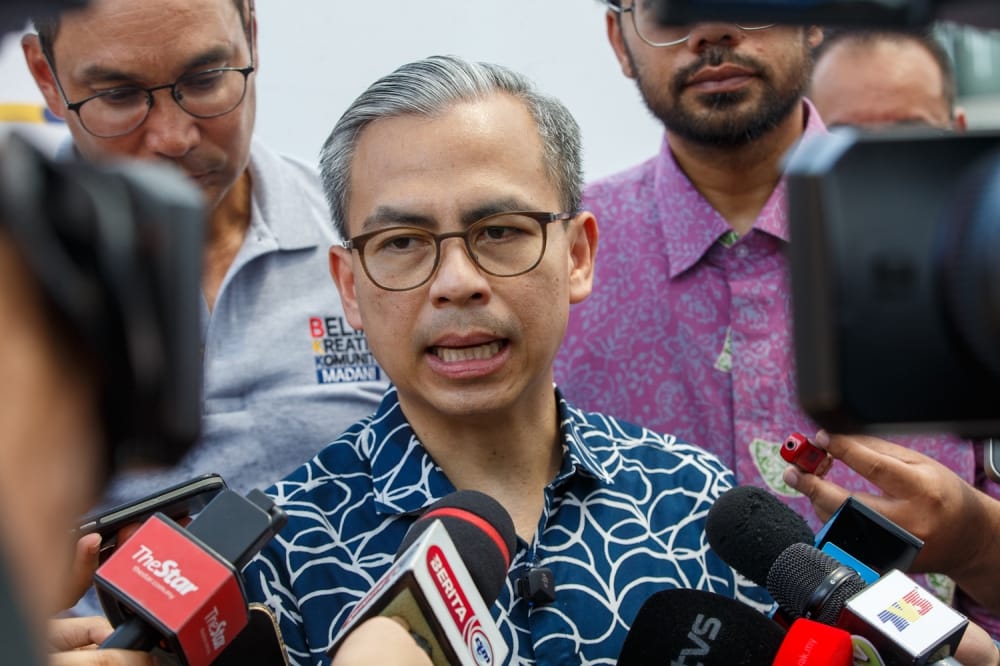
Every Wednesday afternoon in Putrajaya, a familiar ritual unfolds. The Minister of Communications takes his place behind the podium, adjusts his microphone, and faces a room full of journalists hungry for the latest government narrative. He is articulate, impeccably dressed, and speaks with the measured tone of a seasoned performer. Yet, outside the air-conditioned press room of Angkasapuri, across millions of smartphone screens from Johor Bahru to Kota Kinabalu, a completely different storm is brewing. For many ordinary Malaysians scrolling through TikTok, X, and Facebook, this man is no longer the charismatic, grassroots activist they voted for. He has become, arguably, the most relentlessly criticized and meme-targeted member of the Madani Cabinet.
The dramatic shift from a beloved reformist to a lightning rod for national frustration is a uniquely modern Malaysian tragedy. To understand why Fahmi Fadzil triggers such a visceral reaction from the public, one must look beyond simple partisan politics. His predicament lies at the turbulent intersection of rising economic anxiety, highly controversial policy choices, institutional overreach, and a fundamental disconnect with a digital generation that feels increasingly betrayed by the very administration it helped sweep into power.
The Ghost of Reformasi and the Burden of High Expectations
To diagnose the public’s deep frustration, it is essential to trace Fahmi’s political origins. Long before he stepped into the halls of power, he was a theater practitioner, a progressive writer, and a dedicated civil rights activist. He cut his political teeth in the crucible of Lembah Pantai, a highly diverse parliamentary seat that he won under the Pakatan Harapan (PH) banner, as reported by The Star. During his years in the opposition, he was a vocal defender of free speech, an advocate for digital rights, and a sharp critic of the previous government’s heavy-handed media censorship.
When the Madani administration took office, the appointment of an articulate, media-savvy urban reformist to lead the communications portfolio felt like a breath of fresh air. Supporters genuinely expected an era of unheralded press freedom and digital liberalization. Instead, institutional reality hit hard. Political analysts assume that the transition from a progressive activist whose job is to challenge power to a state enforcer whose job is to protect national stability and manage public perception is an inherently volatile transformation.
The public did not just expect a competent manager; they expected a champion of democratic ideals. When those ideals clashed with the pragmatic, often defensive needs of a fragile coalition government, the disappointment among the electorate was profound. This unmet expectation laid the groundwork for a toxic public relationship, where every subsequent policy move was viewed through a lens of profound betrayal.
The Social Media Crackdown and the Policing of the Digital Sphere
The most significant turning point in public perception came with a series of aggressive regulatory policies aimed at reshaping Malaysia's internet landscape. In mid-2024, the Ministry of Communications sent shockwaves through the tech-savvy populace by announcing a mandatory licensing framework for all social media and internet messaging platforms with at least eight million users, as detailed by The Edge Malaysia. While the government framed this as a necessary shield against cyberbullying, financial scams, and online gambling, a vast swathe of the public viewed it as a thinly veiled digital kill-switch.
The tension escalated rapidly as the government rolled out even stricter controls. In rapid succession, the ministry officially enforced a strict ban prohibiting children under the age of 16 from holding social media accounts, mandating platforms to implement rigorous age-verification systems under threat of massive multi-million ringgit fines, according to Vietnam Plus. Simultaneously, the government introduced mandatory identity verification requirements for digital advertisers to curb illegal activities, as reported by Asia Gaming Brief.
While these measures were defensible from a public safety standpoint, the cultural reception was overwhelmingly hostile. In a nation where social media serves as the primary arena for political discourse, creative expression, and micro-commerce, policing these digital spaces felt deeply invasive. Cultural critics argue that by targeting the tools of daily communication, the ministry inadvertently positioned itself as an autocratic gatekeeper rather than a protector of the people.
The 'Supranational' Feud and the Perception of Iron-Fisted Enforcements
Adding fuel to the fire was the combative language used to justify these regulatory crackdowns. Fahmi publicly took aim at global tech giants, openly criticizing Meta and X for acting like "supranational entities" that believed they operated entirely above Malaysian domestic laws, as documented by Free Malaysia Today. He aggressively questioned their willingness to comply with local directives, pointing out the immense advertising revenues they extracted from the domestic market without displaying adequate corporate responsibility.
While confronting multi-billion-dollar tech conglomerates might sound like a populist win on paper, the execution backfired spectacularly in the court of public opinion. Instead of appearing strong, the minister often came across to the digital electorate as deeply adversarial. This perception was severely worsened by highly publicized instances of online defensiveness. During a live TikTok broadcasting session, the minister courted massive public backlash when he visibly lost his temper at online critics, warning them that law enforcement vehicles could easily end up parked outside their houses if they continued to cross regulatory lines.
"The social media platforms believe that they are supranational entities, bigger and larger than nations, and that our laws do not apply to them," Communications Minister Fahmi Fadzil.
This single, viral moment became a cultural symbol of high-handedness. For a population already highly sensitive to state overreach, the image of a reformist minister threatening digital commenters with police action was deeply jarring. It shattered the illusion of an open, consultative government and solidified his reputation as an official more interested in policing dissent than listening to grassroots frustrations.
The Free Speech Paradox: Press Freedom and the Ethics Conundrum
The paradox of Fahmi’s tenure deepens when examining his relationship with traditional media. In early 2024, the ministry launched a revamped Malaysian Code of Ethics for Journalists, aiming to curb the spread of unverified information and malicious fake news, On multiple occasions, the minister vigorously defended his record, pointing out that under his watch, not a single professional journalist had been arrested or dragged to court.
However, this defense did little to assuage the anxieties of civil society groups and independent news outlets. When Malaysia’s ranking on the World Press Freedom Index experienced a drastic nosedive, the minister casually dismissed the drop, asserting that the global index was "not too bad" and did not fully reflect local digital realities, as noted by Malaysiakini.
To independent analysts, this response revealed a profound institutional blind spot. In modern journalism, censorship is rarely carried out through theatrical arrests; instead, it manifests through the quiet blocking of alternative news sites, the subtle withholding of press credentials, and the creation of an atmosphere of pervasive self-censorship. By focusing entirely on the absence of physical arrests while simultaneously tightening regulatory screws, the ministry alienated the very journalistic community that had historically supported the reform agenda.
The Lightning Rod of an Anxious Nation
Ultimately, institutional analysis suggests that the relentless criticism directed at the communications minister is a symptom of a much larger, systemic malaise gripping post-election Malaysia. When the Madani coalition assumed leadership, it inherited a nation battered by severe economic inflation, stagnant wages, a polarizing cultural landscape, and deep-seated exhaustion with political instability.
As the official government spokesperson, it is Fahmi’s unenviable job to defend complex, often deeply unpopular policy compromises, ranging from subsidy rationalizations to sensitive crackdowns on illegal business operations, as seen in recent prime ministerial directives detailed by The Scoop. When a government policy fails to resonate, or when the cost of living pinches the average household, the person who delivers the news inevitably becomes the target of that collective anger.
Fahmi Fadzil’s true dilemma is that he occupies a structural position where success is entirely invisible, and every failure is instantly magnified across a hyper-connected digital landscape. In trying to build a secure, heavily regulated digital ecosystem, he has run directly into the deeply rooted Malaysian cultural desire for personal liberty and administrative transparency. He remains caught in a painful political paradox: the more aggressively he tries to control the national narrative, the more the narrative slips entirely out of his hands.
What do you think? I’d love to hear your opinion in the comments section.
The political journey of Fahmi Fadzil serves as a profound modern parable about the intoxicating and deeply transformative nature of state power. It forces us to confront a highly uncomfortable truth about our political systems: it is infinitely easier to stand on the outside demanding uncompromised freedom than it is to sit in the minister's chair and manage the terrifying, chaotic complexities of a multicultural digital nation. The fierce public backlash he faces daily is not merely a collection of internet trolling; it is the living voice of a deeply demanding democratic electorate that refuses to lower its expectations or allow its leaders to forget their reformist promises.
As Malaysia continues to navigate the choppy waters of global economic shifts and rapid digital transformations, the communication gap between the governing elite and the ordinary citizen feels wider than ever. The critical question moving forward is whether the ministry will learn from these intense waves of public criticism, pivot toward genuine consultative engagement, and rediscover the empathetic, grassroots touch that once defined its leader’s rise to prominence. Only time will tell if trust can be rebuilt, or if the gatekeeper will remain permanently locked outside the hearts of the people.
AM World (tameer.work88@gmail.com) is a content creator under the Newswav Creator programme, where you get to express yourself, be a citizen journalist, and at the same time monetize your content & reach millions of users on Newswav. Log in to creator.newswav.com and become a Newswav Creator now!
The User Content (as defined on Newswav Terms of Use) above including the views expressed and media (pictures, videos, citations etc) were submitted & posted by the author. Newswav is solely an aggregation platform that hosts the User Content. If you have any questions about the content, copyright or other issues of the work, please contact creator@newswav.com.