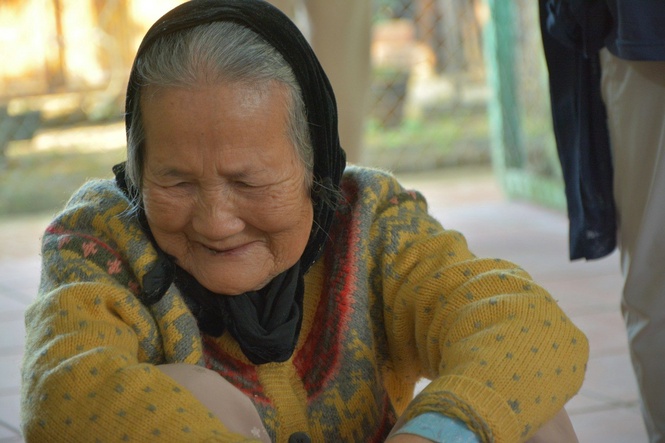
A person reaching 150 years of age remains far beyond anything medicine can presently promise.
Yet a new study is asking a more provocative question: if scientists could prevent or repair almost every reversible feature of ageing, would the human body still have a point at which it could no longer endure?
Research published in npj Aging suggests that it might. Using a mathematical model, researchers examined the possible effects of somatic mutations, the DNA changes that build up in cells throughout life. Their analysis indicates that these mutations could place a major constraint on longevity, particularly in organs whose most important cells cannot easily be replaced.
The results do not establish a fixed human lifespan. They do not show that no person could ever live beyond a particular age. Nor do they predict how long any individual will live.
Instead, they offer a theoretical estimate under highly artificial conditions, a world in which many other drivers of ageing have been removed, while DNA damage caused by somatic mutations continues to accumulate.
Within that model, the researchers estimated that people might have a median lifespan somewhere between 146 and 194 years. In a simulation combining four critical organ systems, the central estimate was approximately 156 years. The model produced outcomes ranging from 146 to 194 years under the assumptions tested.
That is an extraordinary age by present-day standards. It is also far short of claims that future medicine could make human lifespan effectively limitless.
The study matters because it adds to an increasingly important scientific debate. Is ageing driven by one underlying process that could eventually be switched off? Or is it the result of many connected forms of damage, decline and imperfect repair, each of which would need to be addressed?
The new analysis supports the second view.
Ageing research has often focused on recognised biological “hallmarks”, including cellular senescence, chronic inflammation, mitochondrial dysfunction, changes in gene regulation, impaired protein maintenance and the loss of stem-cell function. Somatic mutations are another important candidate. They occur after birth, rather than being inherited from parents, and can arise when cells copy DNA or respond to ordinary damage from metabolism and the environment.
Most somatic mutations have no obvious effect. Cells have repair systems. The body also removes or contains many damaged cells. Over decades, however, mutations can accumulate. Some can contribute to cancer. Others may gradually impair the ability of cells to work normally.
The central idea behind the study is straightforward. If many other age-related problems could be controlled, persistent DNA mutations might still wear down essential tissues. The question is not whether every mutation is harmful. It is whether a lifetime of accumulating cellular errors eventually becomes too great for organs that cannot readily renew themselves.
To explore this, researchers built their model in stages. They began with a hypothetical baseline in which biological ageing did not occur. In that scenario, death could still result from causes such as infections, accidents or external events. They then added mutation-related cell damage, first in individual tissues and later across multiple organs.
The model also accounted for a crucial difference between tissues. Some organs retain a substantial ability to replace damaged cells. Others do not.
The liver was presented as an example of a highly regenerative organ. It can replace cells after injury, allowing healthy cells to replenish damaged ones. In the study’s simulations, this regenerative capacity meant that liver function could remain stable for a very long time under the model’s assumptions.
That finding should not be read as a prediction that a human liver could function for thousands of years. The result reflects a simplified computational scenario, not the full biological reality of a person living for centuries. Real livers are affected by infection, vascular disease, cancer, immune changes, metabolic disorders, toxins, medications and many processes the model did not attempt to capture.
The point is narrower. Regenerative tissues may be more resilient to mutation-related cell loss than tissues that depend heavily on cells that divide rarely, if at all.
The brain and heart are especially important in this regard. Many neurons and mature heart muscle cells have limited capacity for replacement after adulthood. If mutations accumulate in these cells, and if damaged cells gradually die or function less effectively, the body may have few ways to restore what has been lost.
In the researchers’ simulations, these less regenerative tissues became major bottlenecks for survival. Brain and heart function appeared especially important in determining the lifespan estimates. These organs are not readily replaceable even with the best and the most advanced medical technology in the near future.
That conclusion is plausible within the model. It should still be treated carefully.
Human ageing does not occur organ by organ in isolation. The brain, heart, kidneys, immune system, blood vessels, endocrine system and musculoskeletal system affect one another continuously. A person may die because several systems weaken together, rather than because one cell type reaches a particular mutation threshold. The body can adapt to some damage. It can also become more vulnerable when multiple stresses combine.
Scientists often view that ageing is multifactorial. No single hallmark of ageing is likely to explain normal human ageing on its own. Lifespan appears to be shaped by interacting biological mechanisms.
That is perhaps the study’s most useful contribution. It pushes back against the idea that one intervention, one supplement, one peptide or one medical procedure could unlock radical life extension by itself.
Interest in longevity has grown rapidly in recent years. Social-media influencers, technology investors and self-described biohackers increasingly promote detailed testing regimes, restrictive diets, experimental drugs, hormone treatments and supplements as ways to slow ageing. Some claims are cautious. Others promise far more than the evidence can support.
The market is expanding because the desire is understandable. Most people are not simply seeking more birthdays. They want more years in which they can think clearly, move freely, work if they choose, spend time with family and remain connected to the people and places that matter to them.
That is why many geriatricians and public-health researchers focus less on maximum lifespan than on healthspan. Lifespan means the total number of years a person lives. Healthspan refers to the years lived with good physical function, cognitive health and relative independence.
A longer life is not automatically a healthier life. The prospect of surviving to 120 would hold little appeal if those additional decades were dominated by severe pain, repeated hospital admissions, frailty or dementia. The more relevant challenge for medicine is to delay disease and disability, then compress the period of serious illness towards the end of life.
The new model does not tell people how to achieve that goal. It did not test exercise, diet, sleep, medicines or social relationships. It did not examine whether specific lifestyle changes slow the accumulation of somatic mutations in humans. It also did not model every process believed to contribute to ageing.
Notably, the analysis did not fully account for mitochondrial dysfunction, chronic inflammation or other established hallmarks of ageing. It could not include future therapies that may improve DNA repair, reduce harmful mutation rates, replace damaged cells, tissue regeneration or restore tissue function. These omissions do not invalidate the work. They define its limits.
The study allows mutations to continue while producing a longer predicted lifespan than today’s, suggesting that mutation accumulation is one important factor rather than a complete explanation.
That distinction is essential. It would be misleading to describe the research as proof that human life cannot extend beyond 194 years. It would be equally misleading to dismiss it because its assumptions are incomplete. Mathematical models are valuable when used properly. They help researchers test ideas, identify vulnerabilities and reveal where knowledge is weak.
This model highlights a difficult question for future longevity medicine. Even if scientists learn to improve the function of regenerative tissues, how will they protect the brain and heart over very long periods? Repairing age-related damage in organs that cannot easily replace specialised cells may be one of the hardest tasks in the field.
For now, the evidence for living longer and healthier remains much more practical than futuristic. Regular physical activity reduces the risk of cardiovascular disease, type 2 diabetes, falls, some cancers and depression. Aerobic fitness, often measured through maximum oxygen uptake or VO2 max, is strongly associated with lower risks of illness and premature death.
Experts often described fitness as one of the strongest measurable predictors of longevity. That does not mean everyone needs intense training. Fitness can improve through walking, cycling, swimming, strength exercises, gardening and other activities that are safe, enjoyable and sustainable.
Avoiding tobacco remains one of the most effective health decisions a person can make. Smoking damages blood vessels, lungs, heart and immune function. It increases the risk of cancer, stroke, chronic lung disease and many other conditions. Stopping at any age can bring health benefits.
Other evidence-based measures include managing high blood pressure, lowering elevated LDL cholesterol when appropriate, seeking regular medical care, prioritising sleep and maintaining social ties. These steps reduce the chance of dying from specific diseases. They can also preserve mobility, energy and independence.
They are not guarantees. Health is shaped by much more than individual choices. Income, housing, education, access to nutritious food, safe places to exercise, clean air, healthcare availability, disability and discrimination all influence who gets the opportunity to age well. No longevity article should turn health into a test of personal virtue.
The most honest message is both modest and hopeful. There is no proven product that can make people live for centuries. There is no reliable shortcut around ageing. There is, however, strong evidence that established habits and accessible healthcare can improve the odds of living more years in better health.
The new study adds another layer to that story. It suggests that even in an imagined future where many forms of ageing are controlled, the body may still face deep biological constraints. DNA damage could be one of them. Yet the research also shows how much remains unknown.
Science may eventually find better ways to repair cells, protect organs and extend healthy life. Until then, the most meaningful goal is not to chase an uncertain maximum age. It is to support the conditions that allow more people to reach later life with strength, dignity and connection.
The post How Long Can Humans Live, Even with the Best Medicine? New Study Suggests Limit first appeared on PP Health Malaysia.