.jpeg)

In Malaysia, Al-Hijrah is not treated as a passing religious greeting at the start of a new Islamic year. It is a formal national moment through which the state revisits the meaning of moral example in public life, and a window into how Malaysia frames religious figures and gives them public meaning through an official platform of recognition. At Putra Mosque in Putrajaya, where the symbolism of a sacred space meets the authority of the country’s administrative capital, the award does not appear simply as a tribute to someone who has served knowledge or religious outreach. It functions as a quiet mechanism through which religious stature is recognised, disciplined, and placed within a national narrative.
The word Hijrah refers to the Prophet Muhammad’s migration from Mecca to Yathrib, later known as Medina, in 622 CE. In Islamic memory, that journey was not merely a movement from one city to another; it marked the transition from persecution to community-building, and from private belief to a more organised social order. The Islamic calendar itself takes its reckoning from that event, with the Hijri era later formalised under Caliph Umar ibn al-Khattab. In Malaysia, Maal Hijrah, or Awal Muharram, marks the beginning of the Hijri year, but the national celebration gives the occasion an additional public meaning: renewal, reform, service, and the selection of figures who are presented as examples for society.
This year, Malaysia named Emeritus Professor Datuk Dr Osman Bakar, Rector of the International Islamic University Malaysia, as the National Maal Hijrah Figure for 1448H/2026. The International Maal Hijrah Figure award went to Moroccan scholar Dr Ahmad Raissouni. The awards were presented by the Sultan of Perak, Sultan Nazrin Muizzuddin Shah, in his capacity as Deputy Yang di-Pertuan Agong, before an official, religious, and media audience that reflected the occasion’s place within Malaysia’s state calendar.
Having covered this event since 2008, I have come to see that its importance for Malaysians lies not in protocol alone, but in its ability to turn the opening of the Islamic year into a public educational moment. Hijrah is not presented here merely as a distant historical episode. It becomes a continuing idea of reform: a movement from habit to awareness, from private knowledge to public service, and from individual virtue to social contribution. This is why Malaysia annually elevates a national figure seen as embodying learning, work, and service. In a multi-ethnic and multi-religious country, religion cannot be separated from the question of social harmony; yet Malaysia also understands the danger of allowing religion to shift from a unifying moral language into an instrument of division or mobilisation.
From this domestic meaning, the award opens into its international dimension. Malaysia does not stop at honouring national figures; through the international category, it sends a carefully framed message to the broader Muslim world. Over the years, this category has included Syria’s Wahbah al-Zuhayli, Egypt’s Yusuf al-Qaradawi, Mauritania’s Abdullah bin Bayyah, Egypt’s Ahmad al-Tayyeb, Saudi Arabia’s Mohammed al-Issa and Tawfiq al-Rabiah, and now Morocco’s Ahmad Raissouni. This is not merely a list of honourees. It is a symbolic map linking Kuala Lumpur to religious and intellectual centres in the Arab world, the Maghreb, and the Gulf, while also revealing how the Malaysian state chooses the figures it wishes to place at the forefront of its religious and intellectual recognition.
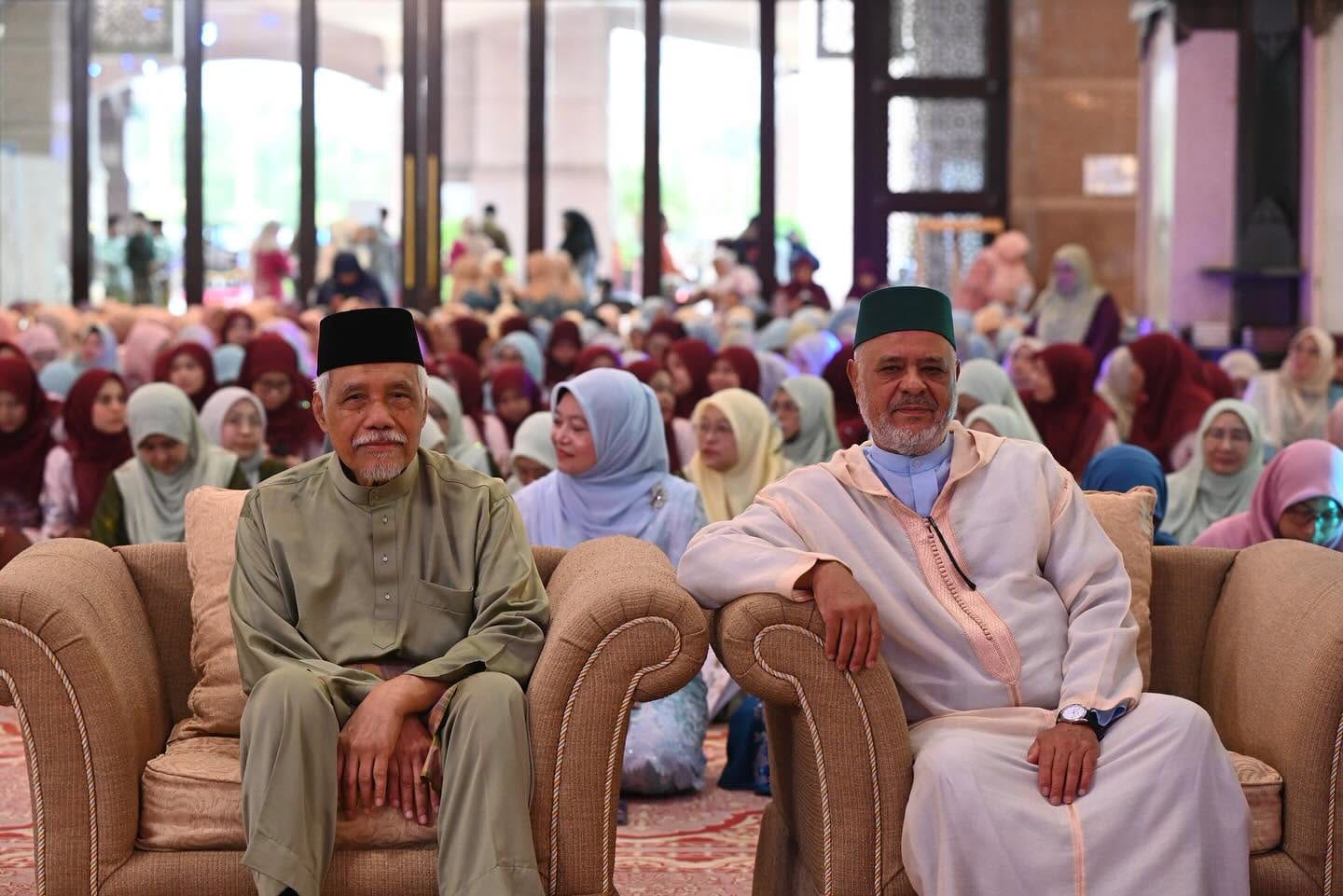
Raissouni’s selection adds a distinct Maghrebi and maqasidi dimension to that map. He is widely associated with the contemporary study of maqasid al-sharia, a field concerned with the higher objectives of Islamic law, including the preservation of life, reason, dignity, and public interest. The significance is clear: Malaysia is not merely honouring a preacher or a religious official, but a thinker identified with a school that examines the relationship between text and reality, ruling and public interest, religion and human life. This is perhaps the most important aspect of serious religious recognition: knowledge should be broader than alignment, and public interest should stand above the calculations of groups and transnational loyalties.
Yet the international award always carries a sensitivity beyond the national category. When a state honours a figure from outside its borders, it does not recognise scholarship alone; it also touches that figure’s institutional history and position within wider public debate. Raissouni’s scholarly profile in maqasid gives the award intellectual weight, while his previous leadership of Islamic institutions across borders inevitably opens the door to political readings. Here, Malaysia’s skill lies in using religious symbolism in a calm and non-confrontational language, but not without meaning. It approaches scholars as people of knowledge, while still needing to preserve a careful distance between intellectual appreciation and the transformation of religious figures into instruments of influence.
At its core, the Maal Hijrah award reveals Malaysia’s distinctive way of managing religious meaning. It begins at home, by presenting national models that society can recognise, and then extends outward to signal that Malaysia, despite its geographical distance from the traditional Arab centres of Islamic authority, wants to remain part of the wider Muslim intellectual space. It does this not through noise, but through an official platform, an annual ritual, and a careful selection of names. There is something worth considering in this method: when religion is protected within knowledge and service, it becomes an ethical force; when it is drawn into contests of power and narrow identity, it loses part of its public clarity.
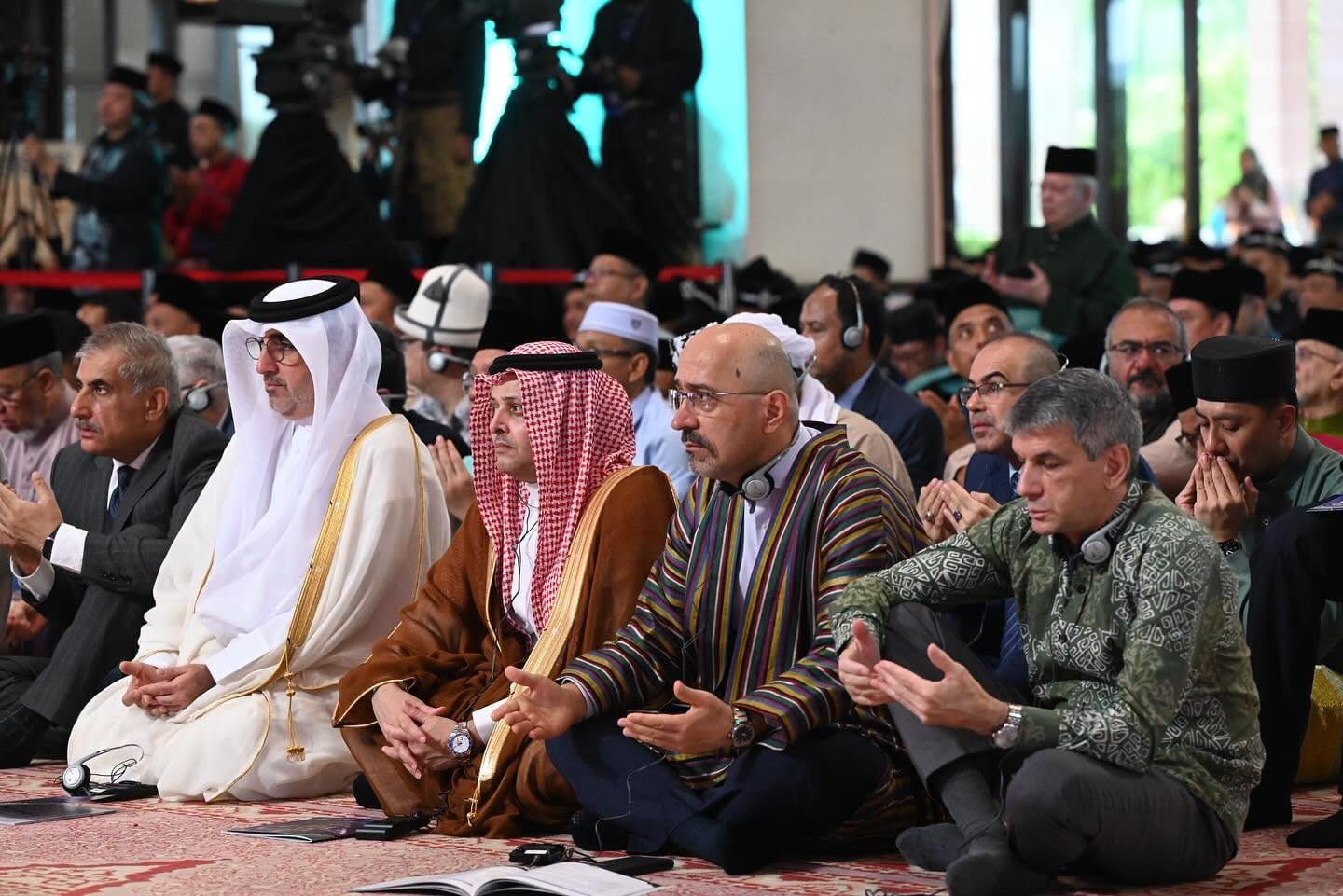
In this sense, the Maal Hijrah award is more than a formal ceremony repeated at the start of each Islamic year. It is a space in which Malaysia tests its own image of religion, moral example, and society. The value of the occasion is not measured by the names of the recipients alone, but by the broader question it leaves behind: what kind of religious figures do contemporary societies need? In the Malaysian experience, the answer appears closer to the figure who serves knowledge, harmony, and institution-building, rather than the figure who reduces religion to loyalty or competition. Despite its limited global visibility, the award shows how a Muslim-majority Asian country can turn a calendar occasion into an organised symbolic act. Hijrah, in its deeper meaning, is not only a movement through time; it is a movement in public consciousness, in the way societies choose their moral examples, and in the protection of religion when it remains knowledge, mercy, and service to people.
Abdullah Bugis (kualalumpur.abdullah@gmail.com) is a content creator under the Newswav Creator programme, where you get to express yourself, be a citizen journalist, and at the same time monetize your content & reach millions of users on Newswav. Log in to creator.newswav.com and become a Newswav Creator now!
The User Content (as defined on Newswav Terms of Use) above including the views expressed and media (pictures, videos, citations etc) were submitted & posted by the author. Newswav is solely an aggregation platform that hosts the User Content. If you have any questions about the content, copyright or other issues of the work, please contact creator@newswav.com.