
The deaths of two CIA agents in April following an operation to dismantle a drug lab in northern Mexico have led to the unusual federal charge of “treason” against a former Chihuahua state attorney general. He is also accused in state court of “illegal exercise of public office.”
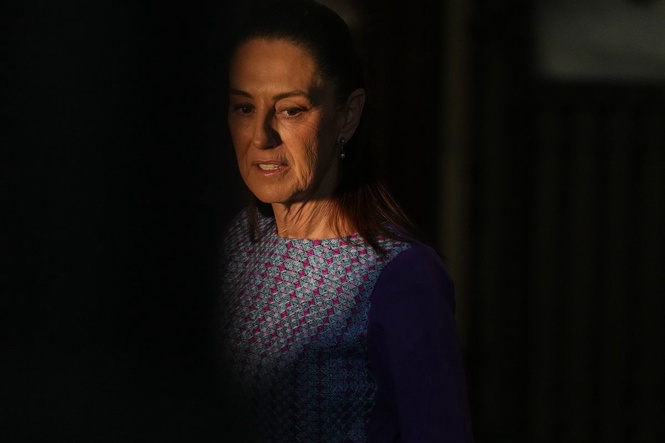
The defendant, César Jáuregui, is being held in pretrial detention at a maximum-security prison for allegedly authorizing the agents’ participation in the operation. President Claudia Sheinbaum said her administration neither authorized it nor was informed of it.
A state judge will determine Thursday whether to initiate the trial in Chihuahua courts on state charges. The federal judge will decide on Saturday — one week after his arrest — whether or not to indict him in the separate case for treason.
The deaths of the U.S. officials in an opposition-led state fueled speculation about the scope of the Trump administration’s actions on Mexican soil. It also called into question Sheinbaum's strong defense of national sovereignty and her refusal to arrest a former governor from her own party accused of drug trafficking by the United States.
According to Héctor Villasana, one of Jáuregui's defense attorneys, the prosecution’s argument is that an “exemplary punishment” against his client was necessary to prevent a situation in which “the United States could carry out an action similar to the one it undertook in Venezuela when it removed President Maduro.”
The U.S. State Department told The Associated Press that it is aware and watching Jáuregui's case but didn't make a link between the case and the CIA deaths.
These are some key points on how a traffic accident in the mountains of Chihuahua led to a charge of treason — a crime Mexico has not successfully brought to trial in decades despite one recent attempt.
An accident in the Chihuahua mountains
On April 19, the Chihuahua Attorney General’s Office reported the dismantling of a synthetic drug lab in the municipality of Morelos, in the mountains of that state. On the way back, a vehicle in the convoy veered off the road and fell into a ravine. Two state agents and two Americans were killed.
The Federal Security Cabinet reported the dismantling of laboratories there during a joint operation by the state prosecutor’s office and the army but did not provide details.
The operation ended without any arrests because the criminals fled.
Treason: a hard-to-prove crime with political undertones
According to the federal prosecutor’s office, Jáuregui endangered national security for allegedly authorizing the participation of U.S. agents in the field operation, a decision that only the federal government can make. Experts say it is a political decision ahead of the 2027 Mexican midterm elections.
The crime could carry from 5 to 40 years in prison and is very difficult to prove.
Carlos Pérez Ricart, a professor at the Mexican university CIDE and author of the book “A Hundred Years of Spies and Drugs,” said that even if the case is ultimately dismissed, its public impact is huge.
Trump has repeatedly said Mexico isn’t doing enough against the cartels. The Mexican political debate centers on whether Sheinbaum's Morena party is properly defending national sovereignty or whether there is a “narco-government,” as opponents of the National Action Party (PAN) that rules Chihuahua claim.
All this debate “sends a very bad signal to Washington” because Mexico is talking about a treason case while the discussion should center on "more or better” collaboration with the U.S., Pérez Ricart said.
Samuel González, a former chief prosecutor for organized crime and an analyst, said that Jáuregui may have failed to fulfill his obligations by not informing the federal government or by allowing the foreign agents to carry weapons in violation of the law — as Sheinbaum confirmed Thursday. But “even if that were the case, it would not constitute treason,” a wartime crime.
Luis Villegas, the former prosecutor’s defense coordinator, said it was unacceptable for the federal prosecution to compare the presence of the agents to a foreign “invasion.”
Official contradictions about the agents' role
Villegas said that the two Americans who died were officials providing training related to intelligence and drones. U.S. Ambassador Ronald Johnson just stated that they were “embassy personnel.” The AP later confirmed that they were CIA agents.
According to Jáuregui’s defense team, the federal prosecutor’s office said the agents were close to the person who led the operation, the Chihuahua investigations chief who was one of two deceased Mexicans.
The day of the operation there were two other U.S. agents in the convoy traveling in another vehicle, who were later expelled from the country. The president said none of them had permission to operate in Mexico and that the military was unaware of the foreigners’ presence.
The next day, Sheinbaum said she was unaware of the operation. Jáuregui clarified that the Americans had joined the group after the operation.
Historical presence of US agencies in Mexico
The presence of U.S. agencies in Mexico has been a constant for decades, although former President Andrés Manuel López Obrador (2018–2024) limited their activities, and Sheinbaum amended the Constitution to prohibit field operations without the express authorization and cooperation of the Mexican government. The law does not allow members of U.S. agencies to be armed.
Ricart, the professor, said that, beyond official relations, there have always been anti-drug agents involved in operations of this kind, “often without the federal government’s knowledge.”
“These actions happen, have happened, and will continue to happen” because they are based on U.S. trust with state or local officials and facilitate ongoing collaboration," he said.
“However, since there are no clear rules, they can lead to abuses.”
___
Follow AP’s coverage of Latin America and the Caribbean at https://apnews.com/hub/latin-america
Read MoreTrump blasts 76ers' star LeBron James as 'disgrace' for not standing still during national anthem
Washington man killed by train after his wheelchair got stuck crossing the tracks
Washington resident charged with conspiracy in Canada school shooting pleads not guilty
Todd Blanche won’t rule out DOJ action to stall midterm election results