As climate change ravages their threatened homes, “emboldened and empowered” Pacific Islanders have issued a clear message ahead of a crucial COP31 summit in Turkey next month: this is our time to be heard.
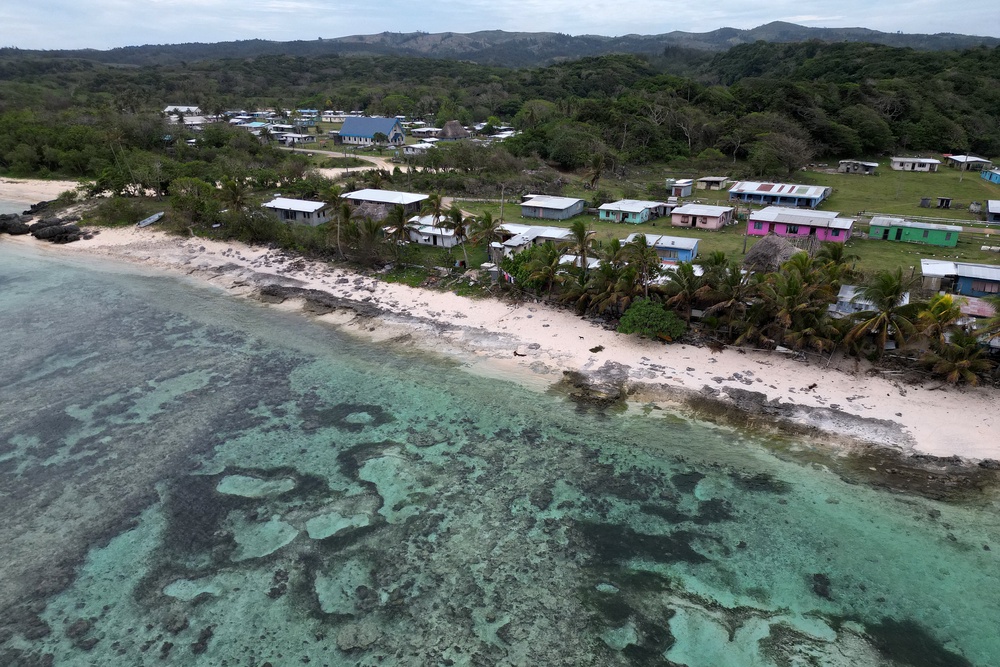
The pre-COP climate summit is taking place on the low-lying island nations of Fiji and Tuvalu, both of which are facing rising sea levels, increasing sea temperatures, devastating storms and dangerous flooding.
Surrounding the summit are villages that have been partially displaced as a result of flooding, and communities witnessing the sea creep up towards their homes.
But after a landmark International Court of Justice (ICJ) Advisory Opinion in July 2025 declared that countries have a legal obligation to protect the climate system - following a years long campaign led by a group of Pacific Island students - Pacific Islanders are now demanding action and accountability.
“They're coming emboldened and empowered, standing on the rights they have in the international community for these issues to be addressed,” Julia Gillard, former Australian prime minister and chair of the Wellcome Trust, told The Independent.
“You can already feel [it] across the Pacific Islands. People definitely want to see change. They are not going to stop. They're going to make sure that their case is heard and responded to.”
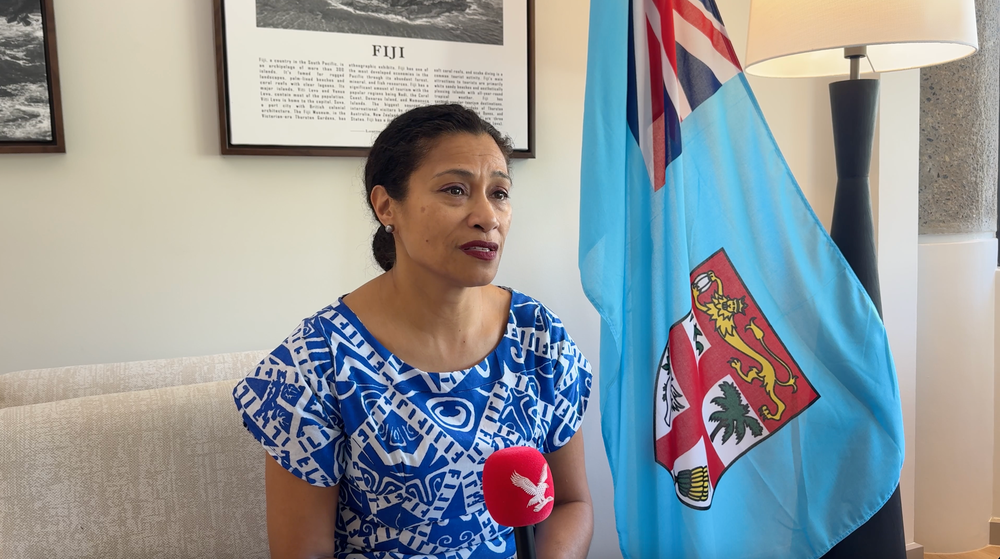
Lynda Tabuya, Fiji’s minister for climate change, said: “We are the least emitters, and yet we are the most disproportionately affected. It’s not just about climate resilience, it’s about climate justice.
“It’s about the need for the world to know, and witness first-hand, what we are dealing with here in the Pacific.”
She added: “I believe with this kind of political will and unity that we have experienced at pre-COP, we will see not only the Pacific going to COP31 with our priorities, but the world behind us as well.”
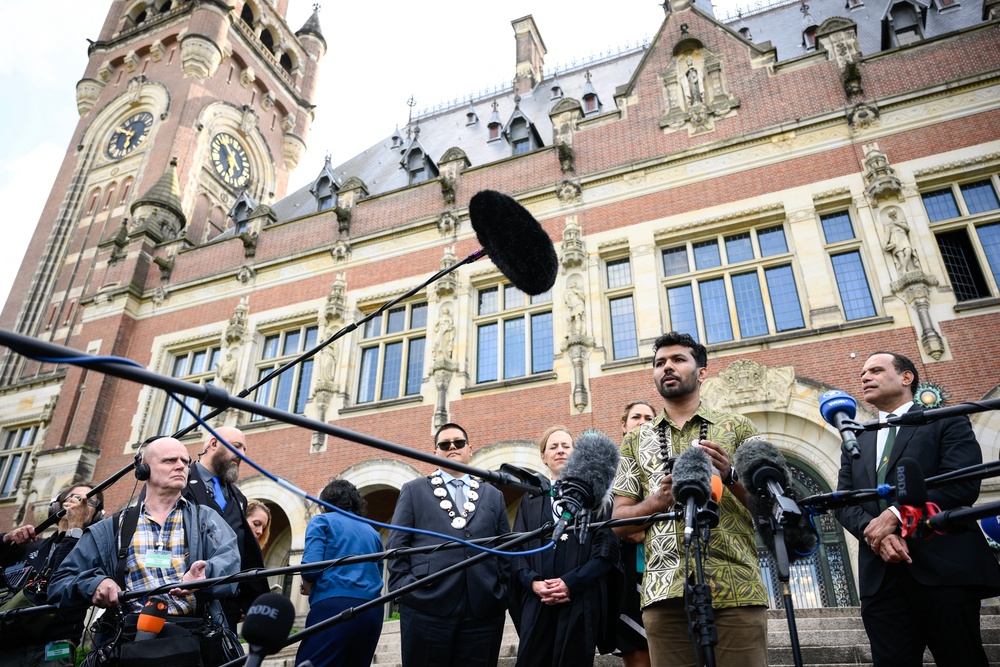
Vishal Prasad, a 30-year-old Fijian who is director of the Pacific Island Students Fighting Climate Change and led students to the ICJ, said the legal opinion is “extremely critical to centre Pacific voices”.
“The ICJ gave us the legal backing for all the demands we’ve been making. We want countries to now not just hear Pacific’s moral call, but now listen to what the law is telling them to do and meet their obligations,” he added, pointing in particular to the 1.5C global warming limit which the UN’s Environment Programme predicts will be surpassed in around 2030.
Speaking at the launch of the ‘All Rise!’ documentary about the legal fight, produced by Open Planet Studios and funded by the Wellcome Trust, Fred Siho Patison, a top climate advisor for the Solomon Islands, said the opinion “gives us this comfort to be able to say to the global community: we are not beggars in this space. This is a right”.
In light of the advisory opinion, Pacific Islanders are demanding an end to the era of promises and the beginning of an era of delivery and accountability.
At the upcoming COP31 in Antalya, Australia has vowed to use its role as president of negotiations to elevate the case of the Pacific Islands, not least their demand for more climate finance for ‘Small Island Developing States’.
Chris Bowen, Australian climate minister and COP31 president of negotiations, said at the pre-conference opening plenary that “no one is more important in that process than the Pacific, the Pacific which has done so little to cause climate change, and has so much at stake in combatting climate change”.
There had been uncertainty about how well-attended the pre-COP summit would be, with Australia playing down claims that the attendance would be worse than expected.
But the absence of dozens of world leaders has only strengthened the ability of Pacific voices to put themselves front-and-centre of climate diplomacy, sharing devastating first-hand accounts of the impacts of climate change on their communities.
The pre-COP summit is a “tremendous opportunity to not only highlight the reality of life on the climate frontline, but also to support and amplify Pacific voices when it comes to solutions", Dr Simon Bradshaw, COP31 Lead and climate expert at Greenpeace Australia Pacific, told The Independent.
“[There are] so many people who live in the Pacific coming and telling their story from their village, their family, their nation about the visible effects of climate change, and it's reinforcing that climate change isn't some threat that we need to worry about in five or 10 years' time, it is happening now,” Ms Gillard added.
“The people who have gathered here can point to that in incredibly real-world ways.”
Saia Piukala, the WHO’s regional director from the Western Pacific region and the first to hail from the Pacific Islands, said at the ‘All Rise!’ event that “courage and extraordinary leadership” from young Pacific islanders has driven change around the world.
“Young people are not the leaders of tomorrow,” he added. “They are leading today.”
The reporting trip for this article was funded by Wellcome as part of its work to promote its ’All Rise!’ and ’Birthright!’ campaigns ahead of COP31. Wellcome had no influence over the editorial content or decisions made in producing this article
Read MorePregnant women exposed to heatwaves ‘25% more likely to suffer complications’
Australia’s top court delivers historic ruling against coal mine expansion
Trump making climate progress ‘more difficult’, warns former Australian PM
Radioactive traces found in teeth of stranded whales used to explore their lives
Indonesian haze makes Singapore the most polluted city in the world
World’s largest penguin colony loses two-thirds of its population