The Federal Reserve is expected to raise its short-term interest rate Wednesday for the first time in three years to fight rising inflation.
The consumer price index, the most widely used measure of inflation in the U.S., has continued to rise, bringing the annual inflation rate to 3.4 percent for August. Higher oil and gas prices caused by the war with Iran played a significant role in keeping inflation higher than the Fed’s 2 percent target.
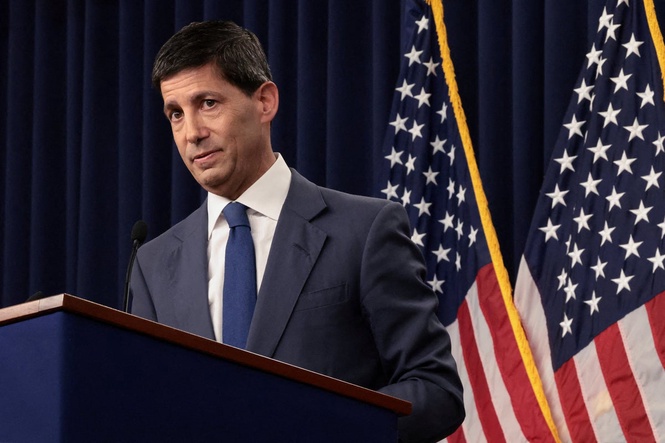
Fed Chairman Kevin Warsh - who was nominated to the position by President Donald Trump - has insisted that policymakers will bring inflation down to that 2 percent goal — prompting experts and analysts to warn that a quarter-point increase in the Fed’s rate may come Wednesday as a move to put inflation in check.
The rate hike, up from 3.6 percent, comes just seven weeks before the midterm elections, for which affordability has taken center stage. Trump has demanded that the Fed cut rates, saying on Sunday, “the United States is so strong we should be paying the lowest interest rate in the world.”
Despite Trump’s demands, financial markets see a 90 percent chance that the Fed will hike Wednesday, according to futures prices.
When interest rates go up, the effects trickle down to the financial products consumers use daily. It can lead to higher interest rates on credit cards, car loans and personal loans. However, for those more inclined to save, it may mean higher returns on high-yield savings accounts.
Here’s everything to know about what a higher rate may mean for you:
Mortgages
When the Fed raises interest rates, it becomes more expensive for consumers and businesses to borrow money.
Mortgages, or loans used to buy a house or other real estate, are often the largest borrowing expense for consumers. The Fed does not set mortgage rates directly, and a hike would not automatically cause an equal increase in 30-year mortgage rates.
Mortgage rates are currently above 6.709 percent and will likely remain around this level through the end of the year, experts predict. The higher interest rates have helped stall the housing market as people with higher rates are paying more for their homes in the long run. It can also discourage people from moving for fear of losing their lower-interest-rate loan.
Savings Accounts
While borrowing becomes more expensive when interest rates go up, higher interest rates also mean better savings. Those looking to profit can increase the amount of money they keep in their interest-earning savings account.
High-yield savings accounts have rates mostly in the 3 percent range, with an occasional 4 percent yield available.
Checking Accounts
Most checking accounts pay little to no interest. While a rate hike may move yields up slightly, national averages will stay around 0.07 percent.
Monthly maintenance fees, out-of-network ATM fees and overdraft charges do not go up because of a Fed rate hike.
Credit Cards
When the Fed changes its benchmark interest rate, banks change the prime rate by the same amount. This either raises or lowers the variable APR (annual percentage rate) on a consumer’s credit card within one or two billing cycles.
“Credit card rates, which are above 20 percent, will rise once the Fed moves to raise rates, likely to record highs,” Mark Zandi, a chief economist at Moody’s, told CNBC.
The Federal Open Market Committee will release its policy decision following its meeting on Wednesday.
With reporting by the Associated Press.
Read MoreNearly all goods and services have seen prices spike in last 5 years
Why it’s getting harder to return your unwanted online purchases
US holiday spending is on track for a major milestone
Fast food giants are reversing its course on AI as customers crave human connection
Thousands of Americans were forced into bankruptcy last year by medical debt
Costco has 10 new stores opening in the next two months - here are the locations