
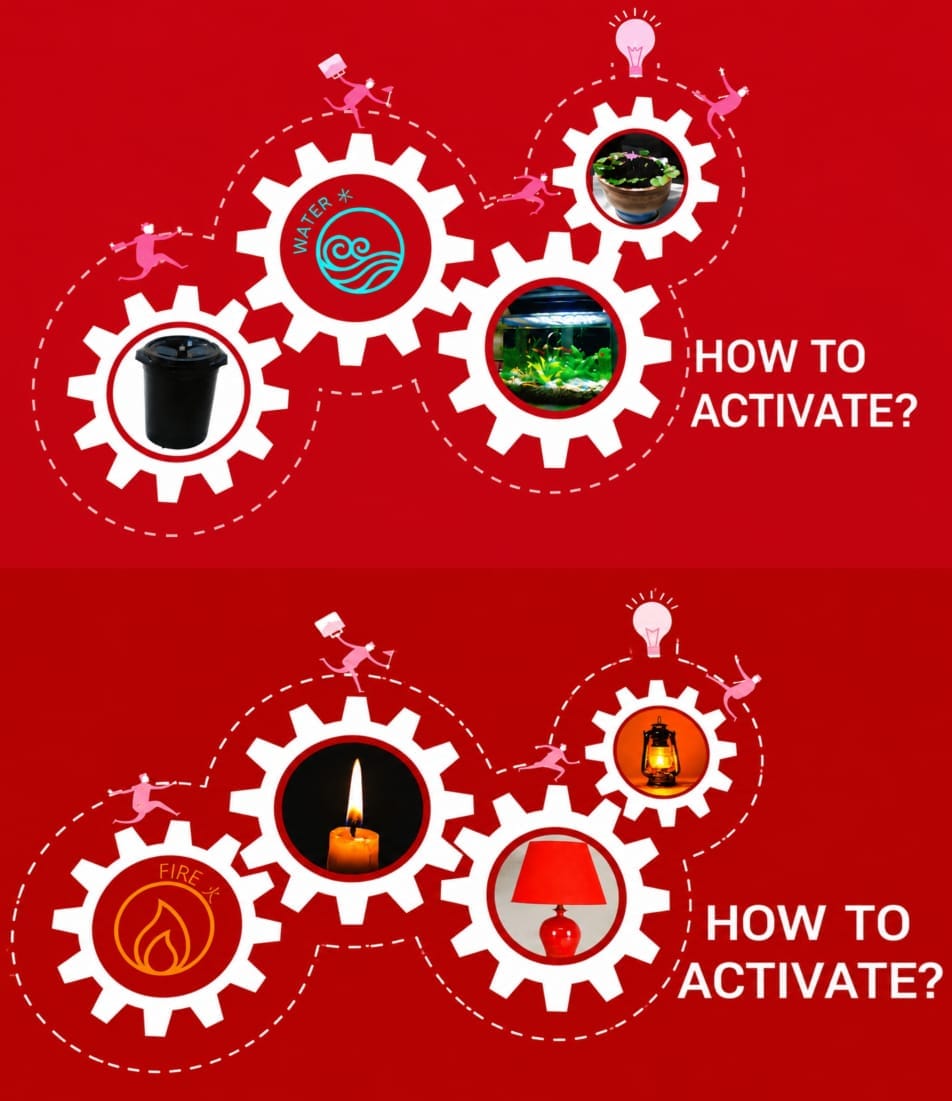
In many traditional systems of design and symbolism, the Water and Fire elements represent two very different but complementary forms of energy. Water is associated with flow, abundance, calmness, communication, and renewal, while Fire represents warmth, visibility, passion, motivation, and transformation.
The image illustrates simple ways to introduce and strengthen these two elements through everyday objects. The key is not simply to add more objects, but to use them intentionally and create a balanced environment.
Understanding the Water Element
Water is traditionally connected with movement, abundance, adaptability, and emotional flow. In interior spaces, it can be represented by actual water as well as objects, colors, shapes, and imagery associated with water.
1. Use an Aquarium or Water Feature
One of the most obvious ways to activate the Water element is by introducing moving or living water.
An aquarium can be particularly effective because it combines several natural qualities: water, movement, plants, light, and living organisms. A small indoor water feature, fountain, or decorative water bowl can also create a sense of movement and tranquility.
When using an aquarium, keep it clean and well maintained. Stagnant, dirty, or neglected water can create the opposite impression of what you are trying to achieve.
2. Add Healthy Green Plants
The image also shows a planted container and an aquarium containing aquatic plants. Plants can complement Water energy by bringing a sense of growth and vitality into the environment.
Choose healthy, thriving plants rather than overcrowding the space. Aquatic plants, bamboo, leafy green plants, and other moisture-loving varieties can work especially well where appropriate.
3. Incorporate Water-Associated Colors
Colors commonly associated with Water include:
- Blue
- Black
- Deep navy
- Dark charcoal
- Blue-green
You do not need to repaint an entire room. Small details such as cushions, artwork, vases, curtains, rugs, or decorative objects can introduce these colors subtly.
4. Use Curved and Flowing Forms
Water is naturally associated with curves and flowing movement. Decorative objects with rounded or wavy shapes can therefore reinforce the visual impression of the element.
Consider mirrors, curved artwork, flowing fabrics, rounded containers, or wave-inspired patterns.
5. Keep Water Moving and Clean
If you use an actual water feature, maintenance is essential. Replace or filter the water as necessary and prevent algae, odors, and debris from accumulating.
The symbolic purpose of a Water feature is flow, so a clean and properly functioning feature is much more appropriate than a neglected one.
Understanding the Fire Element
Fire represents a completely different type of energy. It is associated with enthusiasm, courage, warmth, recognition, creativity, action, and transformation.
Unlike Water, which suggests calm movement and flow, Fire suggests activity and expansion.
The lower portion of the image illustrates Fire through candles, lamps, and the flame symbol.
How to Activate the Fire Element
1. Introduce Warm Lighting
One of the easiest ways to bring Fire energy into a room is through lighting.
Table lamps, floor lamps, pendant lights, wall lights, and warm-toned decorative lighting can make a room feel more vibrant and welcoming.
A warm light source can also become a visual focal point, particularly in areas that feel dark or inactive.
2. Use Candles
Candles are a classic representation of Fire.
A candle can create warmth, movement, and a strong visual connection to the element. Use candles as decorative accents in appropriate areas, always placing them on stable, heat-resistant surfaces and never leaving an open flame unattended.
If an open flame is impractical, an electric candle or warm LED light can provide a similar visual effect without the same fire risk.
3. Incorporate Red and Other Fiery Colors
Fire is often represented by warm, energetic colors such as:
- Red
- Orange
- Coral
- Bright pink
- Purple
- Warm yellow
These colors can be powerful, so they do not necessarily need to dominate the room. A red lamp, artwork, cushion, vase, or decorative accessory can provide a strong accent.
4. Add Triangular or Pointed Shapes
In traditional elemental symbolism, Fire is frequently represented by upward-moving or triangular forms.
You can introduce this visually through artwork, geometric patterns, triangular decorations, or objects that have a strong upward shape.
5. Create Activity and Visibility
Fire is not only represented by physical flames. It can also be expressed through activity, brightness, creativity, and human interaction.
A workspace where you pursue creative projects, a well-lit reading area, or a social space designed for conversation can all reinforce the qualities traditionally associated with Fire.
Water and Fire: Creating Balance
One of the most important points to understand is that Water and Fire are traditionally viewed as opposing elements.
Water cools and extinguishes Fire, while Fire heats and transforms Water. This doesn't necessarily mean they should never appear in the same home. Instead, it suggests that balance and placement are important.
For example, placing a large water feature immediately beside a strong collection of candles may create a visually confusing arrangement. Rather than concentrating opposing symbols in one small area, consider distributing them thoughtfully throughout your environment.
A home can contain both elements without making either one overwhelming.
Practical Ways to Activate Water
Here are some simple ideas you can implement without making major changes to your home:
Low effort
- Add blue or dark-colored accessories.
- Use artwork depicting water.
- Introduce curved or flowing decorative shapes.
- Add a small glass or ceramic water feature.
Moderate effort
- Install an indoor fountain.
- Add an aquarium.
- Introduce healthy aquatic or moisture-loving plants.
- Use a larger water-inspired decorative arrangement.
Important: Actual water features require maintenance. Clean water and proper operation are more important than simply having a decorative feature.
Practical Ways to Activate Fire
Similarly, Fire can be introduced gradually.
Low effort
- Add red, orange, or warm-colored accessories.
- Use warm-white lighting.
- Display artwork containing sunlight, flames, or warm colors.
Moderate effort
- Add a table or floor lamp.
- Create a dedicated warm-lighting arrangement.
- Use candles as decorative accents.
- Introduce red or orange furnishings as focal points.
Higher impact
- Improve lighting in a dark or inactive area.
- Create a visually prominent feature wall.
- Design a space specifically for creativity, social interaction, or energetic activity.
Don't Overactivate an Element
A common mistake when working with symbolic elements is assuming that more is always better.
It isn't.
A room filled with red objects, bright lights, candles, and fiery artwork may become visually overwhelming. Likewise, filling a space with dark blue colors, mirrors, fountains, and water imagery may make it feel cold or excessively heavy.
The goal should be balance rather than accumulation.
Instead of asking, "How many Water or Fire objects can I add?" ask:
What quality do I want this space to express?
If you want calmness and flow, subtle Water-related features may be appropriate. If you want energy, warmth, and visibility, carefully selected Fire-related features may be more suitable.
Water and Fire in Different Areas of the Home
Different rooms can benefit from different approaches.
Living Room
The living room is often suitable for a balanced combination of elements. A small aquarium or water-inspired artwork can be combined with warm lighting to create an environment that feels both lively and comfortable.
Bedroom
Use greater restraint. Soft lighting and subtle colors may be preferable to strong Fire symbolism or large water features.
The bedroom generally benefits from a peaceful visual environment rather than excessive stimulation.
Home Office
Fire symbolism can be useful visually in a workspace because it represents activity, motivation, creativity, and visibility. Warm lighting and a carefully selected red or orange accent can provide energy without overwhelming the room.
Water-associated imagery can also contribute a sense of flexibility and flow.
Entrance
The entrance establishes the first impression of a home. A carefully selected decorative feature can introduce the desired elemental quality without cluttering the area.
Keep the entrance clean, organized, and visually welcoming.
The Importance of Intention
Elemental activation should ultimately be viewed as a symbolic design practice, rather than a guaranteed method for producing specific financial, health, or personal outcomes.
A water feature does not automatically create wealth, and a candle does not automatically create success. Their value can come from the meaning we assign to them and from the atmosphere they help create.
For example, a clean aquarium may remind you of growth and movement. A warm lamp may encourage you to spend more time reading or working creatively. A candle may create a peaceful ritual at the end of the day.
In this sense, the physical environment becomes a reminder of the qualities you want to cultivate.
Final Thoughts
The infographic's central message can be summarized simply:
Water can be introduced through aquariums, fountains, aquatic plants, blue and dark colors, flowing shapes, and water imagery. Fire can be introduced through candles, lamps, warm lighting, red and orange accents, triangular forms, and energetic visual features.
The most effective approach is not to fill your home with symbolic objects. Instead, choose a few meaningful elements, keep them clean and functional, and make sure they complement the overall atmosphere of the space.
Whether you approach these elements from a traditional Feng Shui perspective, as a form of interior styling, or simply as a way of creating a more intentional environment, the underlying principle is the same:
William Lee (kokwei67@gmail.com) is a content creator under the Newswav Creator programme, where you get to express yourself, be a citizen journalist, and at the same time monetize your content & reach millions of users on Newswav. Log in to creator.newswav.com and become a Newswav Creator now!
The User Content (as defined on Newswav Terms of Use) above including the views expressed and media (pictures, videos, citations etc) were submitted & posted by the author. Newswav is solely an aggregation platform that hosts the User Content. If you have any questions about the content, copyright or other issues of the work, please contact creator@newswav.com.