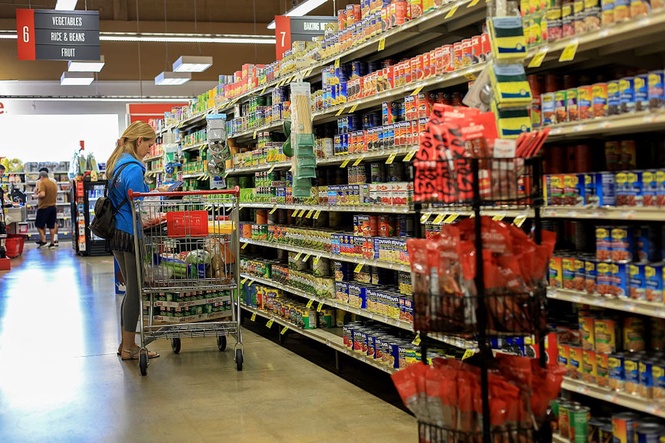
Life is significantly more expensive than it was five years ago, according to federal data, around 23 percent more so.
That means consumers need to spend around $123 today for the same groceries that $100 bought them five years ago. That additional cost, along with soaring gas prices and in other essentials like clothing, has consumers worried.
More Americans now believe their finances are in a bad position than those who think they’re in a good spot, according to a September survey from economic think tank The Conference Board.
That concern over cash trickles down to the average shopping trip, said Nneka Vivienne Onwuachu, a personal and business coach who runs lifestyle and personal blog, Vivi’s Cozy Corner.
“As household budgets continue to stretch, the pressure at the checkout is one of the most immediate financial stresses families face today,” Onwuachu told The Independent.

“However, small, deliberate shifts in how we plan, shop, and use food can yield meaningful monthly savings without sacrificing nutrition or assigning shame to food choices.”
Shop at home first
Before leaving for the grocery store, take stock of what’s already in the fridge, freezer and pantry. Shoppers may find that they have enough ingredients for multiple meals, Onwuachu said.
“Build two or three meals around what you already own, prioritizing ingredients that need using soon,” she said. “This prevents duplicate purchases, reduces food waste and frees up cash.”
Taking stock of what you already have can also curb impulsive buys that can drain a grocery budget, financial independence strategist David Landholm said.
“Fewer trips to the shop mean fewer impulse buys and less food going off at the back of the fridge,” Landholm told The Independent in an email.
Trash talk
The average U.S. consumer wastes about $728 of food per year, according to the Environmental Protection Agency.
And that’s just one person. A household of four wastes more than $2,912 of food annually on average. That translates to $242 every month, a figure that could make or break a grocery budget.
Breaking this habit is hard, but following an intentional series of steps can reduce that waste, Landholm said.
He suggests sticking a blank piece of paper to your fridge. Write down two things on it whenever you throw food away - what was tossed and an estimate of how much it cost. Add all of those dollar amounts up at the end of the month to find out how much the wasted food cost.
“I can tell you firsthand [that] seeing your own number on the fridge will change behavior fast,” he said.
Chatbot your menu
Building a weekly menu that’s affordable and nutritious can take a lot of planning, from listing ingredients to scouring grocery stores for the best deals.
But it doesn’t have to be hard work - just ask AI chatbots like Claude and ChatGPT to do it, said Kendall Montzy, owner of thrifty shopping advice site The Freebie Guy.
“Tools like ChatGPT or Claude can create a weekly meal plan and grocery list based on your budget, the number of meals you need (specify breakfast, lunch or dinner), and how many adults and children you’re feeding,” he said.
Consumers can save time using ChatGPT or Claude to meal plan but they can also save money, said personal finance expert Andrea Woroch.
“You can tell your AI tool which ingredients you are shopping for and ask for help comparing grocery store circulars at local stores for the best deals for the items on your list,” Woroch said in an email to The Independent.
Consumers can even ask their AI to match coupons to sales to save them even more money, she added.
Read More1 in 5 US families is falling behind on debt - here’s how to catch up
Trump’s Iran war just led gas prices to a dreadful new record
Thanksgiving meal bundles on sale for under $40
Here’s who gets the most from the 2027 Social Security cost-of-living adjustment
These are the Trump-voting states being hit hardest by gas prices
Trump’s tariffs and Iran war will make toys more expensive this holiday season