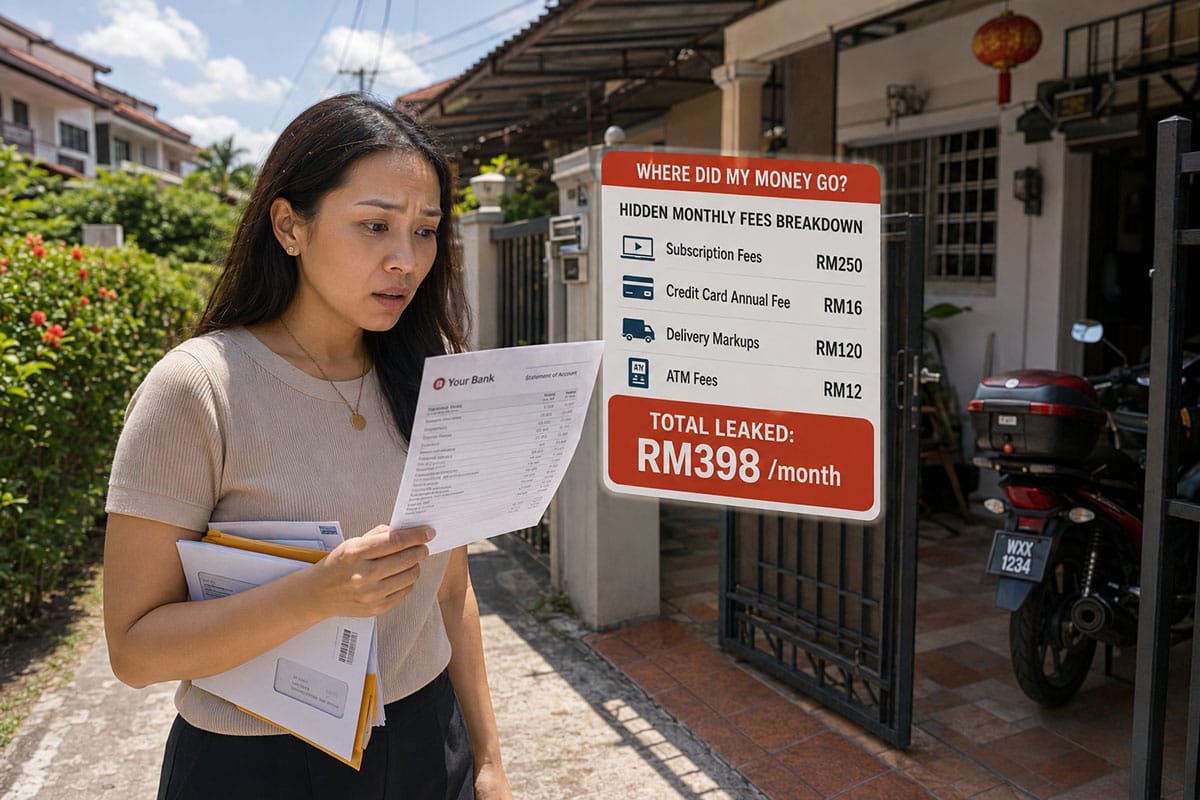
Your money is leaving your account right now in amounts too small to notice and too large to ignore.
This is the article that will make you open your bank statement tonight. You are welcome in advance.
The Subscription Graveyard
Let us start with the one that hits closest to home for most Malaysians, because it certainly hit close to home for me.
At some point in the last few years, you signed up for Netflix. Then Spotify. Then maybe YouTube Premium because the ads were getting unbearable. Then a cloud storage plan when your phone ran out of space. Then a subscription to Canva. Then that one app with the Pro tier that offered a free trial you forgot to cancel. Then something else you genuinely cannot remember.
Before you know it, you are paying for seven subscriptions and actively only using three of them.
I found myself paying close to RM300 per month across all my digital subscriptions at the peak. Netflix, YouTube Premium, CapCut Pro, Spotify, and a handful of others. When things got tight after the retrenchment and I actually sat down and added it all up, the number was quietly embarrassing. Not because any single subscription was expensive. Because all of them together were.
Malaysians collectively spend billions of ringgit annually on digital subscriptions, and a significant portion of that money goes to services that are barely touched. The average Malaysian household has at least four to six active digital subscriptions at any given time, many of which are renewed automatically without a single notification beyond a receipt that lands in an email folder nobody checks.
Go open your bank statement right now. Count the subscriptions. I will wait.
The Credit Card Annual Fee You Forgot to Waive
This one is particularly Malaysian in how quietly it happens.
You signed up for a credit card because the free gift at the mall booth was appealing or the cashback offer looked great. The first year was free. Lovely. You used the card. You enjoyed the rewards. Then year two arrived and somewhere on your statement, sandwiched between the food delivery charges and the petrol transactions, a line item appeared for RM95, or RM195, or RM250 depending on your card tier.
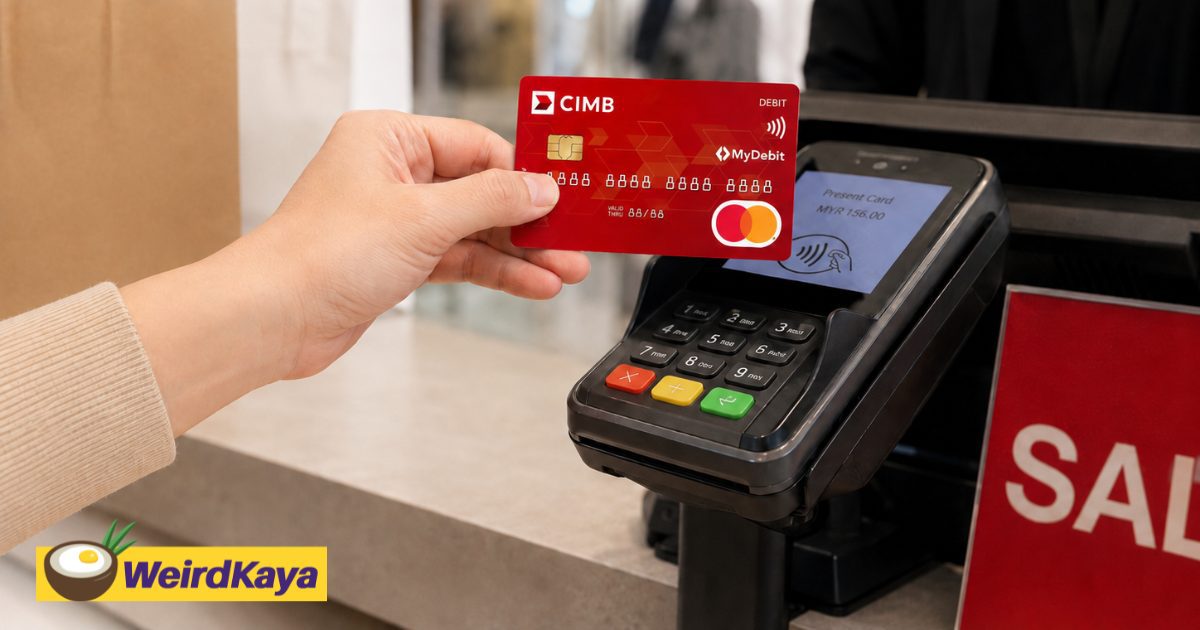
Credit card annual fees in Malaysia range from RM60 to over RM600 per year for premium cards. Most banks will waive the fee entirely if you call and ask, or if you meet a minimum spend threshold, sometimes as modest as 12 transactions per year. But most Malaysians do not call. They see the charge, feel mildly annoyed, and move on.
The banks are counting on exactly that response. A RM195 annual fee that takes one phone call to waive but 90% of cardholders never bother making? That is an enormously profitable form of consumer inertia.
If you prefer to avoid this entirely, there are genuinely good free-for-life credit cards in Malaysia from banks including Maybank, Alliance, AmBank, and BSN that charge zero annual fees with no conditions whatsoever. The rewards may be slightly less exciting but the zero annual fee more than compensates if you are not spending at the level required to justify a premium card anyway.
The ATM Withdrawal Fee That Adds Up
You need RM50 cash urgently. The nearest ATM belongs to a different bank. You withdraw the RM50 and without thinking much about it, you pay a RM1 interbank withdrawal fee.
One ringgit. Not a big deal, right?
But if you do this three times a week because the right ATM is never quite where you are, that is RM156 a year in fees for the privilege of accessing your own money. Not dramatic. Not life-changing. Just quietly, persistently expensive in the way that only truly forgettable charges can be.
The fix is simple: keep a small cash float, use your own bank's ATM network, or use e-wallets and online transfers for most transactions so physical cash withdrawals become rare enough that the fee is genuinely occasional rather than habitual.
The Food Delivery Markup You Know About but Accept Anyway
Here is the one where we all quietly admit the truth: we know the prices on GrabFood and Foodpanda are higher than the restaurant's actual menu prices. We just decide the convenience is worth it and order anyway.
And fair enough. Convenience has real value. But let us at least be honest about what we are paying for it.
Food delivery platforms charge restaurants commission rates of 25 to 35 percent on every order. Restaurants respond to this by marking up their delivery menu prices to protect their margins. The result is that the same plate of nasi lemak that costs RM7 at the mamak can appear on the app at RM9.50 or RM10.50. Add the delivery fee, the small order fee, the service charge, and the tip, and your RM7 plate of nasi lemak has quietly become a RM16 plate of nasi lemak.
Reports from Malaysian consumers on forums like Lowyat have noted markups of 30 to 50 percent on certain popular restaurants' delivery menus compared to their dine-in prices. This is not illegal. It is just how the economics of food delivery platforms work. But it means that if you are ordering delivery daily, you are not just paying for convenience. You are paying a significant premium that compounds meaningfully over a month.
The VIP membership on Grab and Foodpanda helps reduce the delivery fee component. But it does not address the menu markup, which is set by the restaurant rather than the platform.
The Foreign Transaction Fee Hiding in Your Exchange Rate
This one is the most invisible of all the fees on this list because it does not appear as a line item. It hides inside the exchange rate itself.
When you subscribe to a foreign service like Netflix, Spotify, or any overseas SaaS product, your bank processes the transaction in the foreign currency and converts it to ringgit. What they do not prominently advertise is that the exchange rate they use includes a markup of typically 1 to 3.5 percent above the real mid-market rate.
Malaysians collectively lost RM2.99 billion to hidden foreign exchange fees in a single year, according to research by Wise. That figure covers international transfers and cross-border transactions broadly, but the principle applies equally to anyone using a Malaysian bank card to pay for overseas subscriptions or online purchases. You are almost certainly paying more than the stated price every single time, and the extra amount goes nowhere near you.
The fix, if you regularly transact in foreign currencies, is to use a multi-currency card or service that applies the real mid-market exchange rate without the markup. Several options are available in Malaysia for users who send money abroad or subscribe to foreign services regularly.
The Late Payment Interest That Multiplies Quietly
This one is less about a hidden fee and more about a fee that Malaysians consistently underestimate until they are already inside it.
Credit card interest in Malaysia typically runs at 15 to 18 percent per annum on the outstanding balance. Pay your minimum payment of RM50 on a RM2,000 balance and the remaining RM1,950 starts attracting interest at that rate immediately. Not next month. From the transaction date.
CIMB, Maybank, and most Malaysian banks charge a minimum RM10 or 1 percent of outstanding balance as late payment fees, whichever is higher, up to RM100. On top of the ongoing interest charges. On top of the annual fee if you did not call to waive it.
The snowball effect of credit card interest is one of the most common reasons Malaysian personal finances quietly deteriorate. It does not happen in a dramatic moment. It happens in the gradual gap between spending slightly more than you can clear each month and not quite noticing until the balance has crept up to a number that takes months of discipline to bring back down.
The Parking App Fees Nobody Reads
A newer entrant to the quiet fee parade. Parking apps in Malaysia like JomPARKING, PayParking, and others charge small convenience fees per transaction on top of the parking rate itself. Each transaction fee might be 20 or 30 sen. Over a month of daily parking in the city, that adds up to RM4 to RM6 in fees you never consciously agreed to pay but never bothered to question either.
Not catastrophic. Just quietly, persistently nibbling.
What To Do About All of This
The good news is that awareness is genuinely half the battle. Most of these fees persist because they fall below the threshold of conscious attention. The moment you actually look at them, you start making different choices.
Go through your bank statement this week and list every recurring charge. Be honest about which services you actually use. Cancel the ones that have been quietly renewing while you forgot they existed. Call your credit card bank and ask for the annual fee to be waived. Switch your default ATM habits so you stop paying interbank withdrawal fees for convenience.
The total amount recoverable by doing this for one hour is not life-changing money. But for most Malaysians, it is probably between RM100 and RM300 per month that is currently going somewhere other than your pocket. Over a year, that is between RM1,200 and RM3,600 quietly walking out the door while you were busy not looking.
That is a family holiday. Or four months of EPF contributions. Or a meaningful addition to your emergency fund.
The fees did not get loud to take your money. They did not need to.
My Take
Finding out I was spending nearly RM300 a month on digital subscriptions was one of those quietly mortifying moments of financial self-awareness that I suspect more Malaysians have than anyone admits. Not because the amount was devastating, but because so much of it was for services I had forgotten I was paying for.
The Spotify I had not opened in months. The Pro tier of an app I used twice and then replaced. The streaming service I kept because cancelling felt like admin.
Working as a solo business owner made me look at everything clearly, and what I found when I actually looked was a collection of small, forgettable expenses that collectively added up to a real number. Cutting most of them did not change my quality of life in any meaningful way. Which tells you everything you need to know about whether I actually needed them.
Go check your statement. The fees are there. They are just waiting for you to notice them.
Kamarul Azwan (k.azwan@gmail.com) is a content creator under the Newswav Creator programme, where you get to express yourself, be a citizen journalist, and at the same time monetize your content & reach millions of users on Newswav. Log in to creator.newswav.com and become a Newswav Creator now!
The User Content (as defined on Newswav Terms of Use) above including the views expressed and media (pictures, videos, citations etc) were submitted & posted by the author. Newswav is solely an aggregation platform that hosts the User Content. If you have any questions about the content, copyright or other issues of the work, please contact creator@newswav.com.