
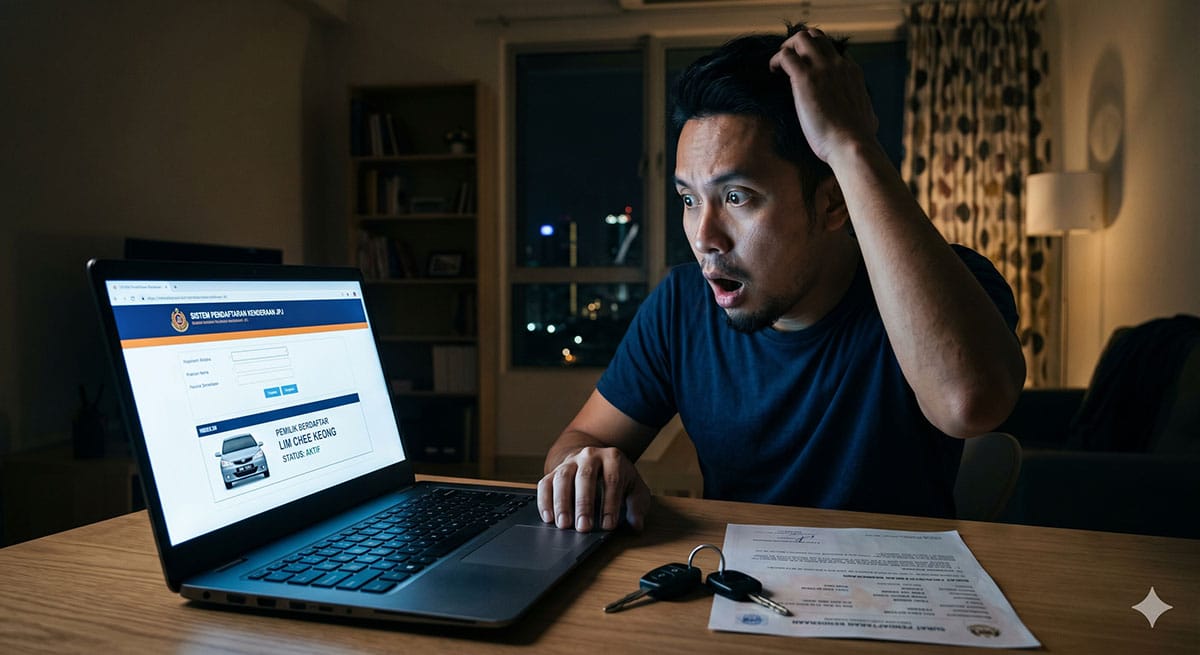
The other day, the Road Transport Department quietly dropped a bombshell.
JPJ announced the suspension of all online vehicle ownership transfer services effective May 25, 2026, covering every digital channel including the public portal, kiosks, MyEG, and eAuto. The reason was blunt: complaints, including on social media, that vehicle ownership had been transferred to other parties without the registered owners knowing it had happened.
Later that day, Transport Minister Anthony Loke had intervened and instructed JPJ to restore the service, with system improvements to be carried out over the long weekend instead. The suspension lasted less than a day.
The service is back. The problem that caused the suspension is not.
And that problem deserves a much more serious conversation than the news cycle around the suspension and restoration has allowed for.
What Actually Happened Here
To understand the scale of what JPJ was responding to, it helps to know that this is not the first time complaints about unauthorised vehicle ownership transfers have surfaced. The suspension came a full month after JPJ had already acknowledged complaints about illegal transfers of unique vehicle registration numbers without registered owners' knowledge. The complaints had been building. The social media reports had been accumulating. And the problem had apparently reached a threshold where JPJ felt it had no choice but to pull the plug on the entire online system.
JPJ Director-General Datuk Aedy Fadly Ramli confirmed that the department views the matter seriously, particularly regarding vehicle maintenance and safety records registered in the system. When ownership of a vehicle is fraudulently transferred without the original owner's knowledge, the consequences go far beyond the inconvenience of having to correct a record. The implications are far reaching and in some cases devastating.
How This Fraud Actually Works
Understanding the mechanics of unauthorised vehicle ownership transfer matters because it helps every car owner understand what they are actually protecting against.
The process of transferring vehicle ownership in Malaysia requires certain documentation — the vehicle's registration card, the seller's identity card, the buyer's identity card, and payment of transfer fees. The online system was designed to make this process more convenient for legitimate buyers and sellers.
The problem is that convenience cuts both ways. Fraudsters have been exploiting weaknesses in the identity verification process to submit transfer applications using falsified or stolen documents. In some cases, third-party service providers who have access to the JPJ system have allegedly been involved in processing transfers without adequate verification of ownership consent.
The suspension specifically covered the permanent ownership transfer system through the eSerahan Tukar Milik (eSTM) channel, while the temporary ownership transfer system continued to operate. This distinction matters because the permanent transfer is what changes who legally owns your vehicle on JPJ's records. If that process can be manipulated, the consequences for the original owner can be severe.
Why This Should Alarm Every Malaysian Car Owner
Consider what an unauthorised vehicle transfer actually means in practice.
Your car is registered under your name in JPJ's system. That registration is the legal foundation for everything else, your insurance policy, your road tax, your liability in the event of an accident or traffic offence. If someone fraudulently transfers ownership of your vehicle to themselves or to a third party, you may not know about it until something goes wrong.
You could receive a summons for a traffic offence committed by someone else driving your car under a new ownership arrangement you knew nothing about. Your insurance claim could be complicated or rejected because the insured owner on record no longer matches the registered owner. If the car is involved in a crime, your name may appear in JPJ records creating complications that could take months to untangle.
And here is the scenario that should alarm anyone with a vehicle registered under their name. Fraudulent ownership transfers have been used as part of wider financial crimes, where vehicles are transferred and then used as collateral for loans, sold to unsuspecting buyers, or stripped of parts and abandoned. By the time the original registered owner discovers what has happened, the damage is already done and the paper trail is deliberately obscured.
What You Should Do Right Now
This is the part that matters most. Because knowing a problem exists is only useful if you know what to do about it.
Check your vehicle ownership status immediately. JPJ's e-Services portal allows registered users to check vehicle ownership details. Log in and verify that your vehicle is still registered under your name. If anything looks incorrect, flag it immediately before the situation compounds.
Download and activate the MyJPJ app. The MyJPJ mobile application allows vehicle owners to monitor their vehicle status and receive notifications about changes to their registration. If ownership transfer notifications can be pushed to the registered owner's phone in real time, that early warning system could be the difference between catching fraud quickly and discovering it months later.
Guard your vehicle documents and identity documents carefully. Fraudulent transfers typically require access to your identity card number and vehicle registration details. Be cautious about where you share these details, particularly with used car dealers, service centres, or third-party agents who request copies of your IC alongside vehicle documents.
If you use a used car dealer or third-party agent for any JPJ transaction, verify the outcome. After any legitimate vehicle transaction, log in to JPJ's system within a few days to confirm that the outcome recorded matches what you intended. Do not assume the transaction was completed correctly just because you received a receipt.
Report suspicious activity immediately. JPJ's official complaints channel is accessible through the JPJ website and hotline at 1-800-88-5566. If you discover that a transfer has been recorded without your consent, lodge a report with JPJ and simultaneously file a police report. The police report creates a formal record that protects you from any downstream liability arising from the fraudulent transfer.
The Bigger Problem That a Weekend Maintenance Window Cannot Fix
Transport Minister Anthony Loke was right to instruct JPJ to restore the service rather than leave millions of legitimate users without an online option. Pushing everyone to physical counters creates queues, delays, and inconvenience for the vast majority of users who are conducting perfectly legitimate transactions.
But restoring the service while carrying out system improvements over the weekend is a patch, not a solution. The fraud that triggered this suspension reflects a systemic vulnerability in how identity verification is handled within the online ownership transfer ecosystem. MyEG, eAuto, and the JPJ portal are interconnected systems, and any weakness in one creates an entry point for fraud in all of them.
What Malaysia needs is a properly secured vehicle ownership transfer system that requires multi-factor verification from the registered owner before any transfer can be initiated. Not just document submission by the applying party. Active, real-time confirmation from the person whose name is on the registration card. An OTP sent to the registered owner's phone. A biometric check. Something that makes it genuinely impossible to transfer ownership without the owner's explicit participation in the process.
Until that exists, the system will remain vulnerable regardless of how many weekend maintenance windows JPJ schedules.
My Take
I checked my own vehicle ownership status after reading about this. My 2013 Alza is still registered in my name. I will be checking it again next week, and the week after that.
The story of JPJ suspending and then restoring the online transfer system in the same day is really a story about how fragile the trust underpinning our digital government services can be when fraud is allowed to accumulate before action is taken. One morning's suspension is not the answer. A genuinely secure system is.
For now, the most practical thing any Malaysian car owner can do is be vigilant. Check your JPJ records. Monitor your vehicle status. And do not assume that because nothing has gone wrong yet, nothing will.
Your car is probably fine. But it takes less than five minutes to confirm that. Go confirm it.
Kamarul Azwan (k.azwan@gmail.com) is a content creator under the Newswav Creator programme, where you get to express yourself, be a citizen journalist, and at the same time monetize your content & reach millions of users on Newswav. Log in to creator.newswav.com and become a Newswav Creator now!
The User Content (as defined on Newswav Terms of Use) above including the views expressed and media (pictures, videos, citations etc) were submitted & posted by the author. Newswav is solely an aggregation platform that hosts the User Content. If you have any questions about the content, copyright or other issues of the work, please contact creator@newswav.com.